Skip to content
Resolve to Save Lives
How we save lives
Our priorities
Epidemic prevention
Blood pressure control
Healthier food
Primary health care
Our strategies in action
Where we work
Map
RTSL: Ethiopia
RTSL: India
RTSL: Nigeria
Who we are
About
Team
Careers
Justice & inclusion
Press
Our partners
Funding partners
Annual reports
News
Resources
Contact
Donate
Resource Library
Healthier food
Webinar: Low-sodium salt substitutes in India
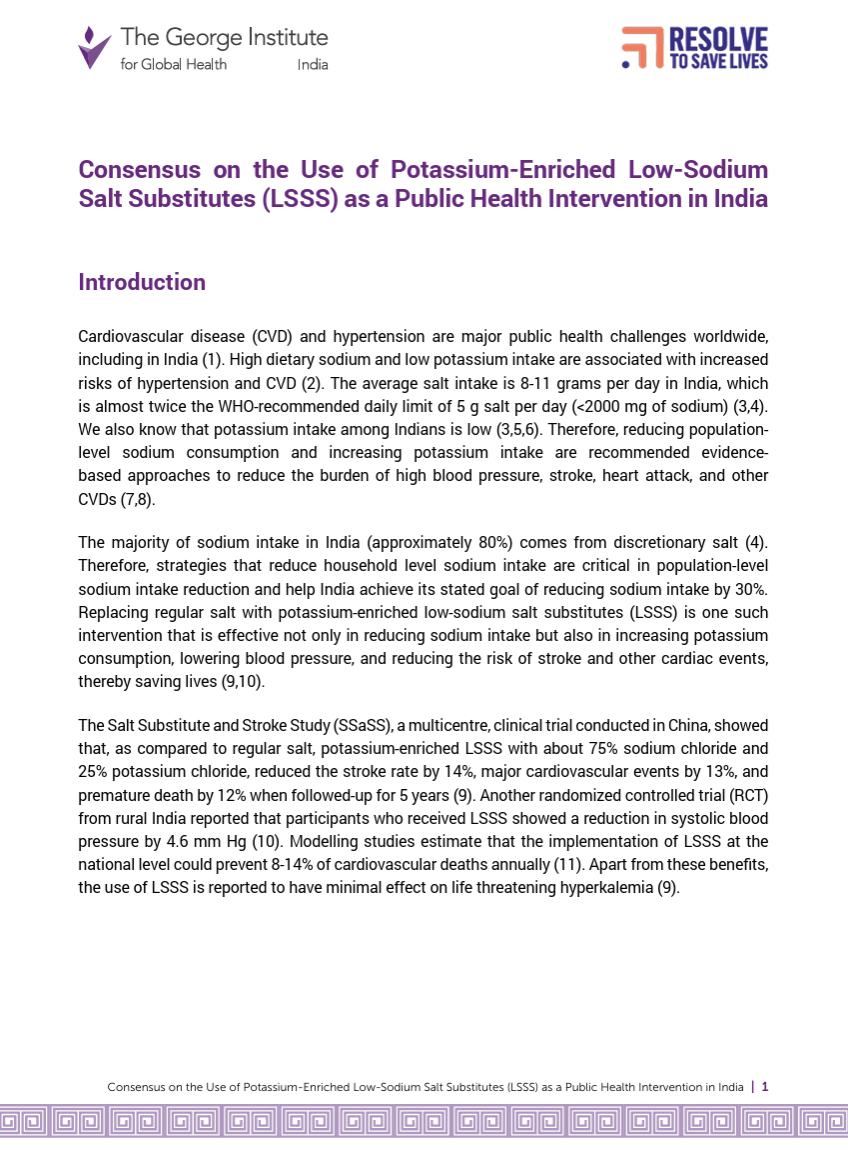
Consensus on the Use of Potassium-Enriched Low-Sodium Salt Substitutes (LSSS) as a Public Health Intervention in India
Resolve to Save Lives and The George Institute
Strengthening subnational action on sodium reduction in Nigeria
Healthy public food procurement and service resource library
Resolve to Save Lives
Procurement Resource Library
2025 in review: Country leadership, global impact
Policies and interventions to create healthy school food environments: WHO guideline
World Health Organization
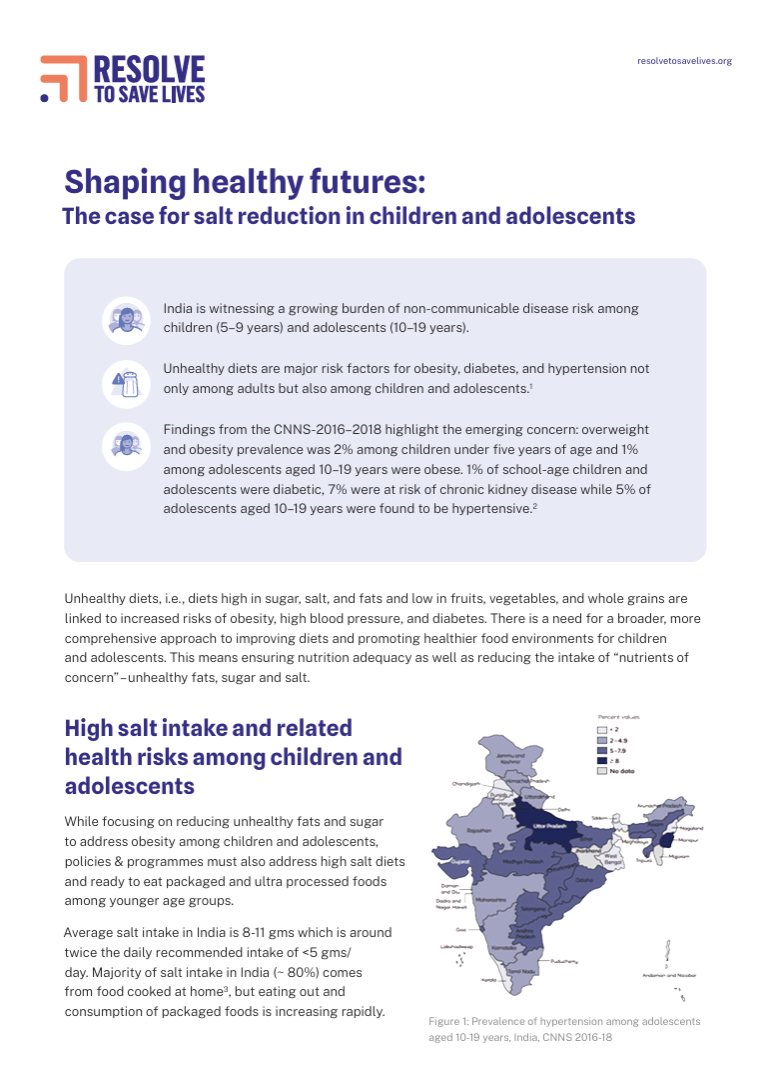
Taxation of foods high in fat, sugar, and sodium in India: A modelling study of health and economic impacts
PLOS Medicine
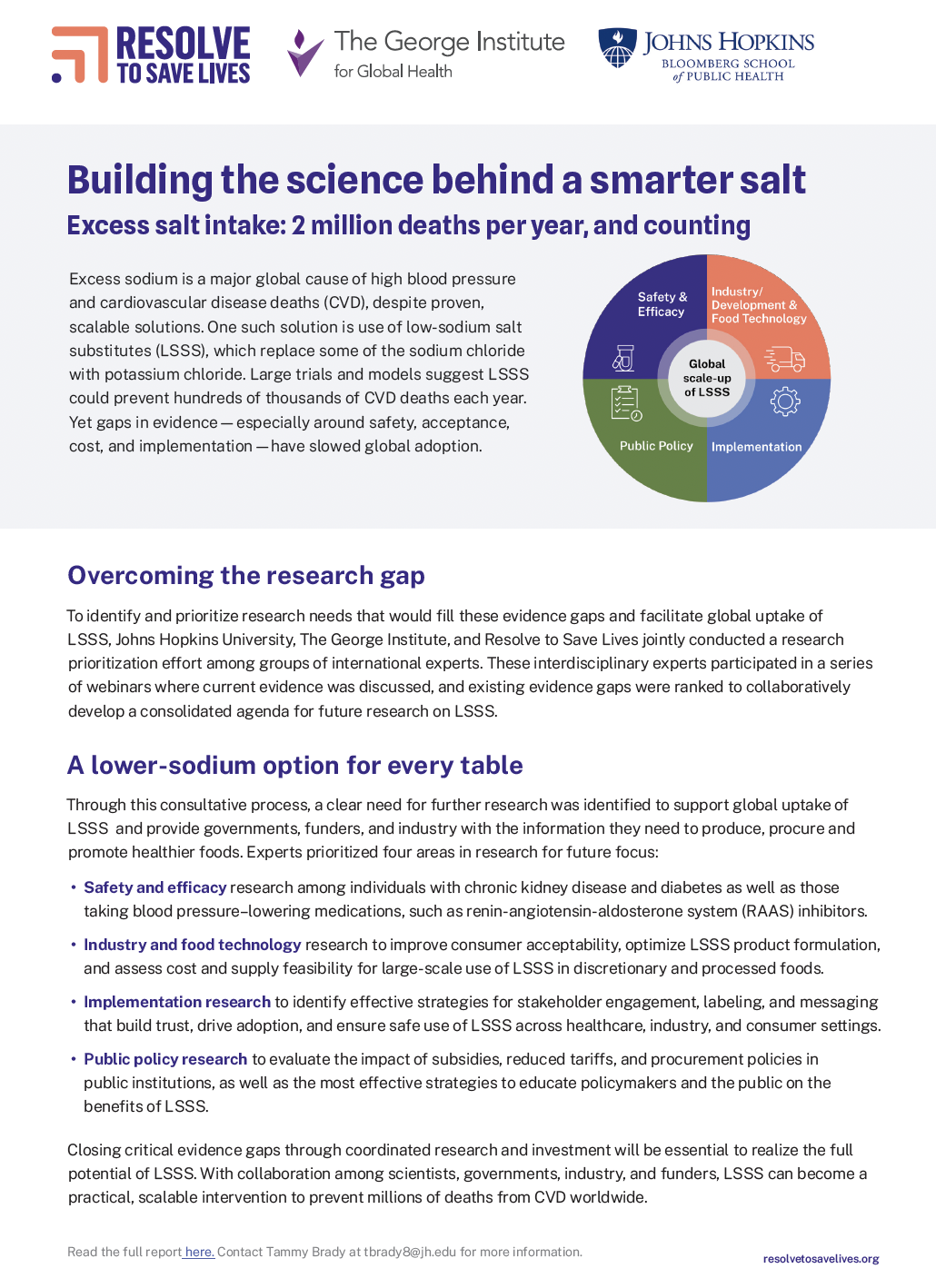
Building the science behind a smarter salt
Resolve to Save Lives
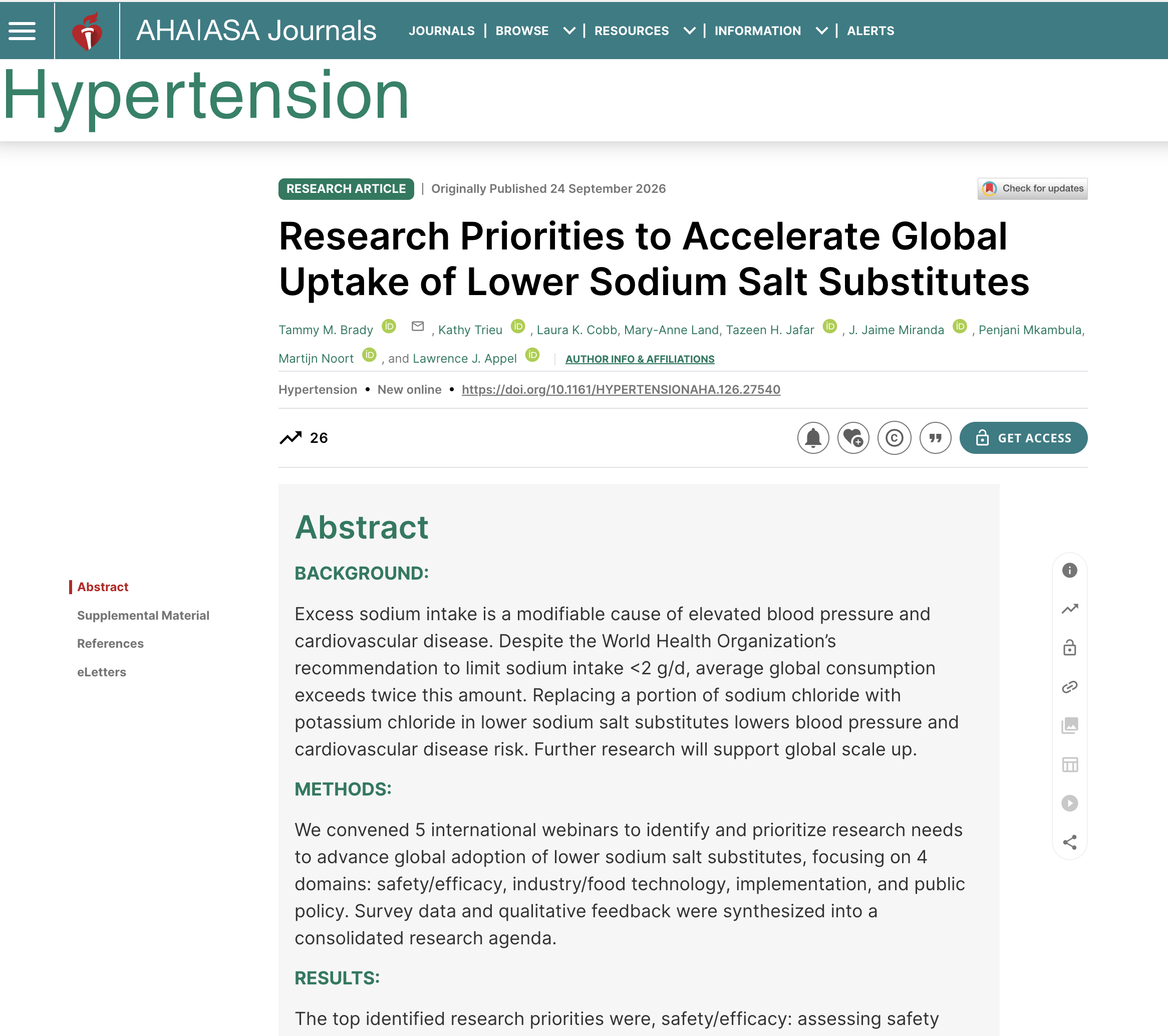
Global adoption of low-sodium salts is slow despite strong evidence they lower health risks. Strategic research will help fill in gaps and make this health tool a viable option for everyone.
Research prioritization to scale-up lower-sodium salts
Resolve to Save Lives, The George Institute, Johns Hopkins University
Healthier food options in Nigeria’s public institutions
Australian clinician group advocates for lower-sodium salts to lower high blood pressure
Ultra-processed foods in Bangladesh are full of salt—and often not saying so
Ummay Afroza, et al.
A new study shows 97% of people in Bangladesh consumed ultra-processed foods weekly, with 63% of products exceeding WHO sodium limits.
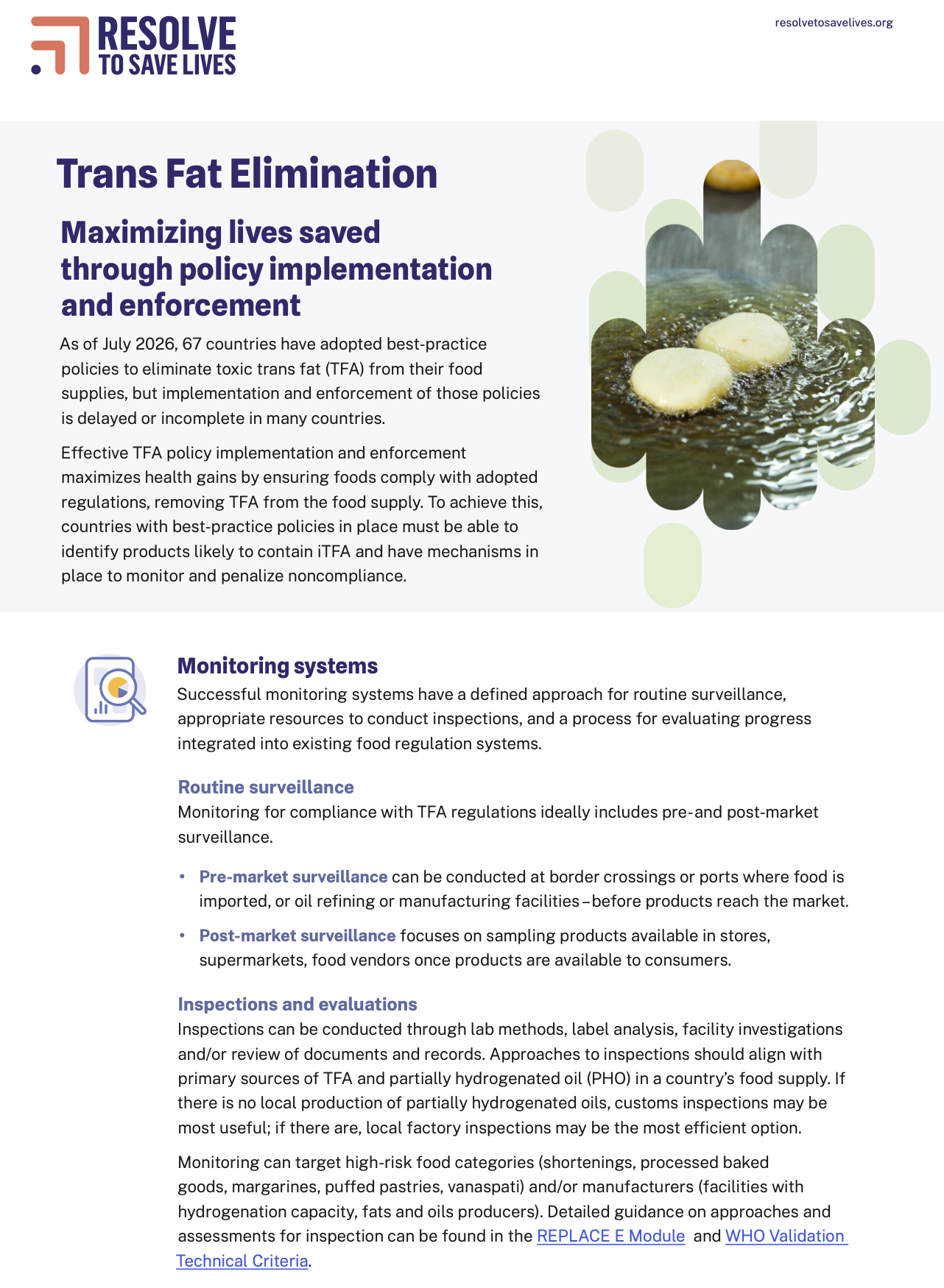
Putting Nigeria’s trans fat elimination policy into action
Global Week for Action: Key actions to successfully eliminate toxic trans fat
Unhealthy food tax in the Philippines could save lives and money
The Lancet Public Health
A Lancet Public Health study shows a 20% tax on unhealthy foods in the Philippines could save thousands of lives and reduce healthcare costs.
Promoting Healthier Food Environments at the 23rd International Congress of Nutrition
Preparing for policy in action: Nigeria builds capacity to eliminate trans fat and protect heart health
Potassium-enriched salt substitutes: supporting global cardiovascular and kidney health
Lancet Global Health
New data shows that potassium-enriched, lower-sodium salts don’t pose as much risk to those with chronic kidney disease as once thought. A co-written
Eliminating trans fat: Only your heart will know the difference
Dr. Tom Frieden explains how New York City successfully banned trans fat and became a model for eliminating this toxic food additive.
New video from Dr. Frieden: What it takes to eliminate trans fat
Effective ways to address obesity
Resolve to Save Lives
Healthy food in schools and other public settings
Four more countries validated by WHO for actions toward a trans fat-free world
Webinar unpacks industry’s role in removing trans fat from foods
Position paper: Mandatory sodium reduction targets for processed foods
Global Health Advocacy Incubator
Clear, evidence-based recommendations to guide policymakers and advocates in shaping and advancing mandatory sodium reduction targets.
Proven ways to address obesity, improve health, increase government revenue, and reduce health care costs
Resolve to Save Lives
Improve public health, increase government revenue, and reduce health care costs by addressing obesity with these proven strategies.
Front-of-package labeling systems
Resolve to Save Lives
Only one system is proven to improve food choices: Mandatory nutrient warning labels.
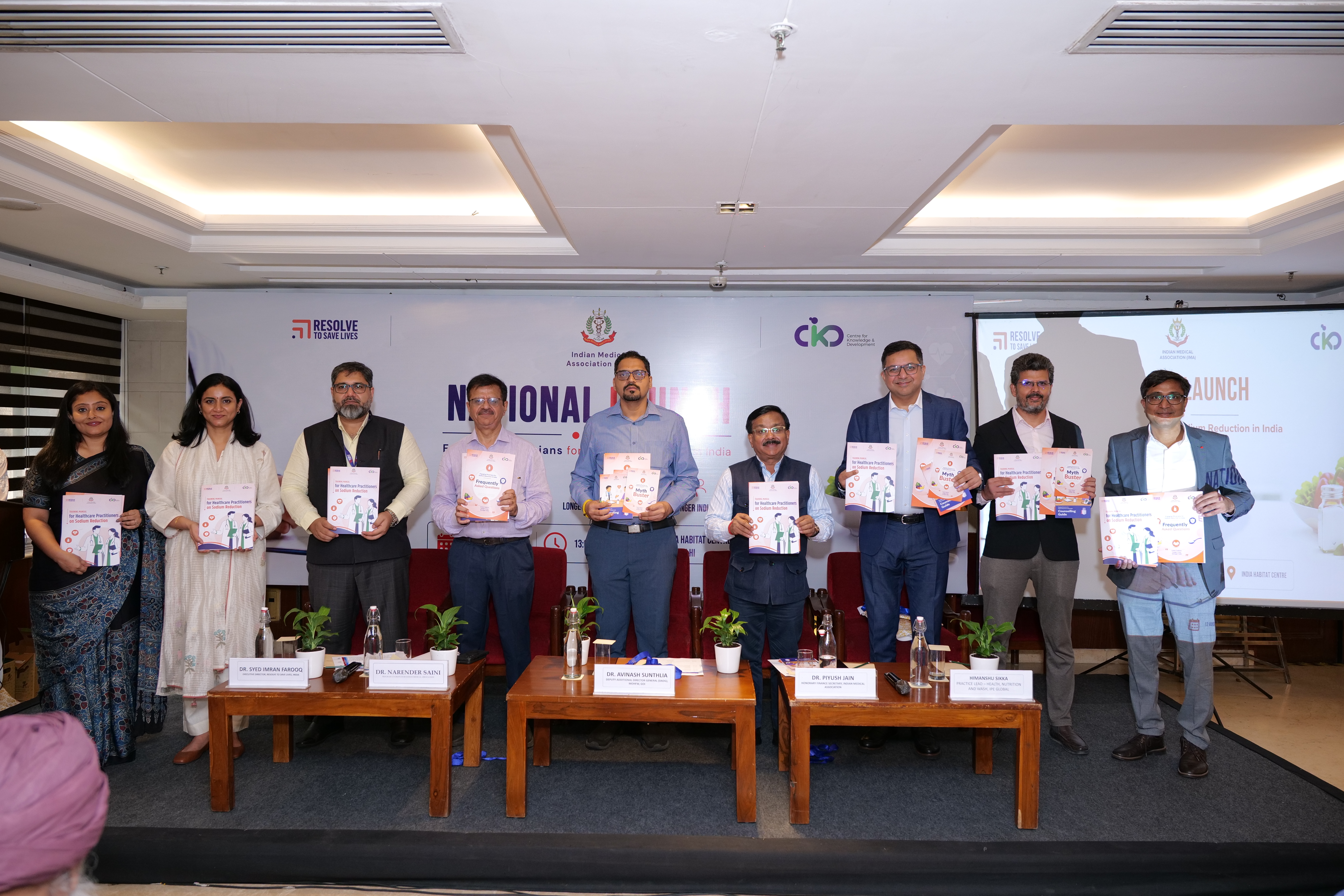
Lower-sodium salt substitutes: Frequently asked questions
Resolve to Save Lives
Answers to common questions about lower-sodium salt substitutes.
Policy brief: Front-of-package warning labels give consumers the freedom to choose healthy
Global Health Advocacy Incubator & Resolve to Save Lives
Use this brief to learn how to adopt FOPL polices and implement nutrient profile models – the foundation for FOPLs that work.