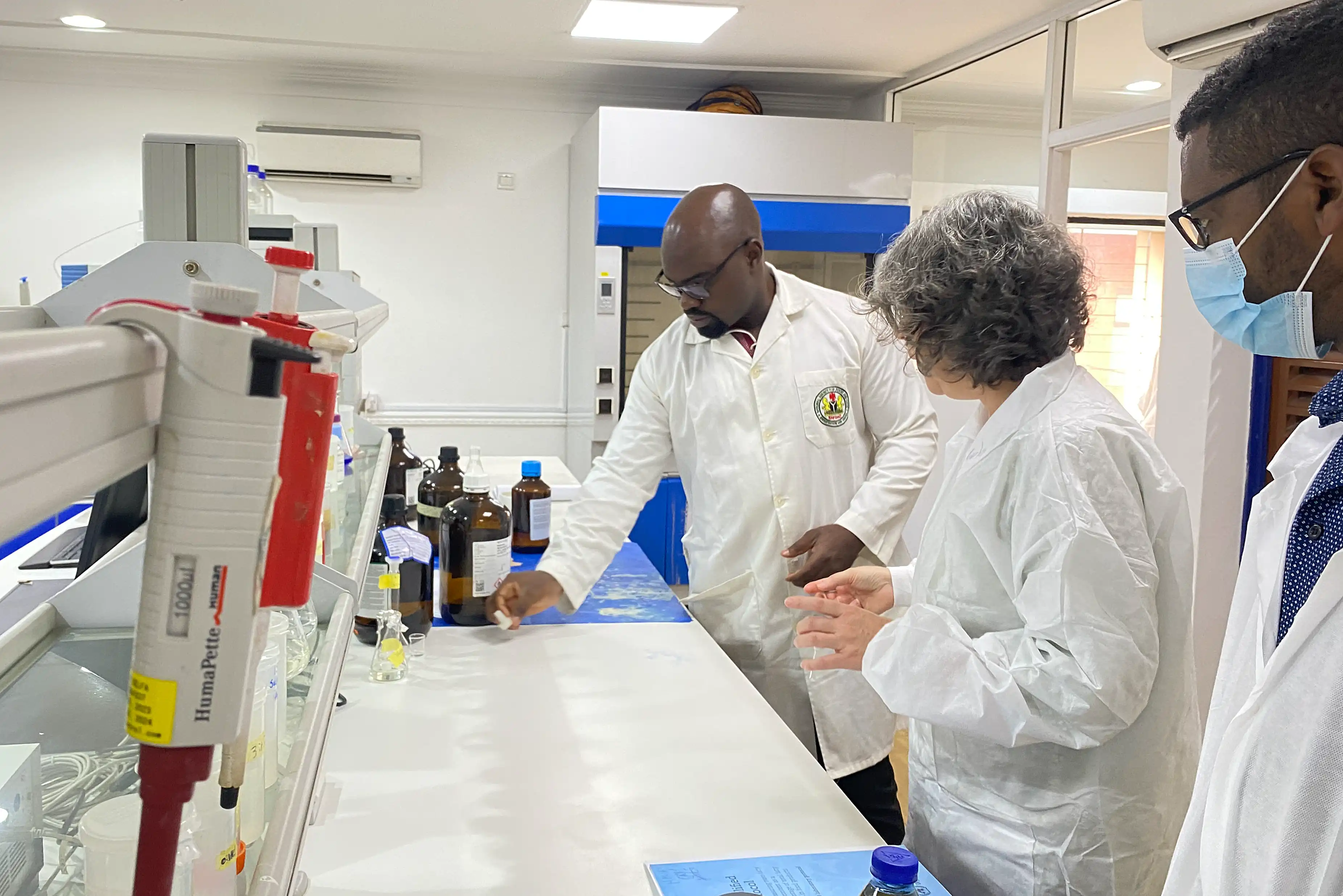
Right: Participants in “Law & Health Security: Strengthening Nigeria’s Legal Preparedness”. Credit – Resolve to Save Lives
Challenge
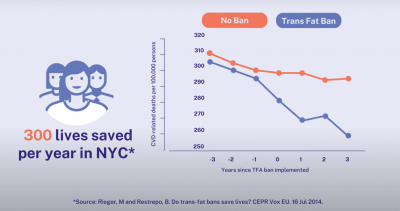
Artificial trans fat in our food increases the risk of heart attack and stroke and kills more than 500,000 people a year.
Solution
We partnered with WHO to co-create the REPLACE initiative, calling on countries to eliminate trans fat and providing step-by-step guidance on how to do it.
Impact
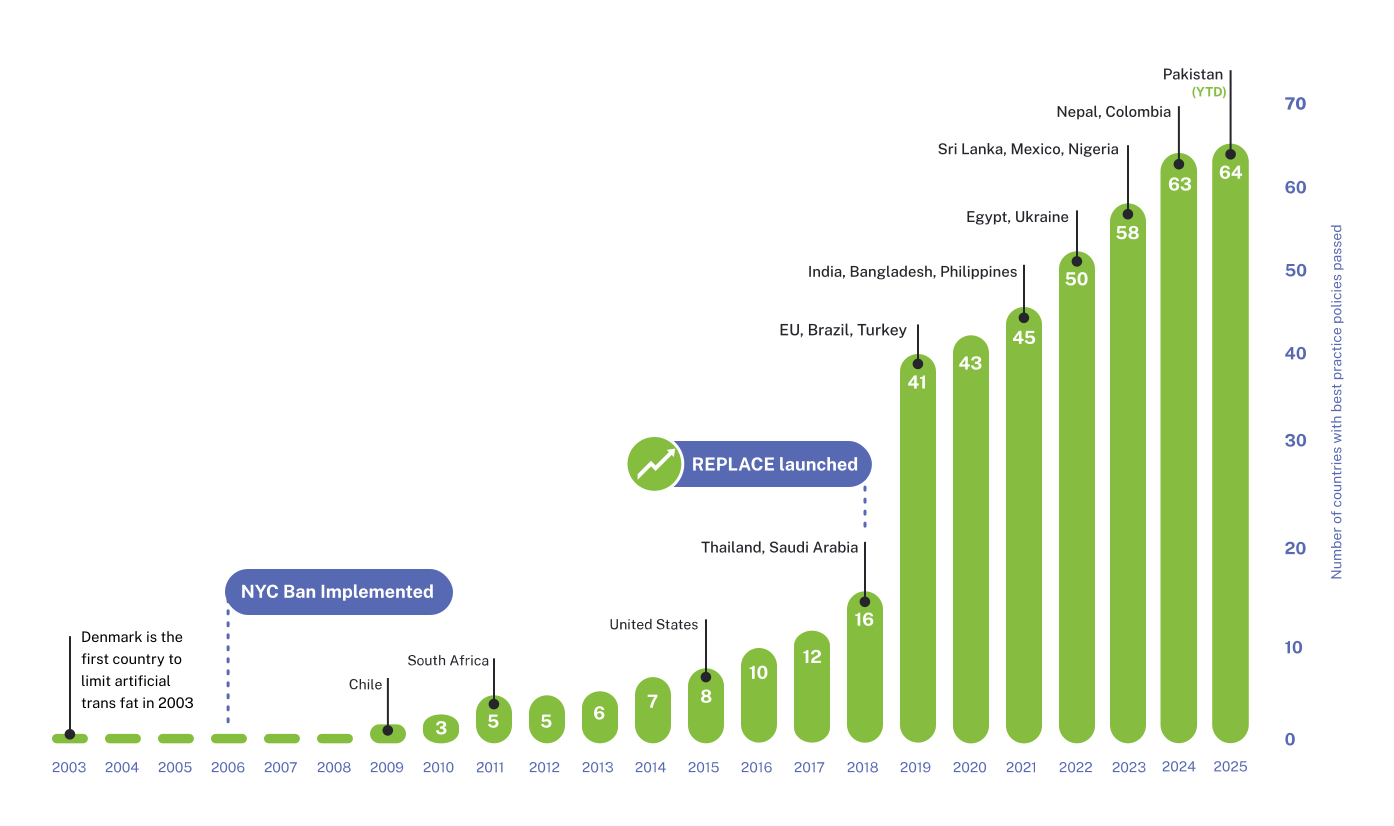
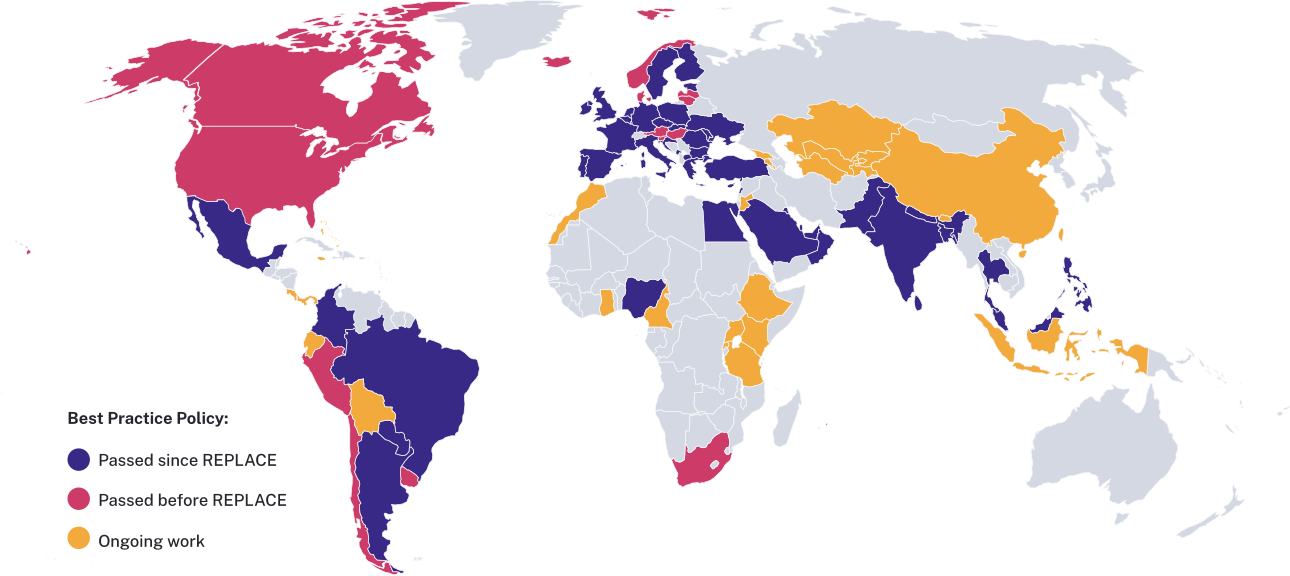
Since REPLACE launched in 2018, 54 countries have banned trans fat protecting more than 4 billion people from this deadly toxin and saving lives from heart disease.
What is trans fat?
Industrially produced trans fat is a harmful compound added to food to improve shelf-life—you may not know it’s there, but eating it increases your risk of heart attack, stroke, and premature death. As recently as 2018, trans fat contributed to as many as 500,000 deaths every year.
But no one needs to eat trans fat. It can be replaced with healthier alternatives and kept out of food supplies using mandatory, best-practice policies.
How trans fat elimination works
To protect heart health and save lives, countries can adopt policies that remove industrial trans fat from the food supply.
Banning partially hydrogenated oils—the main source of industrially produced trans fat—or enforcing limits on the amount of trans fat ensures food manufacturers replace trans fat with healthier oils, removing this added toxin from the source without changing taste or cost to consumers.
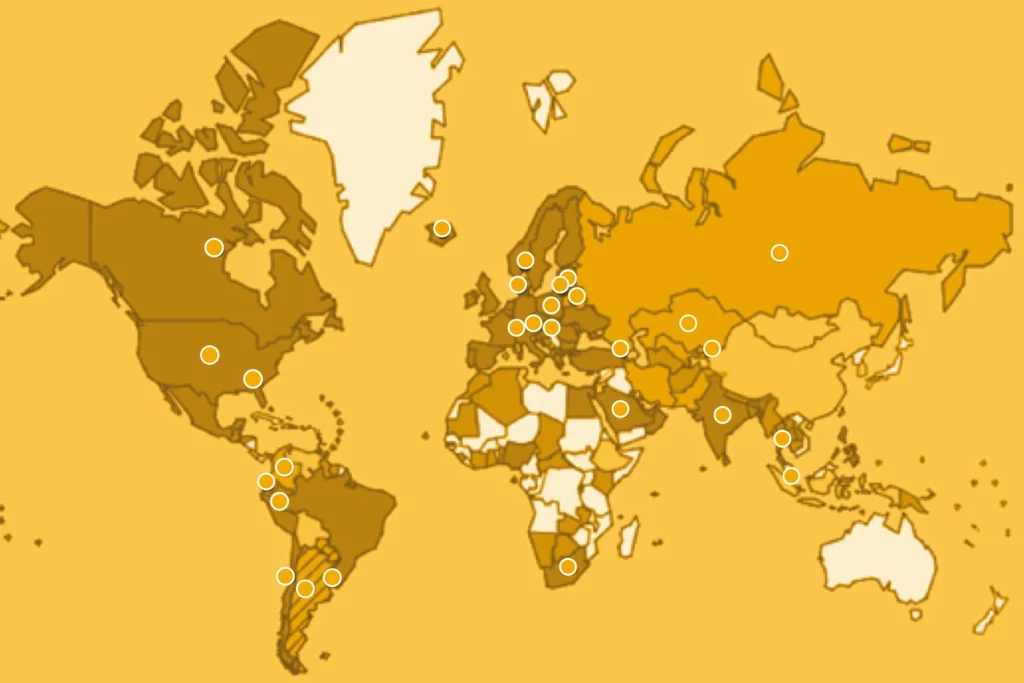
The 60+ countries that have eliminated trans fat prove it’s possible.
Since 2018, we’ve partnered with the World Health Organization (WHO) on REPLACE, an initiative to eliminate artificial trans fat from the global food supply. We helped develop the REPLACE action package, a step-by-step guide that provides governments all the tools they need to eliminate trans fat in their country along side other key tools to support policy adoption.
With our support, WHO has developed important reference materials for laboratory methods, regulatory drafting, and policy implementation critical to eliminating trans fat.
At the end of 2025, just over half the world’s population—4.1 billion people—lived in countries with best practice trans fat elimination policies, a huge jump from just 6% when REPLACE was launched.
Supporting the policy process
At the national level, we work with governments and advocates to pass policies that work. In collaboration with our partners, the Global Health Advocacy Incubator and the NCD Alliance, we support local civil society organizations to make the case for trans fat elimination to decision makers and the public. We also support research on trans fat levels in food and advocacy campaigns on the dangers of trans fat.
From policy to action
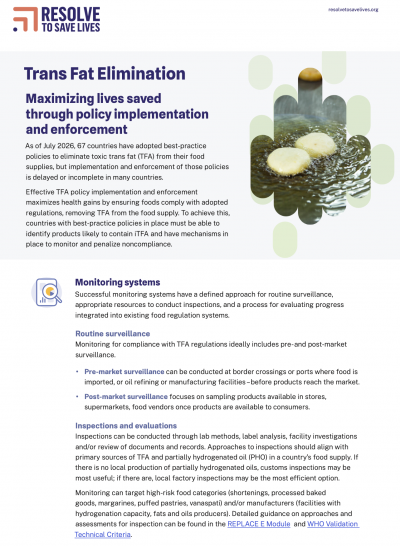
Policy passage is just the beginning. Keeping trans fat out of the food supply requires enforcement. We’re working with WHO to build lab capacity to test for trans fat across multiple regions, and supporting improved food control systems—making it easier for countries to monitor compliance.
WHO awards validation certificates to acknowledge countries that have successfully eliminated trans fat through regulatory action and strong monitoring and enforcement systems. To date, 11 countries have achieved this award.