How we save lives / Healthier food / Lower-sodium salt revolution
How we save lives / Healthier food / Lower-sodium salt revolution
The lower-sodium salt revolution
Replacing regular salt with potassium-enriched, lower-sodium salt could be the next big public health victory.
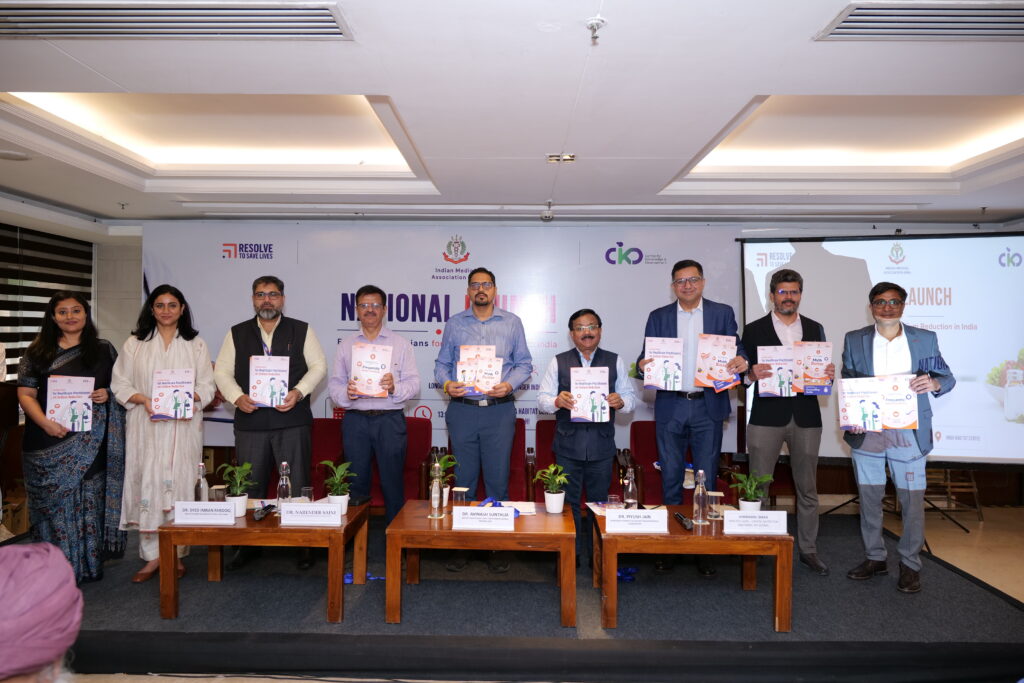
Right: Participants in “Law & Health Security: Strengthening Nigeria’s Legal Preparedness”. Credit – Resolve to Save Lives

Challenge
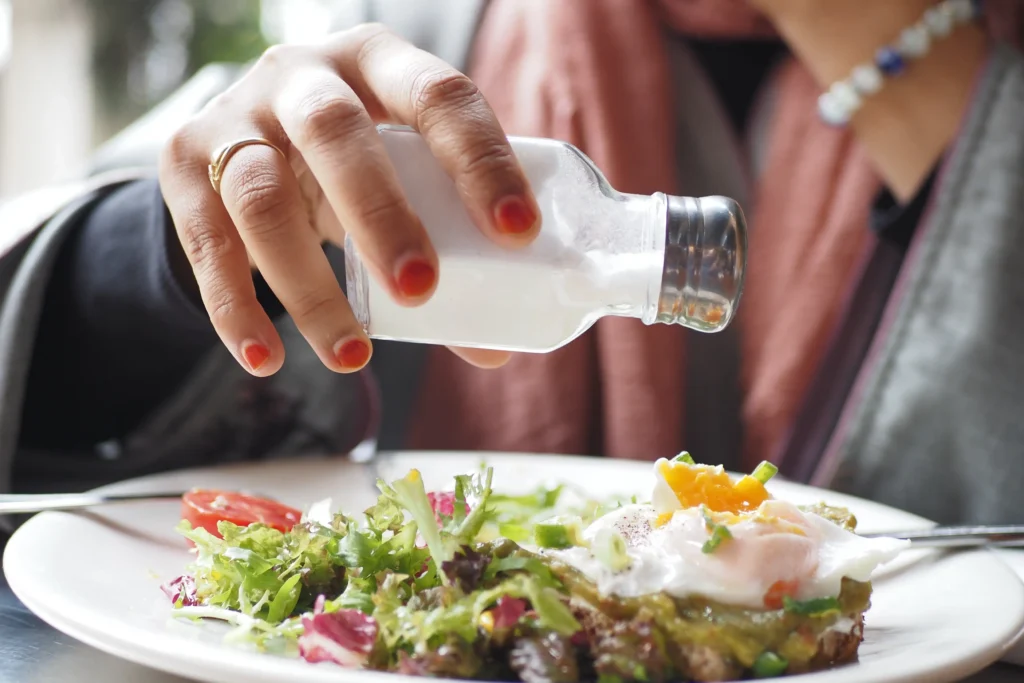
High-sodium diets are deadly, but cutting salt often cuts flavor, too.

Solution
Replacing regular table salt with a lower-sodium salt—at home, in restaurants, and in package foods—can deliver a familiar taste with fewer health risks.

Impact
Just switching to a lower-sodium salt can reduce the risk of a heart attack, stroke, or death by nearly 15%.
What is lower-sodium salt?
Lower-sodium salt tastes like regular salt, but it’s a much healthier choice. Most lower-sodium salts replace 10% to 50% of sodium—the harmful ingredient in salt—with potassium.
This is a double win. Reducing sodium reduces blood pressure. Increasing potassium, which most people don’t consume enough of, further reduces blood pressure and improves heart health.
The World Health Organization recommends replacing regular salt with lower-sodium, potassium-enriched salt.
Highlights
Switch the Salt Alliance
A diverse group of partners from across the globe—convened with the George Institute and partners—working to advance lower-sodium salt uptake

Frequently asked questions
What is low-sodium salt, what does it taste like, and more.
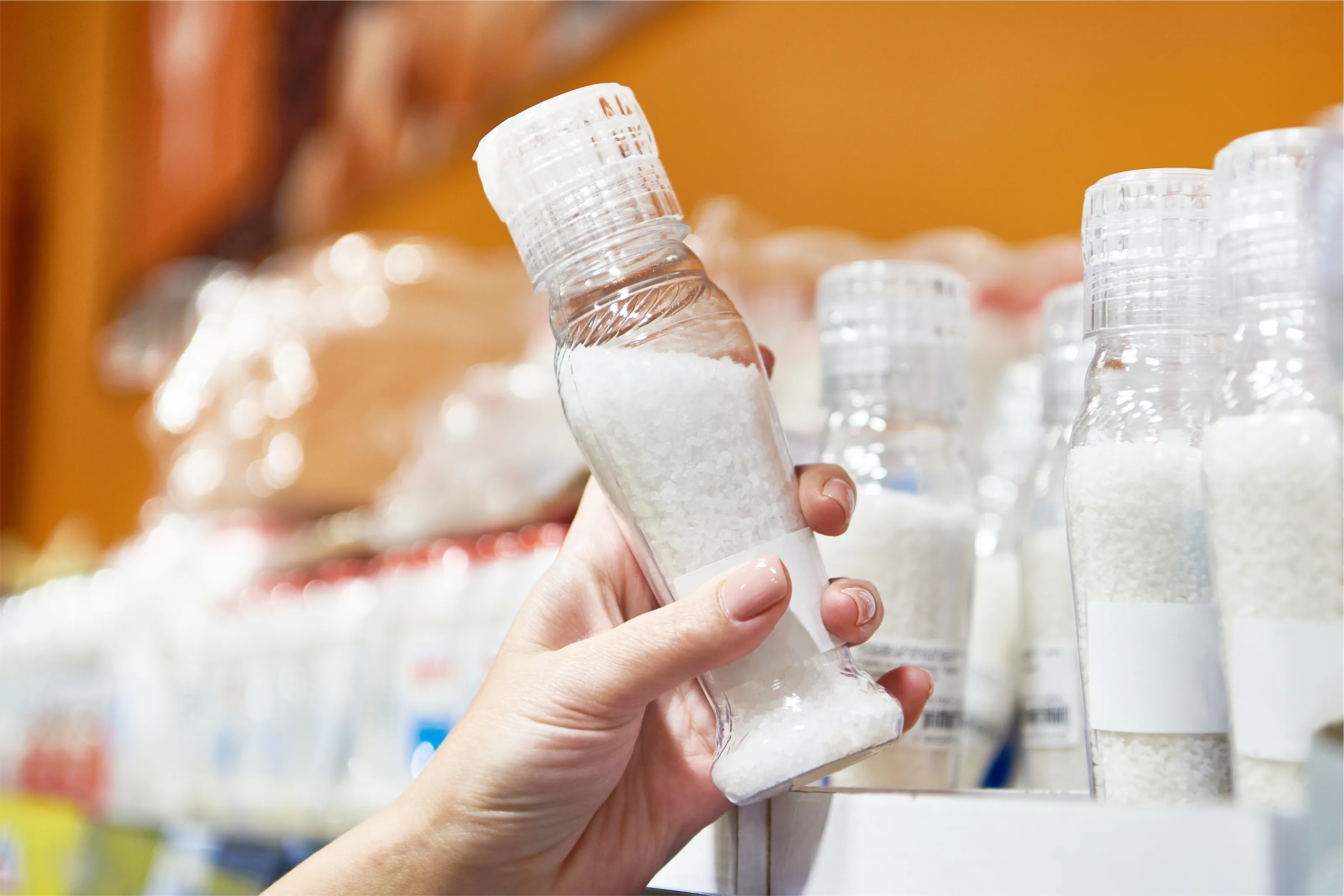
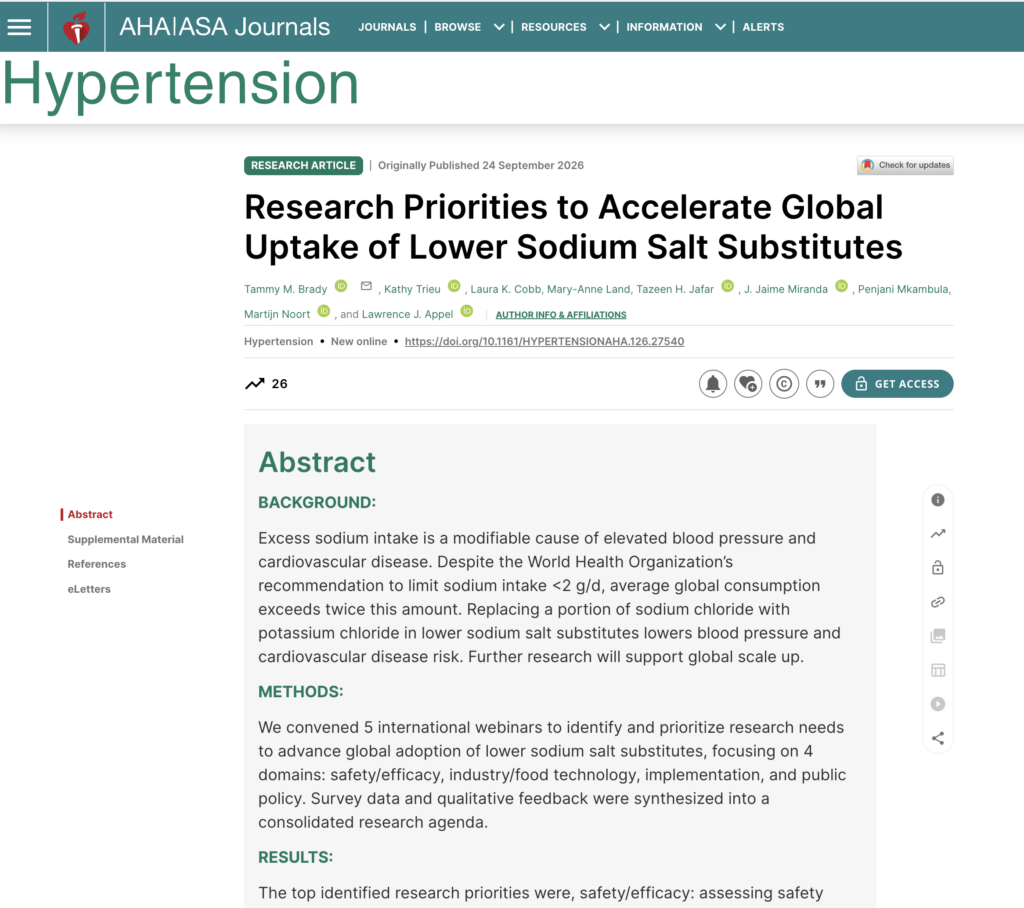
Research prioritization to scale-up lower-sodium salts
Full report and recommendations on the research needed to support LSSS uptake
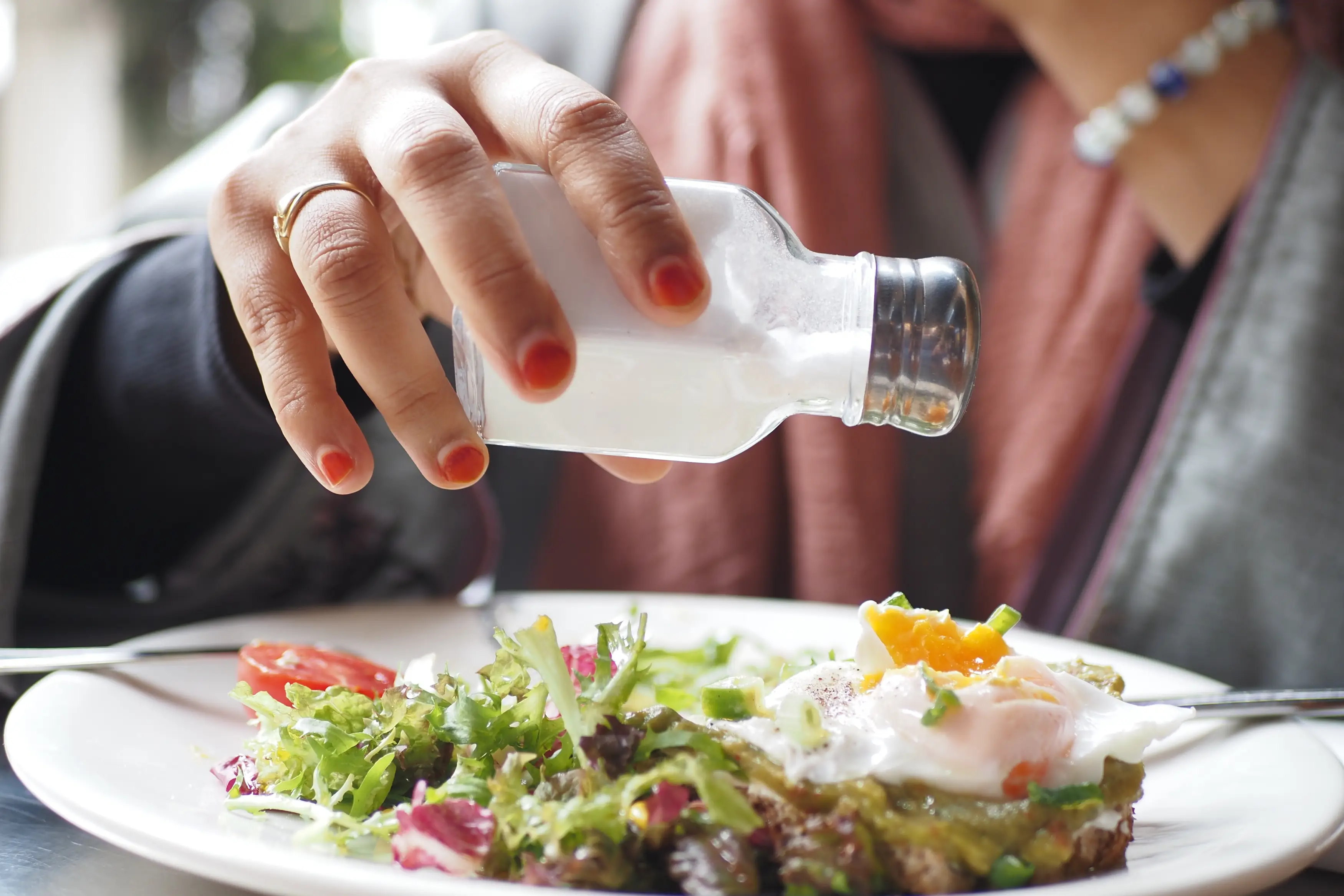
How lower-sodium salt saves lives
In many countries, most salt in the diet is added during cooking or at the table—so reducing salt consumption requires people to change their behavior. But what if salt itself could be less harmful?
Studies in China, India and Peru have shown that switching to lower-sodium salt reduces sodium intake and lowers blood pressure effectively and at low cost. A study in China found that people who used the lower-sodium salt were less likely to have a stroke or other cardiovascular event, or to die prematurely.
Lower-sodium salts can replace regular salt in many places:
- Most people* can use them at home.
- Cooks can use them in restaurants and in street foods.
- Governments can purchase them for use in public institutions, including schools and cafeterias in government office buildings.
- Food manufacturers can use them in packaged foods.
How we support lower-sodium salt
We’re collaborating with research institutions, advocates and our country partners to make lower-sodium salt the next big win for global public health.
Building the science behind a smarter salt
Despite strong evidence that lower-sodium salt could prevent hundreds of thousands of deaths annually, adoption remains slow. Coordinated research and investment across sectors will be crucial to unlock lower-sodium salt’s global potential.
With Johns Hopkins University and the George Institute, we convened international experts to identify the most urgent research gaps:
- Assessing LSSS safety for people with conditions like chronic kidney disease, diabetes, or using blood pressure-lowering medications;
- Improving product formulation, acceptability, and supply;
- Testing implementation strategies that build trust and encourage adoption; and
- Evaluating policy tools such as subsidies, tariffs, and public procurement.
With collaboration among scientists, governments, industry, and funders, lower-sodium salt can prevent millions of deaths from cardiovascular disease worldwide.
*Safety considerations
Lower sodium salt is generally safe, but because of its potassium content, it may not be appropriate for people with some health conditions (such as kidney disease). Given the limited potential risk, lower-sodium salts should carry a warning, but this should not discourage consumers who don’t have contraindications.