Where we work / RTSL: Rwanda
Where we work / RTSL: Rwanda
RTSL: Rwanda
Since 2024, Resolve to Save Lives has partnered with Rwanda on primary healthcare, food and financing.
Right: Participants in “Law & Health Security: Strengthening Nigeria’s Legal Preparedness”. Credit – Resolve to Save Lives
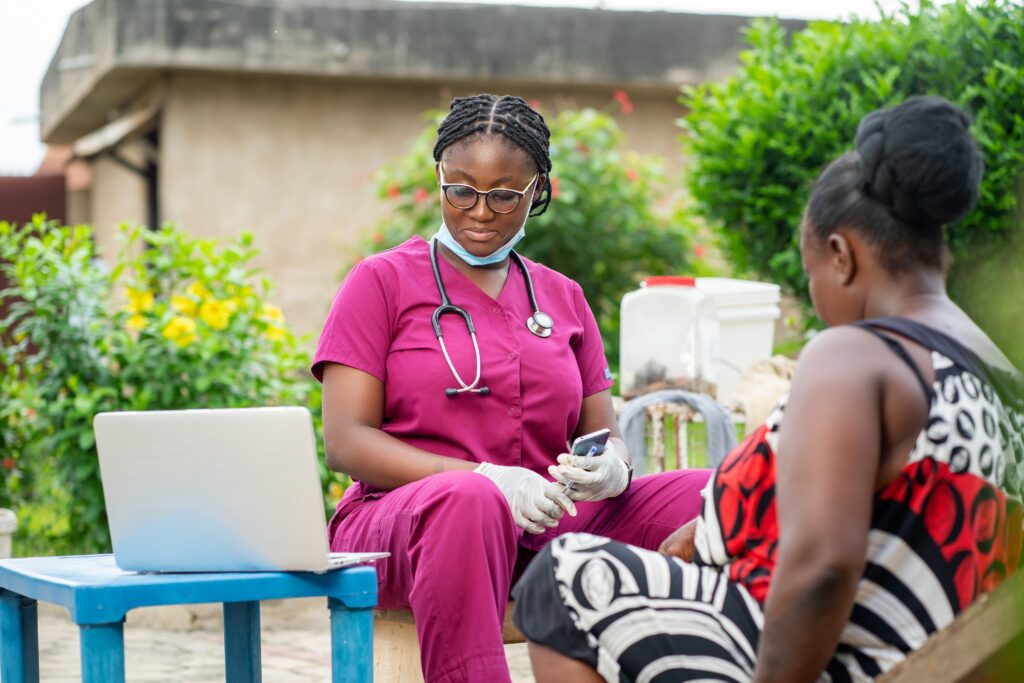
Resolve to Save Lives (RTSL) has partnered with the Government of Rwanda through the Ministry of Health, the Rwanda Biomedical Centre and the Rwanda Social Security Board to make primary healthcare more proactive and accountable for prioritized population health goals. Rwanda has achieved remarkable health gains—near-universal health insurance coverage, a rapidly expanding network of health facilities and nationally deployed digital health tools. RTSL works to ensure these foundations translate into lives saved: more patients tracked through care, more preventable diseases caught early and a financing system that rewards prevention.
Primary healthcare
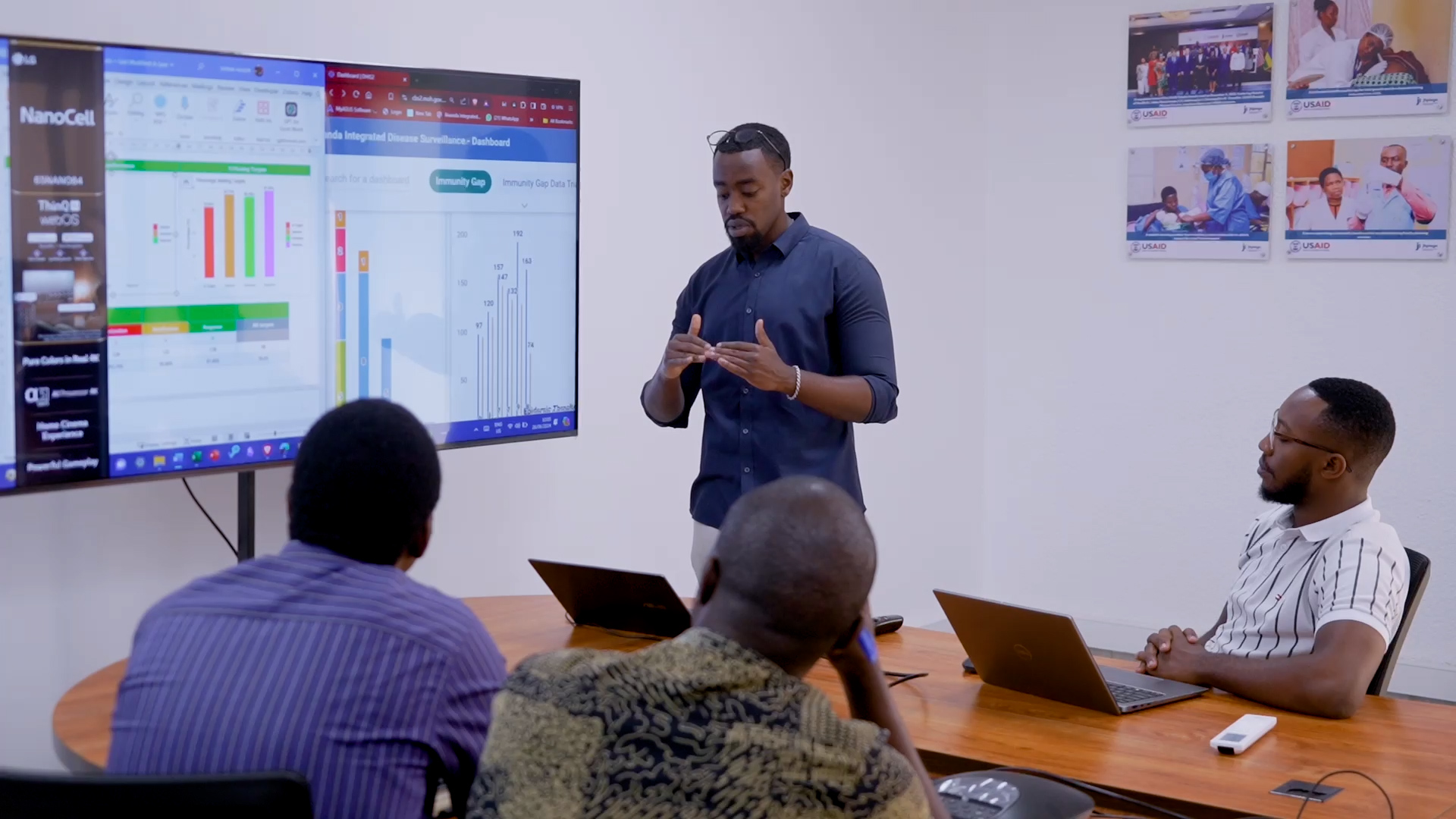
Rwanda is building a paperless primary healthcare system – electronic health records for health facilities and a digital platform for the country’s 60,000 community health workers. RTSL works inside Rwanda’s Ministry of Health as an embedded technical partner, helping make these tools reliable for frontline care providers and turning their data into better patient care.
- The eBuzima electronic health record is now running in more than 340 health centers across 19 districts, with more than 3 million patients registered
- RTSL is helping scale a digital platform to all 60,000 community health workers nationwide, so they can track patients and flag risks from the community to health centers
- Concurrent and rigorous user research, both in facilities and with community health workers, has improved uptake, sustained use and enabled vital enhancements to make the digital tools more user-centered and effective
Good data only helps if frontline workers can act on it quickly and reliably. RTSL developed PHC365, an approach that turns clinical and facility management data into daily worklists, flagging which patients need follow-up, which tests are overdue and who hasn’t returned for care. This shifts primary care from reactive to proactive, especially for pregnant women and children, contraceptive users and hypertension and diabetes patients.
- PHC365 is being piloted in two Kigali health centers, with RTSL data scientists embedded in Rwanda’s National Health Intelligence Centre to track results, and prepare for national scaleup
- RTSL is supporting the National Health Intelligence Centre in tracking childhood stunting and maternal risk, aligned with Rwanda’s priorities enshrined in the Health Sector Strategic Plan 2024-29
Healthier food
RTSL works with government stakeholders and local partners to advance the elimination of industrially produced trans fat from the national food supply, an effort that would protect 15 million people from preventable heart attack and death. RTSL, working alongside the Rwanda Biomedical Centre, supported an assessment of edible oils in the Rwandan market to build the evidence base for healthier food policy. RTSL provides technical assistance, supports evidence generation and guides stakeholder coordination through our Rwandan partners and local team, helping lay the groundwork for stronger food safety standards nationwide.
Blood pressure control
Hypertension and diabetes are among the leading causes of preventable hospitalization in Rwanda, and most cases can and should be managed at the primary care level. With RTSL support, the Ministry of Health and Rwanda Biomedical Centre have launched a HEARTS hypertension control program in two learning districts, working with Society for Family Health (SFH Rwanda) as implementing partner. The program introduces simplified treatment protocols aligned with WHO HEARTS technical package, standardized blood pressure monitoring at multiple facility entry points and a quality improvement framework for frontline teams.
Health financing
Most health systems pay for visits, not results. Rwanda is testing a different model: capitation, where primary healthcare providers receive a fixed payment per patient rather than a fee for each visit, rewarding prevention and quality over volume. RTSL provides technical assistance to the Rwanda Social Security Board (RSSB) for this reform, currently piloted in the Eastern Province. RTSL supports RSSB to monitor how the model affects access to care and quality of services, and is helping build a national dashboard to track total cost of care, especially for potentially preventable hospitalizations, that can be prevented with strengthened primary care.
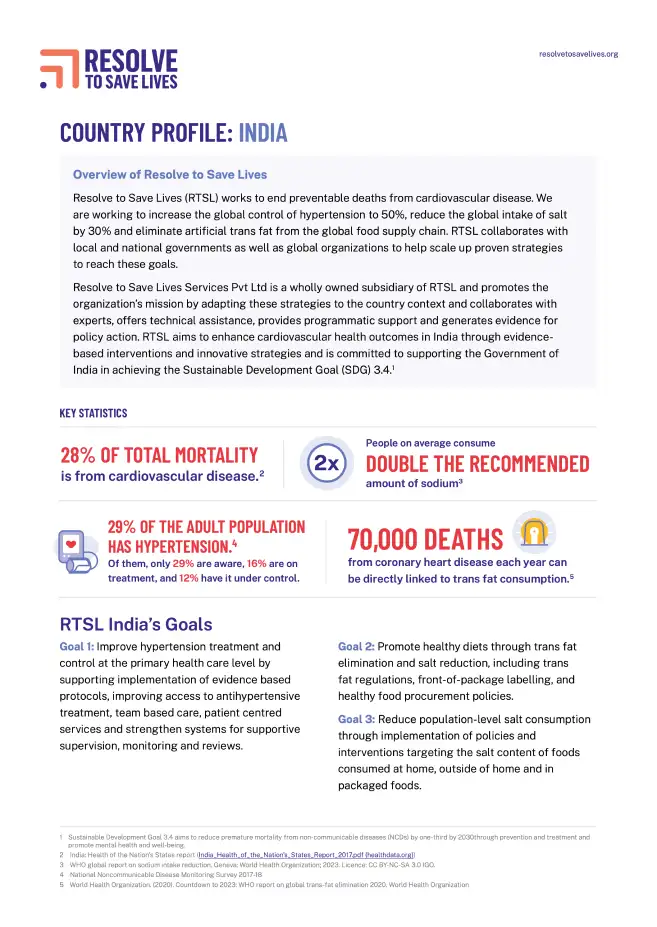
Our programs
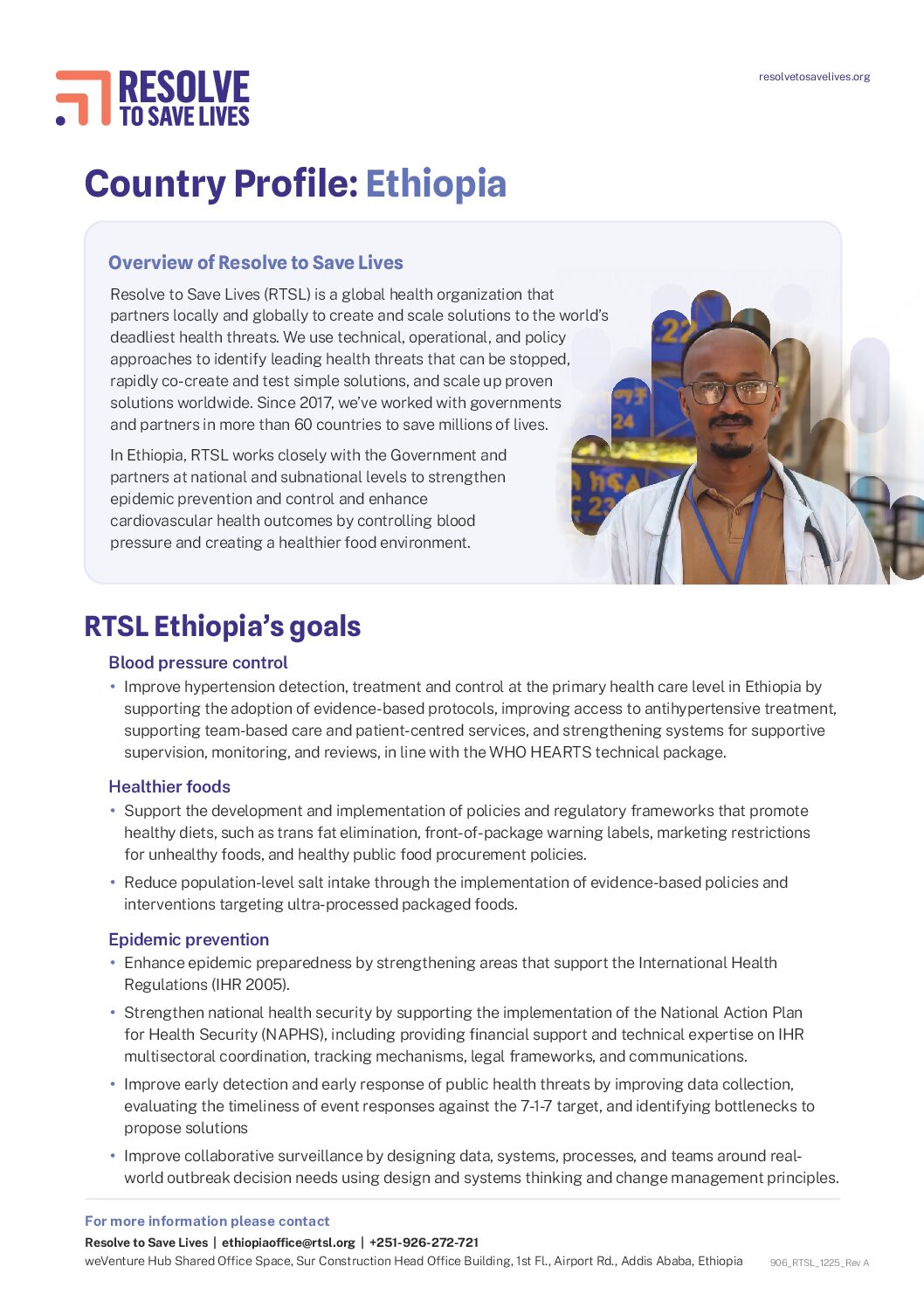
Our experts in Rwanda
Our partners in Rwanda
- Ministry of Health, Government of Rwanda
- Rwanda Biomedical Centre (RBC)
- Rwanda Social Security Board (RSSB)
- National Health Intelligence Centre (NHIC)
- Society for Family Health Rwanda
- Africa Quantitative Sciences
- Rwanda Food and Drugs Authority
- QT Global Software
- Spiderbit
- Fio Corporation
- Global Kwik Koders
Our work in Rwanda in action

News from Rwanda
Contact us
Resolve To Save Lives
weVenture Hub Shared Office Space, Sur Construction Head Office Building, 1st Floor, Airport Road
Addis Ababa, Ethiopia
| Phone | +251926272721 |
| [email protected] | |