How we save lives / Healthier food / Healthy food procurement in schools and other public settings
Healthy food in schools and other public settings
When governments set nutrition standards for foods served and sold in schools, hospitals, and other public institutions, they make the public sector an engine for health and resilience.
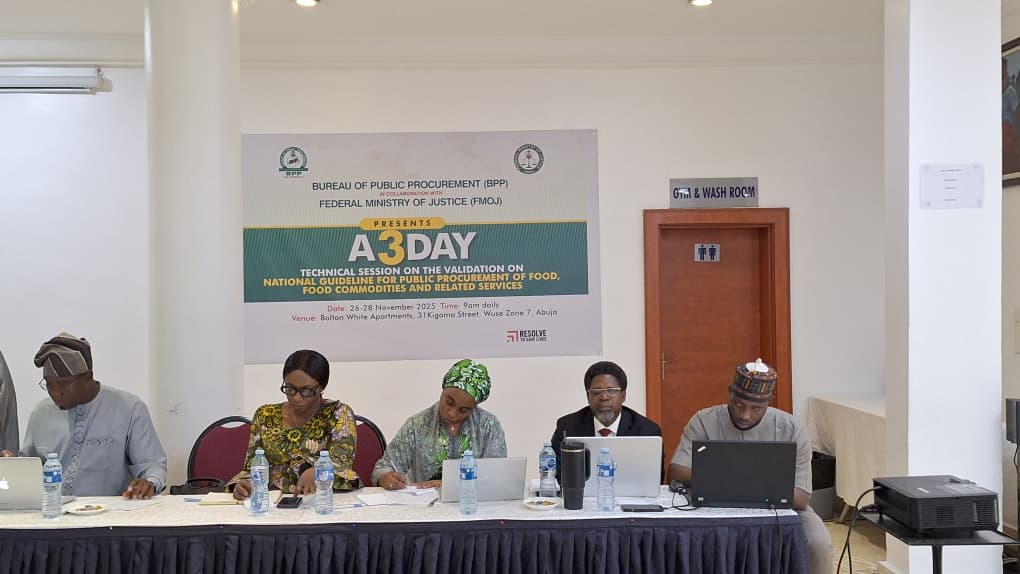
Right: Participants in “Law & Health Security: Strengthening Nigeria’s Legal Preparedness”. Credit – Resolve to Save Lives

Challenge
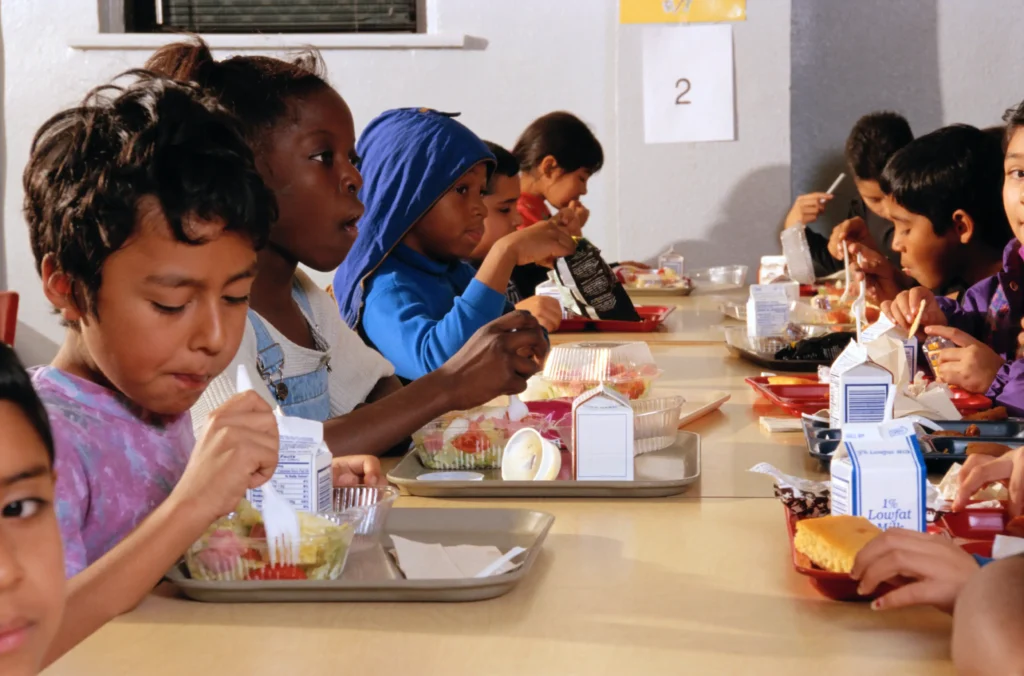
Food and beverages high in salt, fat, and sugar are often served and sold in government settings, putting millions of students, workers, and patients at risk.

Solution
We support governments to use their purchasing power to ensure foods in public institutions support healthier diets.

Impact
Healthy nutrition standards for foods served in public institutions can improve the nutritional quality of millions of meals and snacks provided each day and set an example for the rest of the country.
What is healthy public food procurement and service?
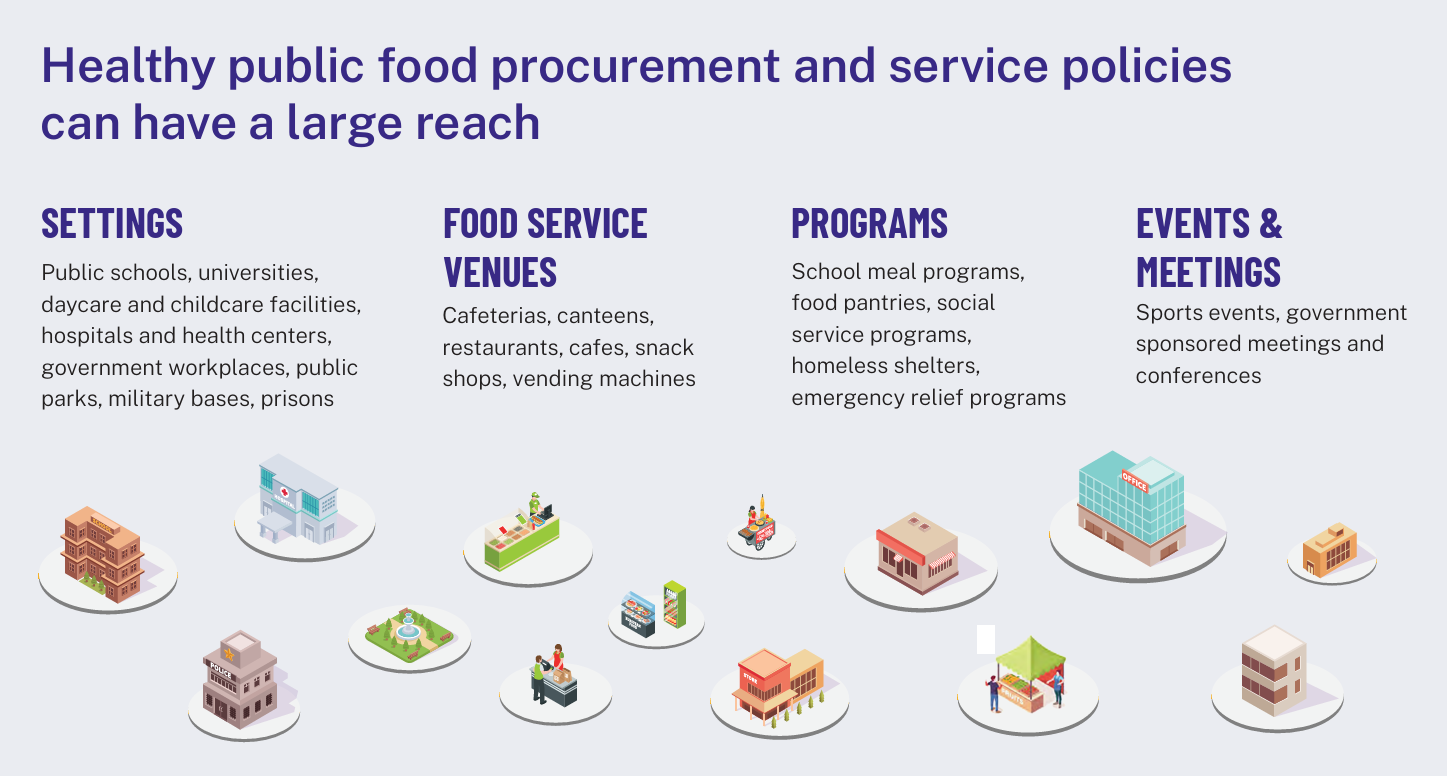
Healthy public food procurement and service policies set nutrition standards for the foods governments purchase, serve and sell in public institutions such as schools, hospitals and workplaces. These policies guide what food can be bought and offered—prioritizing healthier options and limiting salt, sugar, unhealthy fats, and ultra-processed foods—so that meals and snacks served with public funds support healthy diets.
Healthy public food procurement and service policies can also include complementary standards that address food safety, restrict unhealthy food marketing on public premises, and add sustainability criteria such as prioritizing local purchasing.
How healthy public food procurement and service works
Because public institutions serve large numbers of people every day, these standards can improve nutrition at scale.
Consistent demand for healthier foods also influences suppliers, strengthens urban-rural supply connections that bolster local agriculture, and shifts the broader food system toward healthier, more affordable options.
Highlights
Healthy public food procurement and service resource library
Evidence and tools for creating nutritional standards, browsable by type of guidance, setting, and location
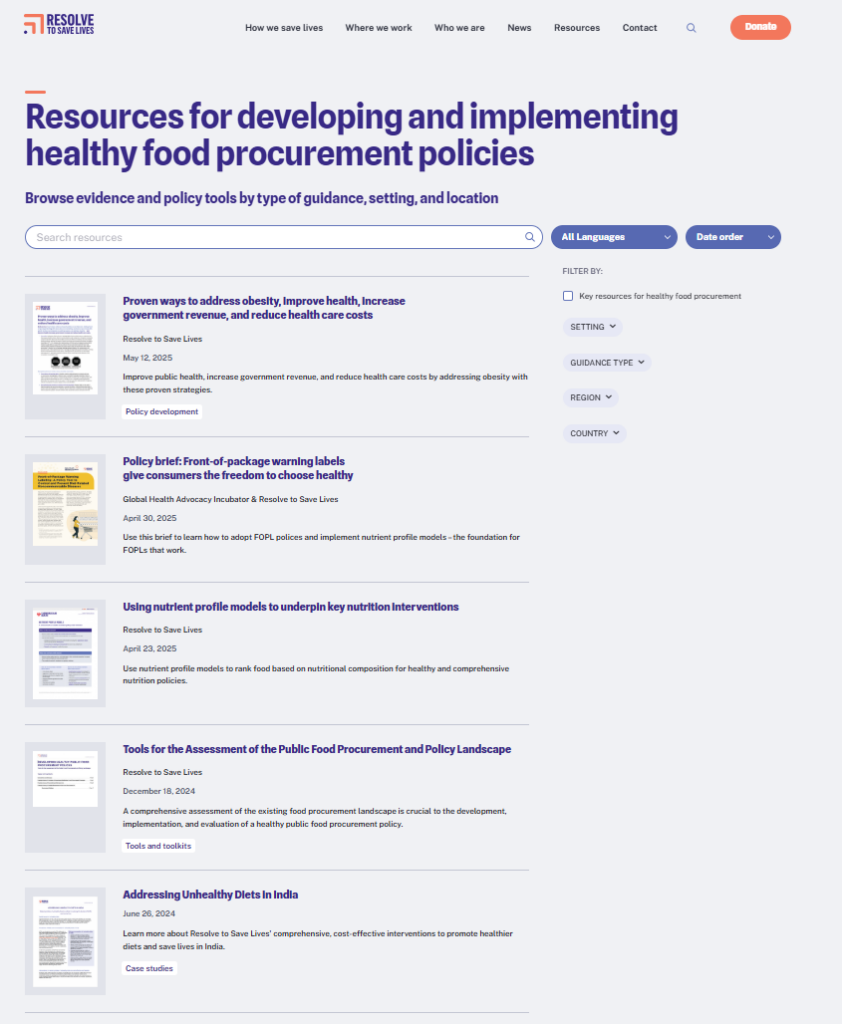
Guide to developing nutrition standards
Resource that governments can use to ensure foods and beverages purchased, served or sold in government settings are healthy and low in sodium

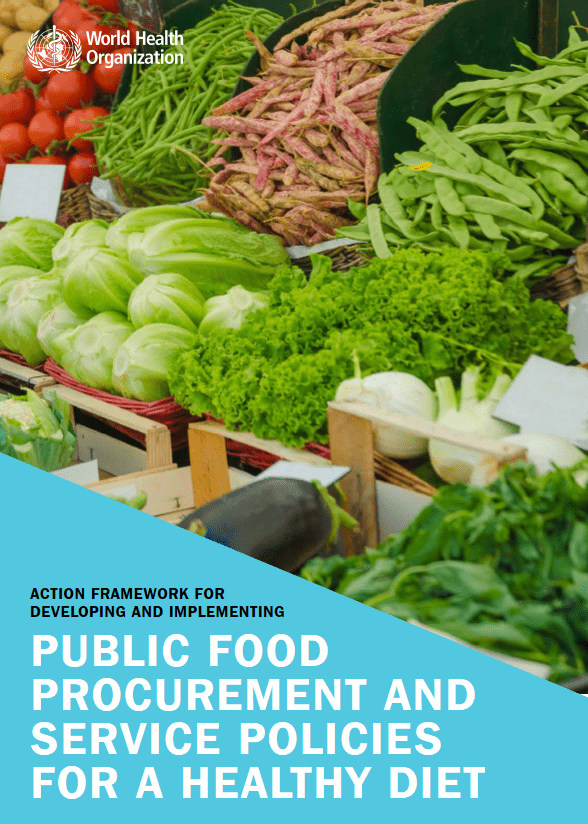
WHO’s Action framework on public food procurement and service policies
An overview of how to develop, implement, monitor, and evaluate the effectiveness of healthy public food procurement and service policies.
How RTSL supports healthy public food procurement
RTSL works closely with global and local partners—including the World Health Organization (WHO), national governments, and local stakeholders—to align policies with global best practices, build evidence, and share lessons across countries.
Support for governments
We support countries to assess their existing food environments using structured tools to map how food is purchased, served, and sold across government institutions. These assessments inform policy development and ensure solutions are tailored to local contexts. We then provide technical assistance to governments to develop and implement policies with strong nutrition standards for food in public institutions suited to their needs. In the Philippines, Nigeria and Nepal, our partners have successfully advanced healthy public food procurement and service policies.
Global tools and best practice guidance
Our Guide to Developing Nutrition Standards offers a set recommended nutrition standards that align with global best practices and dietary intake recommendations. It is the first set of specific, measurable, and enforceable global standards for public food procurement and service.
In partnership with Johns Hopkins University, we are developing an evaluation framework for healthy public food procurement and service policies, with pilots in Nepal and the Philippines.