New report offers lessons on stopping disease outbreaks, amid global spread of H5N1
Resolve to Save Lives report shows how public health specialists around the world controlled bird flu and other outbreaks last year June 18, 2024 (New York, NY) – With the highly contagious H5N1 avian influenza (bird flu) spreading worldwide, Finland provides a lesson in how to bring an outbreak under control quickly. After a deadly outbreak […]
Fiscal policies to promote healthy diets: WHO guideline

A WHO guideline offering Member States recommendations on implementing fiscal policies, such as taxes and subsidies, to promote healthy diets by influencing consumer behavior through price adjustments at the retail level.
Conference talk shows how DHIS2 app achieves real-world results
At the 2024 DHIS2 conference in Oslo, DHIS2, FHI 360 and RTSL showed how a user-centered approach to DHIS2 Android app development achieved real-world results in Nigeria and Central Asia.
DHIS2 3.0: The user-centered healthcare app gets a big update

The new updates reduce hypertension program enrollment time by 3 minutes per patient.
Five countries commit to implementing comprehensive sodium reduction policies to improve health and save at least 39,000 lives per year
New commitments made at 77th World Health Assembly event hosted by Resolve to Save Lives and NCD Alliance 28 May 2024 (GENEVA, SWITZERLAND)—Bangladesh, Cameroon, Malaysia, Nigeria, and Singapore made new commitments today to implement comprehensive policies that will protect their populations from the harms of high-sodium diets. These commitments, made during the 77th World Health […]
Salt reduction event at 77th World Health Assembly
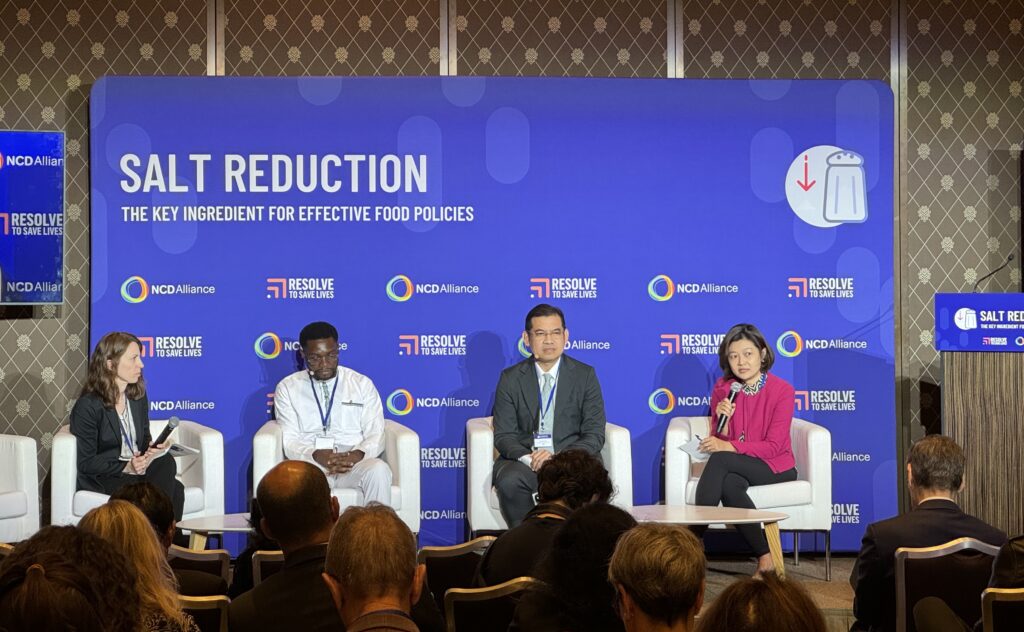
At the event we co-hosted with the NCD Alliance and WHO, Bangladesh, Malaysia, Nigeria, and Singapore made new commitments to implement comprehensive policies that will protect at least 37,000 people from the harms of eating too much salt.
New video guide for fast and simple user testing for healthcare software

A monthly cycle of testing software with end users is necessary to build good software that drives program improvements.
Webinar: Designing digital tools with healthcare workers at the center

For the launch of our new digital tools playbook, we cohosted a webinar with the Bill and Melinda Gates Foundation on designing digital health tools with the end user at the center.
The Simple app manages more than 4 million patients—and health workers love it
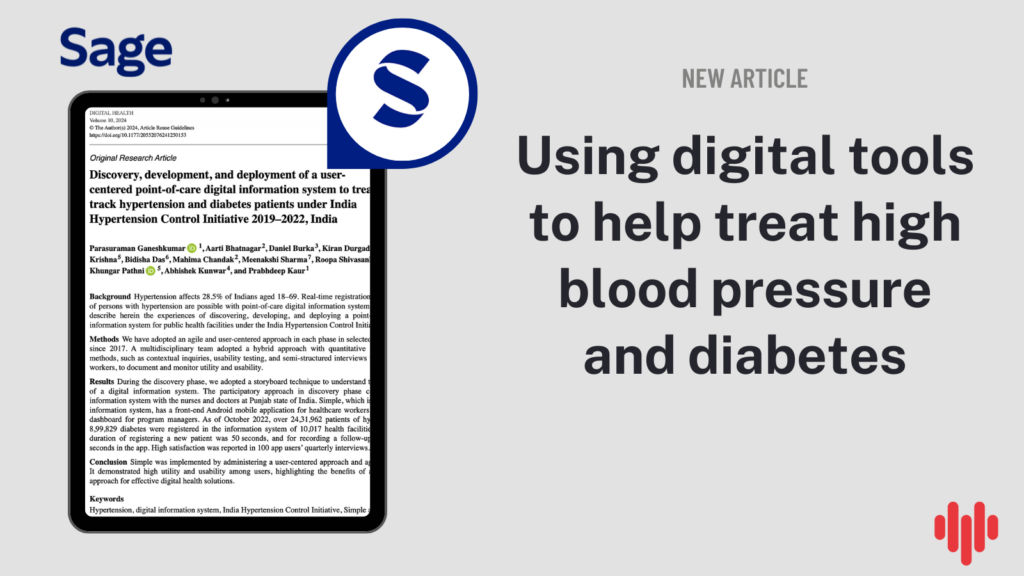
In a new article for Sage Publications, Resolve to Save Lives and the DHIS2 team talk about collaborating with healthcare workers to design an app that doctors and nurses love to use.
RTSL releases first-of-its-kind guide to effective, user-centered digital health tools
New playbook summarizes lessons from hundreds of healthcare workers and millions of patients on how to build a digital tool that saves time and lives May 8, 2024 (NEW YORK, NY)— A new playbook released by Resolve to Save Lives (RTSL) compiles lessons learned from five years of healthcare workers using the Simple app to […]
WHO’s 2nd edition Sodium Benchmarks report

A webinar highlights lessons learned from the first report, current progress on global salt reduction, and next steps countries can take to promote heart health.
Tackling NCDs: best buys and other recommended interventions for the prevention and control of noncommunicable diseases, 2nd ed

WHO’s updated list of “best buys” and recommended interventions for addressing NCDs, aligned with the extended Global Action Plan (2013–2030) to help countries achieve the nine voluntary NCD targets and advance SDG 3 on good health and well-being.
NIH webinar highlights five years of promoting heart health at RTSL
For the U.S. National Institute of Health’s HERO series, RTSL’s global health equity research takes center stage.
New IHR Benchmarks Tool simplifies planning for health emergencies

Developed in partnership with Resolve to Save Lives, this tool helps countries prepare for outbreaks and prevent epidemics.
WHO global sodium benchmarks for different food categories, 2nd ed

A document that updates the global sodium benchmarks developed in 2021 for different food categories to help reduce salt intake using country experiences (updated in 2024)
Dr. Frieden on rebuilding trust in public health

For STAT News, President and CEO of Resolve to Save Lives Dr. Tom Frieden outlines three actions that must be prioritized to restore trust.
Urban pandemic response: Survey results describing the experiences from twenty-five cities during the COVID-19 pandemic

How do local governments contribute to pandemic response? For PLOS Global Public Health, Resolve to Save Lives collaborated with colleagues at Center for Global Health Science & Security and Vital Strategies to assess government responsibilities, the timeline of response activities, challenges faced during the COVID-19 pandemic among members of the Partnership for Healthy Cities. Among […]
JHPIEGO webinar on controlling high blood pressure in primary care through HEARTS

Watch: How to integrate WHO’s HEARTS into primary healthcare strengthening grants
How much does it cost to treat high blood pressure?
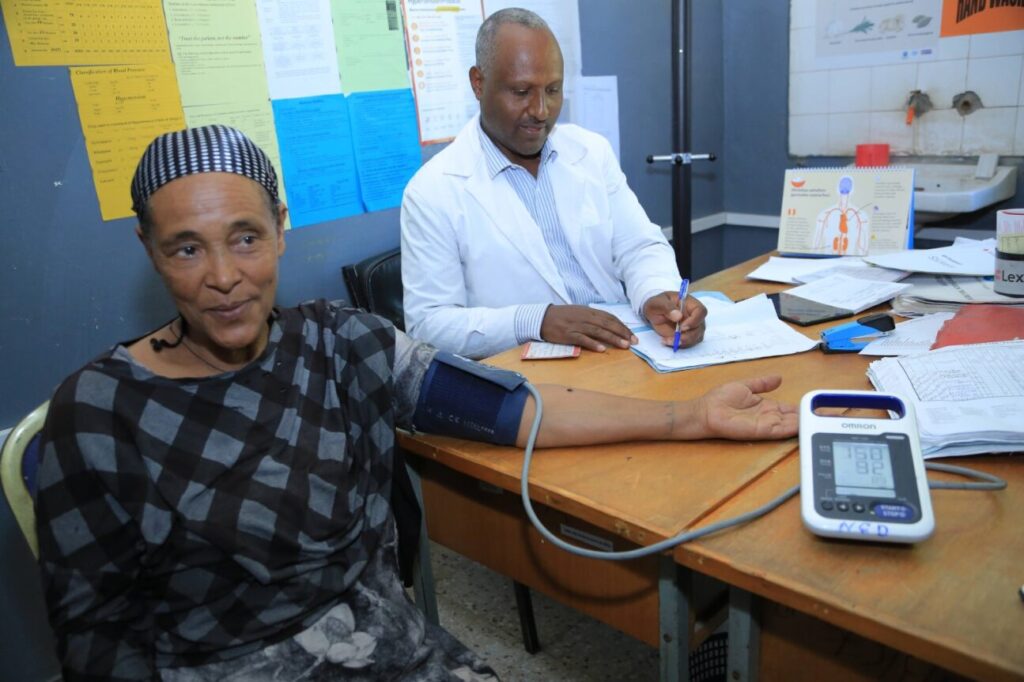
Studies in Bangladesh, Ethiopia, Mexico, Thailand and the Philippines show that implementing the WHO HEARTS package is an affordable way to improve blood pressure control and save lives.
New tool helps governments combat nutrients of concern

Watch a webinar exploring GHAI’s new Nutrient Profile Models tool for developing healthy food policies
Statement from Dr. Renu Garg: Nepal bans trans fat
STATEMENT FROM DR. RENU GARG, SENIOR VICE PRESIDENT OF CARDIOVASCULAR HEALTH AT RESOLVE TO SAVE LIVES 16 February 2024 (NEW YORK, USA)—“Congratulations to Nepal for issuing legislation that limits the amount of trans fat in food, which will save 2,200 lives each year. The new legislation, adopted with support from the World Health Organization’s South-East […]
Controlling hypertension can be the next global health win
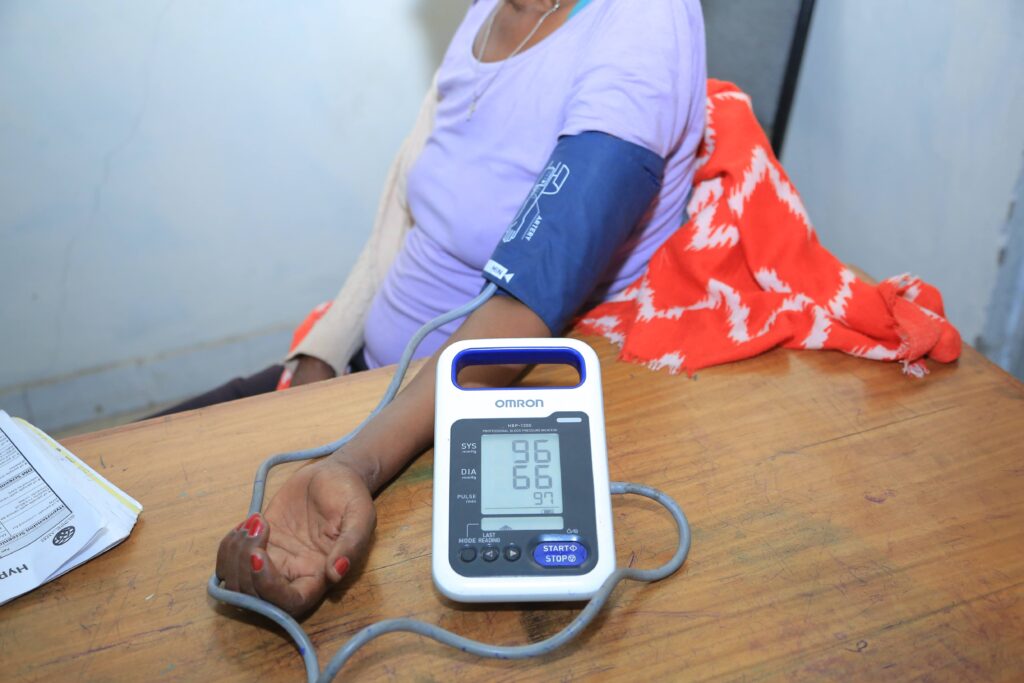
In the Washington Post, Dr. Tom Frieden calls attention to the need for increased focus and funding to prevent and treat the deadly condition.
New playbook: Designing an optimal digital tool for hypertension and other long-term treatment programs
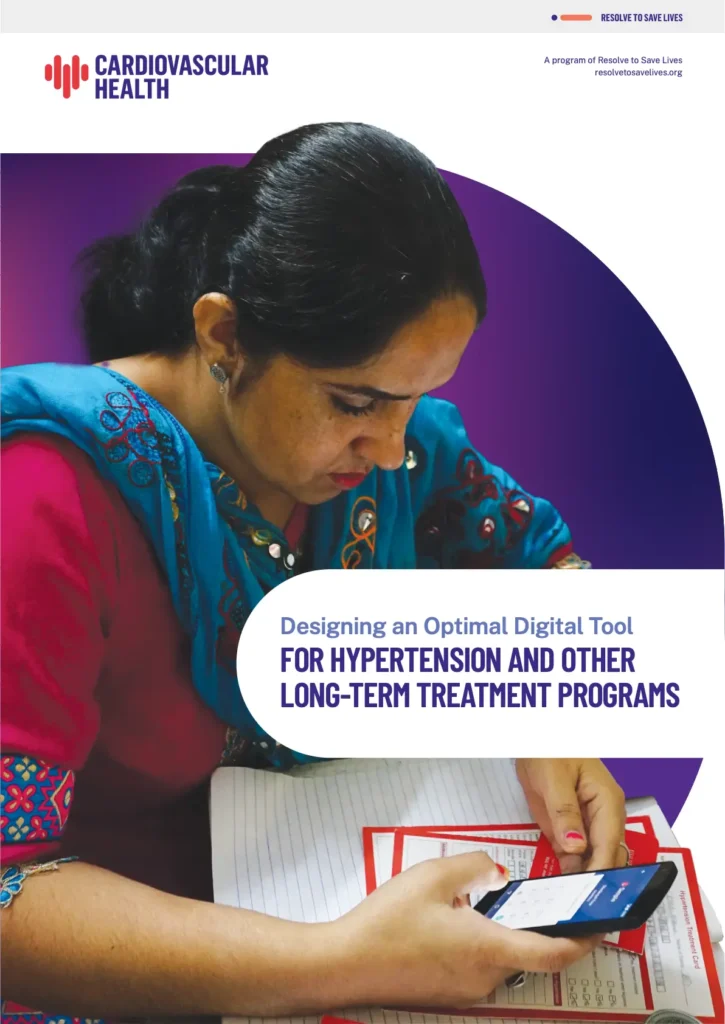
Step-by-step guidance to create or adapt an effective digital health tool—one that healthcare workers actually like.
Celebrating the progress and partnerships that defined 2023

RTSL’s 2023: Year in Review is our first-ever digital annual report, looking back at a remarkable year of saving lives and making the world safer from epidemics.
WHO celebrates progress against toxic trans fat with validation program

Congratulations to Denmark, Lithuania, Poland, Saudi Arabia and Thailand for their groundbreaking work helping to rid the world of this invisible killer.
Salt substitutes can help treat high blood pressure
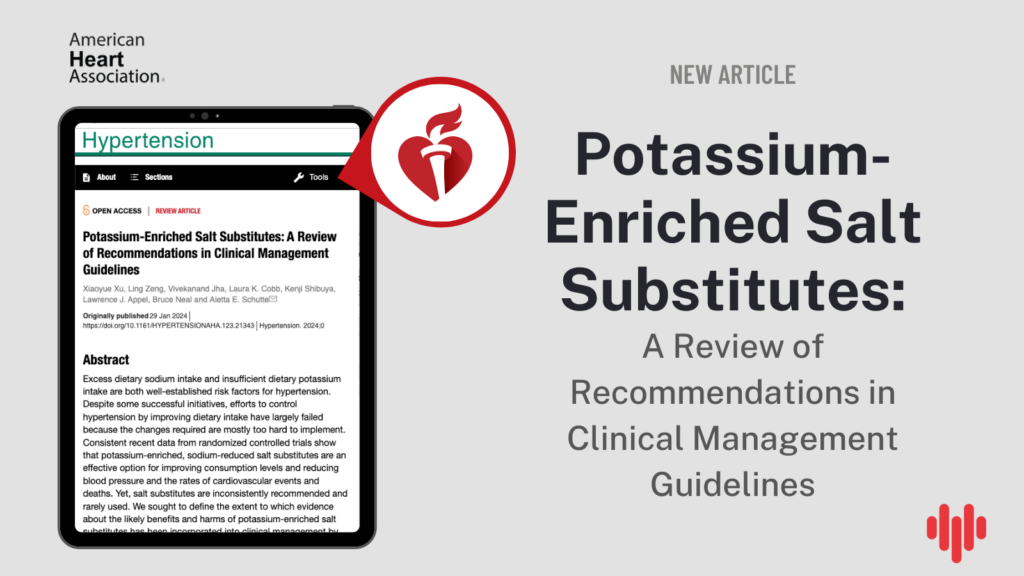
We joined international experts in the call to include salt substitutes in the treatment for high blood pressure.
Addressing the global shortage of healthcare workers

For CNN, Amanda McClelland proposes recommendations to address the growing global shortage of healthcare workers.
Trans fat stats for selected countries

Excel file with stats for selected countries including annual deaths from TFA consumption and potential lives saved between now and 2047.
WHO’s Science in 5: Everything you need to know about trans fat

Short video with WHO’s Dr Francesco Branca explaining which foods contain trans fat and how trans fats hurt us
Customizable fact sheet: Developing and Implementing a Trans Fat Elimination Policy
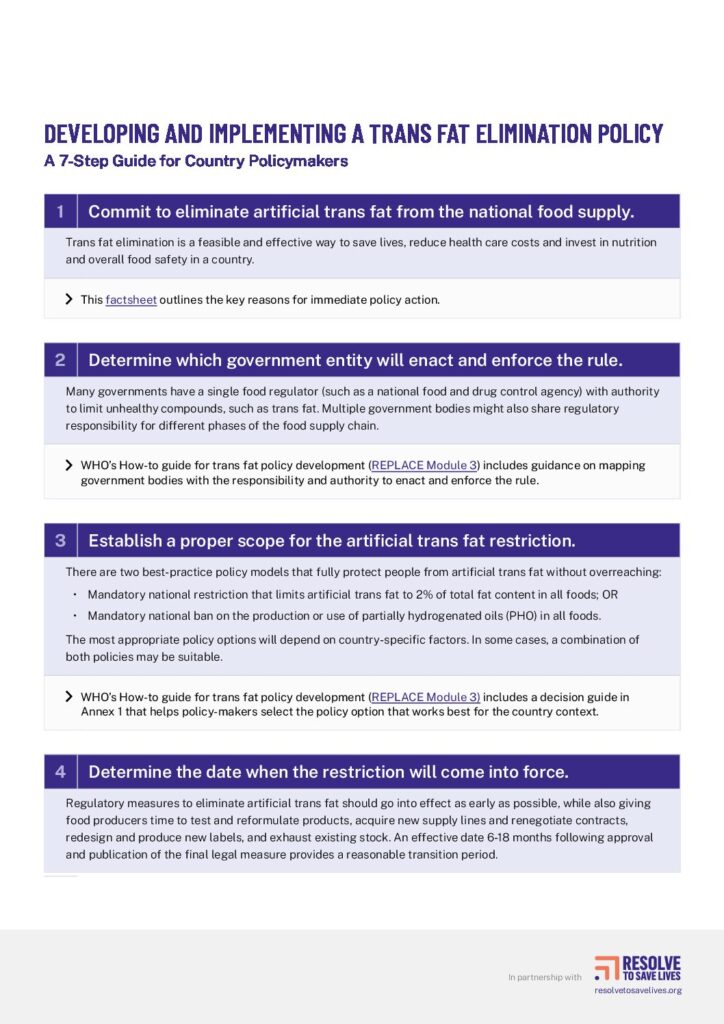
Fact sheet explaining 7 steps to developing and implementing a trans fat elimination policy. Design files available here (download).