Blood pressure measures done right
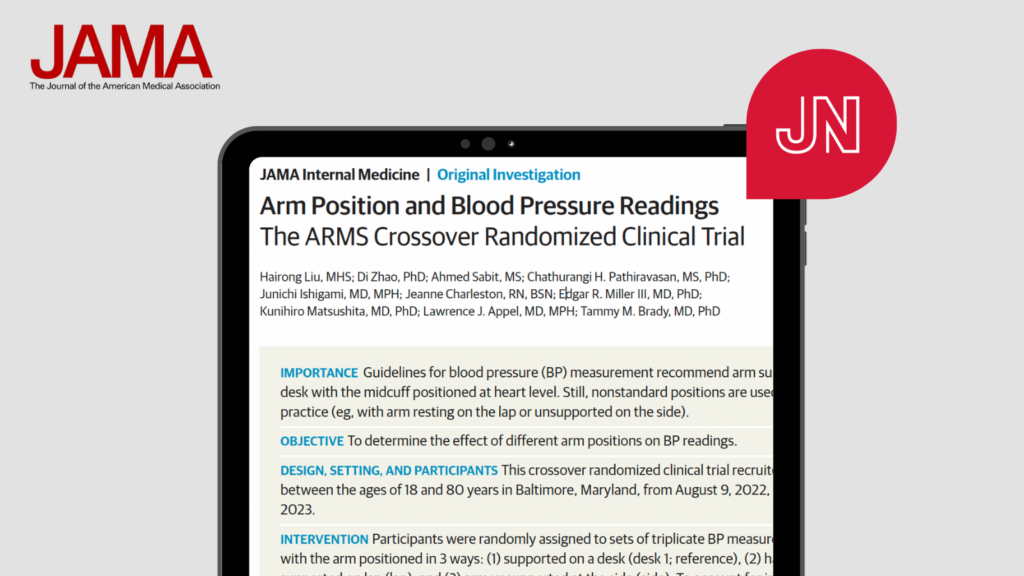
Faulty BP readings can put lives at risk. New evidence supports this method for accuracy.
7-1-7: rapid improvement for early disease detection and response
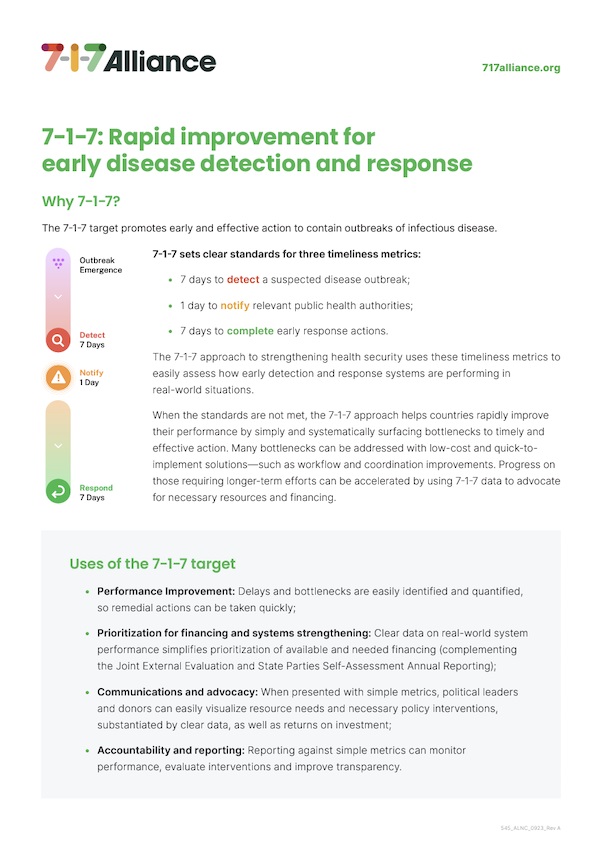
Introductory brief on the 7-1-7 target, its uses, and how it complements existing tools and assessments.
7-1-7 for Accountability, Monitoring and Evaluation
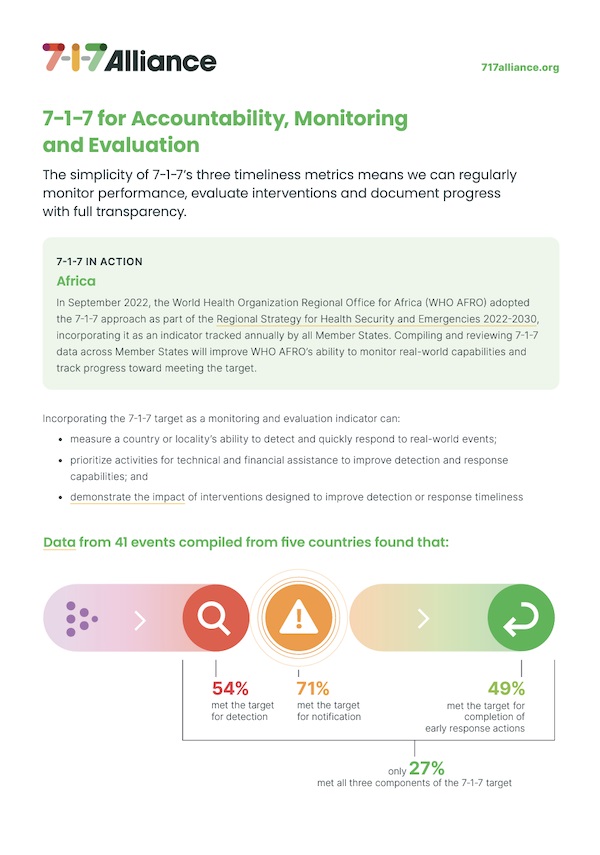
The simplicity of 7-1-7’s timeliness metrics helps monitor performance, evaluate interventions and document progress with full transparency.
Advocacy as easy as 7-1-7
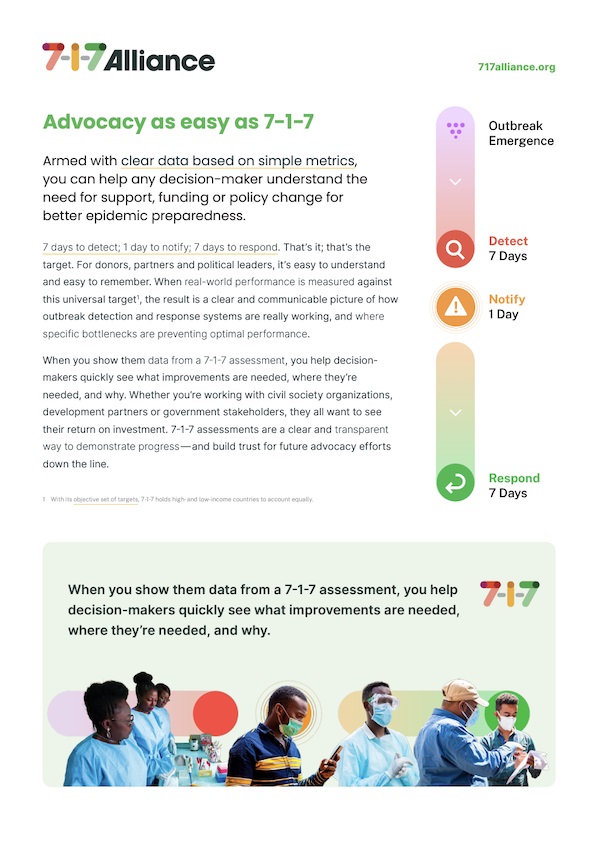
Clear data based on simple metrics can help any decision-maker understand the need for support, funding or policy change for better epidemic preparedness.
Continuous improvement with 7-1-7
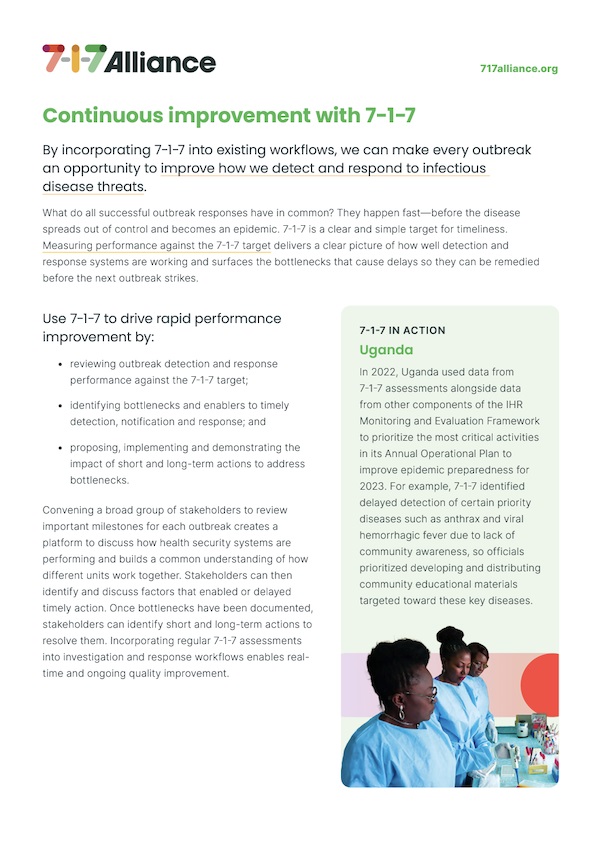
By incorporating 7-1-7 into existing workflows, we can make every outbreak an opportunity to improve how we detect and respond to infectious disease threats.
Digital toolkit
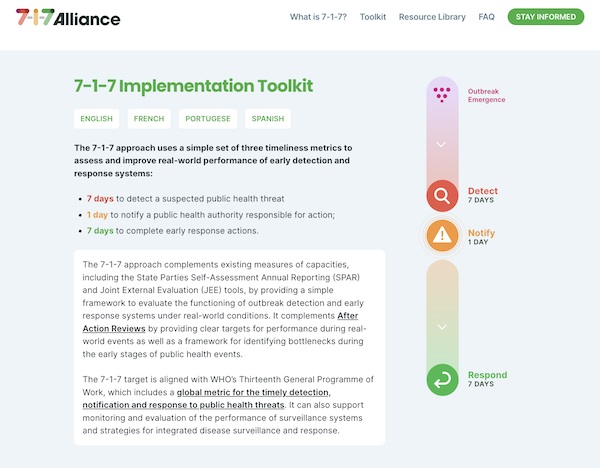
Step-by-step guidance and tools to start putting 7-1-7 to work, in one place.
“Reduced-sodium salts…are a great alternative to regular salt”
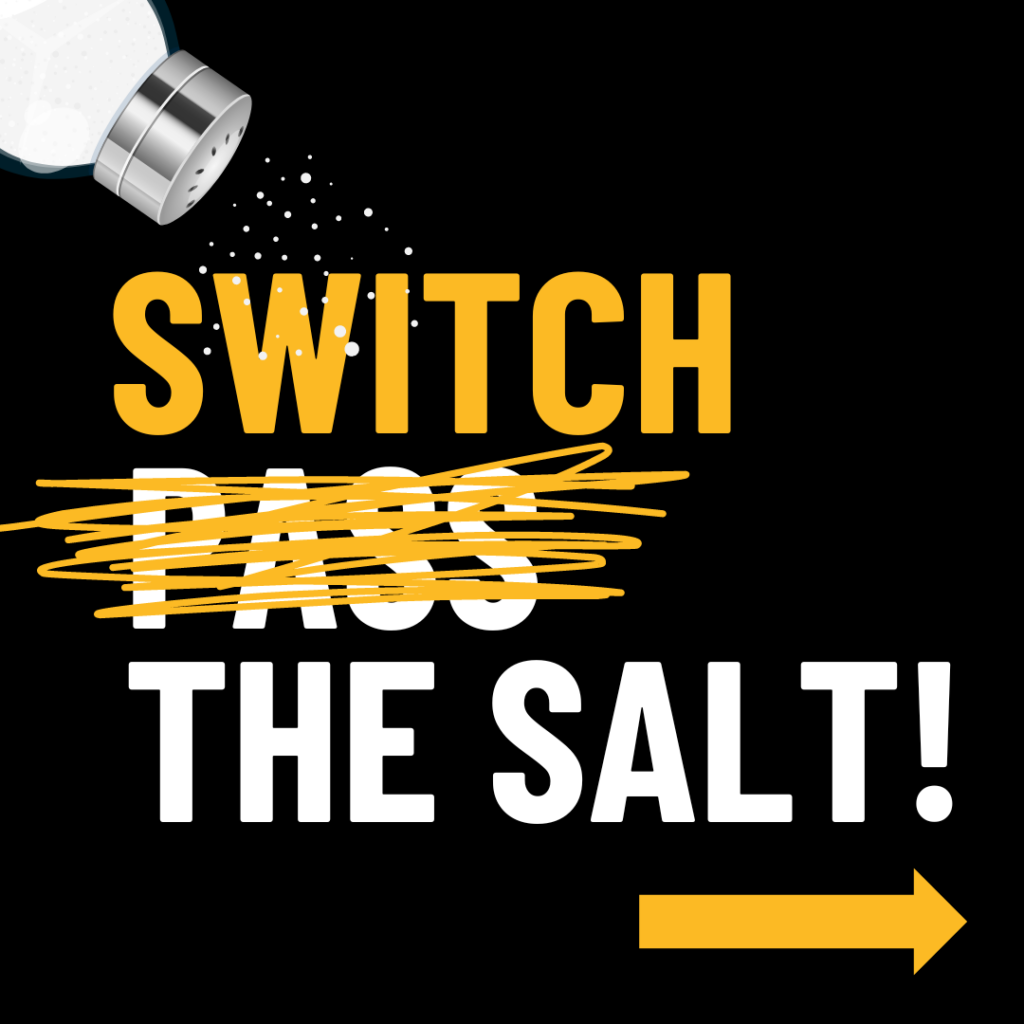
In a new op-ed for Health Affairs Forefront, Professor Bruce Neal, Executive Director for The George Institute for Global Health and our own Dr. Tom Frieden, President and CEO of Resolve to Save Lives, call for switching the salt we use to a healthier alternative—potassium-enriched, low-sodium salts—to improve heart health. Low-sodium salts look and taste just […]
“Surveillance is a public health superpower”

In an essay for the Financial Times, Dr. Tom Frieden explains how disease surveillance helps us foretell health disasters and see trends in diseases and health programs to save lives.
Factsheet for DHIS2 for Hypertension & Diabetes Programs

DHIS2 Tracker is a free, open-source health management data platform developed by DHIS2 and Resolve to Save Lives that program managers can use to monitor large-scale non-communicable disease (NCD) programs. The new version 2.0 integrates hypertension and diabetes care and is optimized for use in busy primary care facilities that manage thousands of patients. DHIS2 […]
Considérations Liées au Développement d’un Institut National de Santé Publique (INSP)
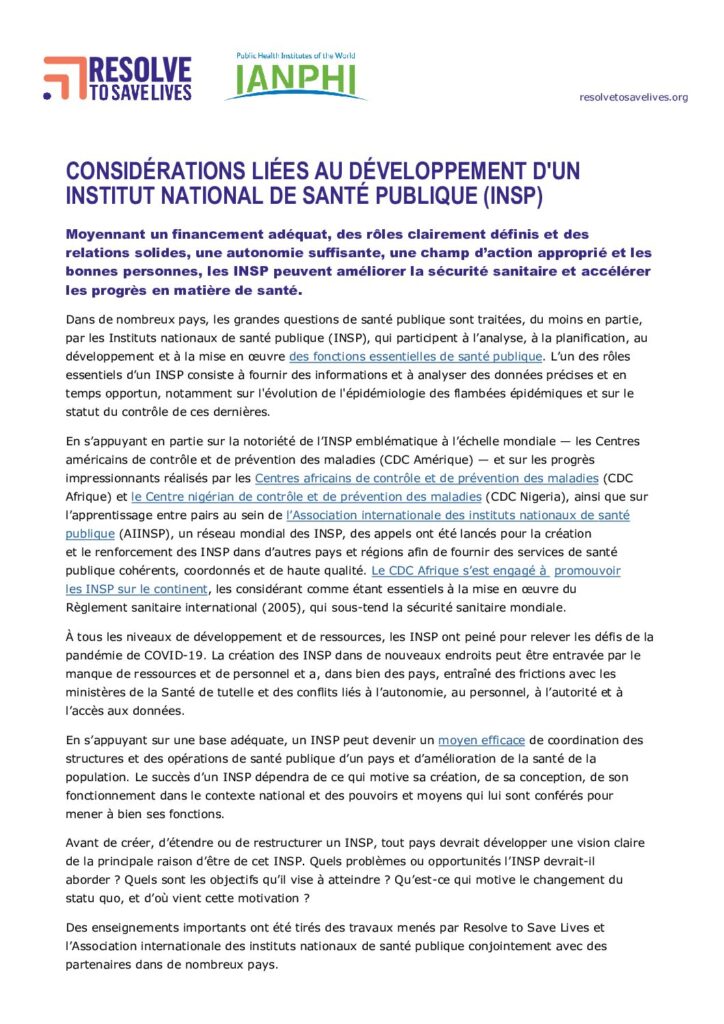
Ensiegnements et recommandations tirés des travaux menés par Resolve to Save Lives et l’Association internationale des instituts nationaux de santé publique conjointement avec des partenaires dans de nombreux pays.
Conseils pour la mise en place d’une communauté virtuelle de pratique

Guide pour la mise en place d’une communauté virtuelle de pratique.
Dedicated Preparedness Teams
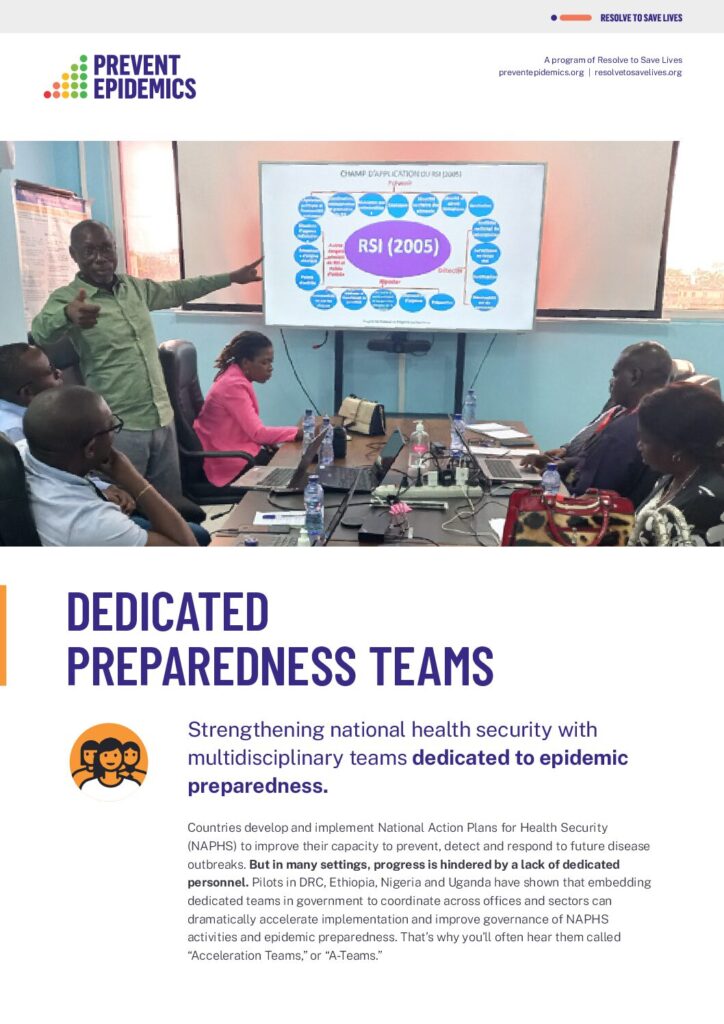
Strengthening national health security with multidisciplinary teams dedicated to epidemic preparedness.
Évaluation Externe Conjointe
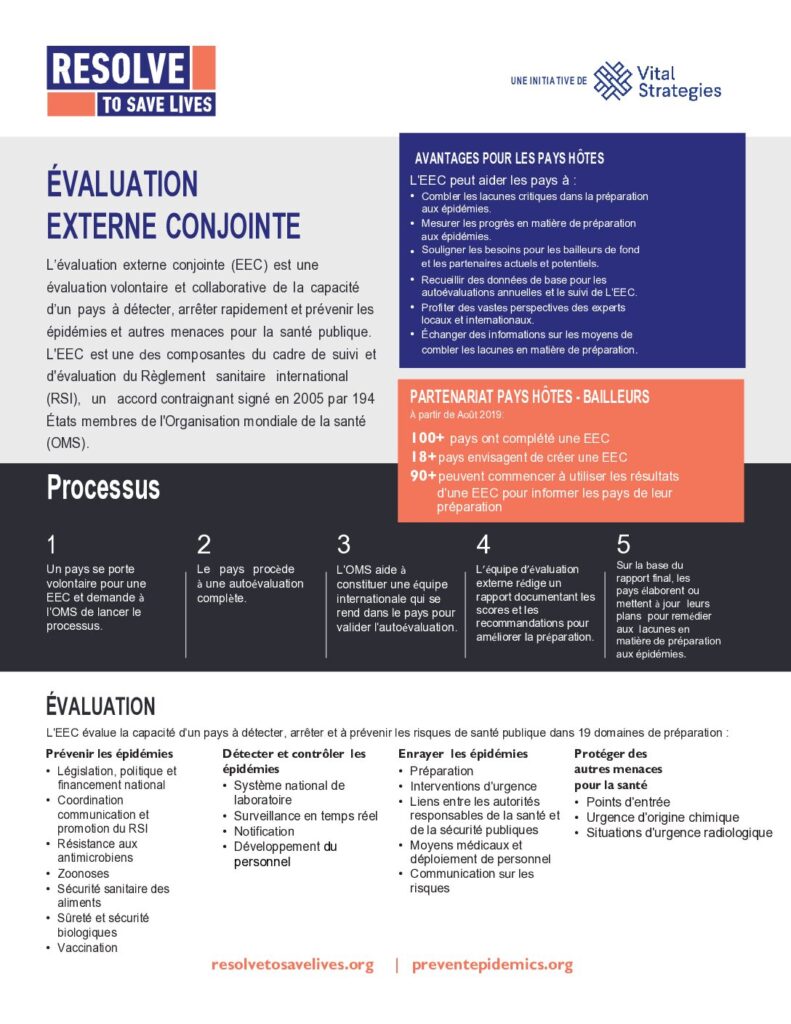
Fiche d’information sur l’évalution externe conjointe (EEC).
Comment gérer efficacement les groupes en ligne
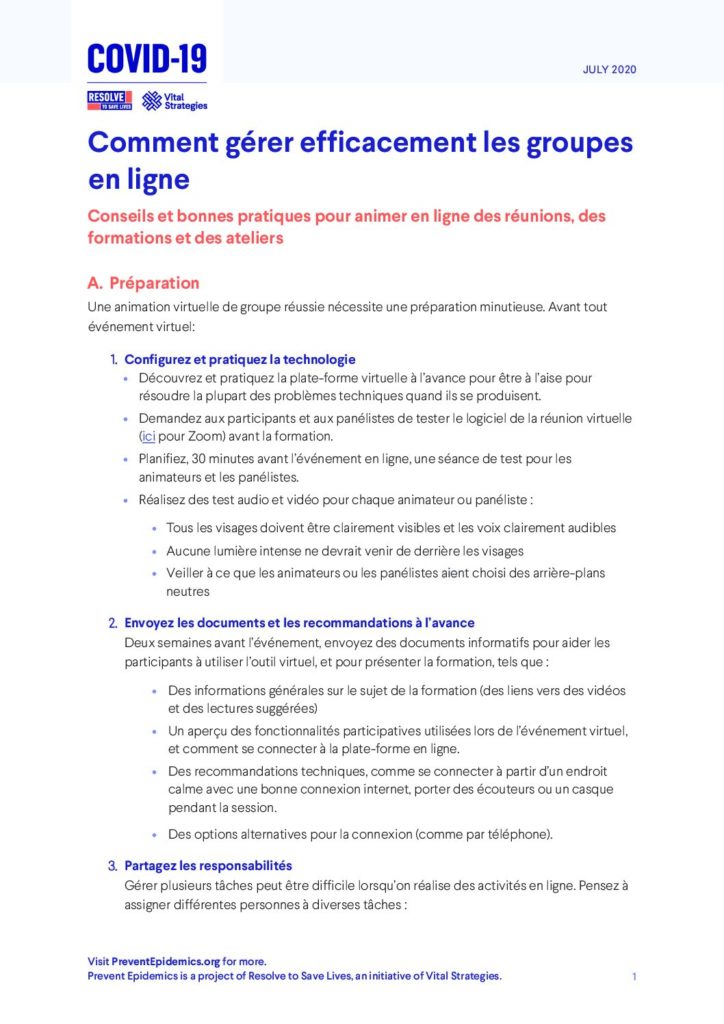
Conseils et bonnes pratiques pour animer enligne des réunions, des formations et des ateliers.
Comment animer une formation de formateur
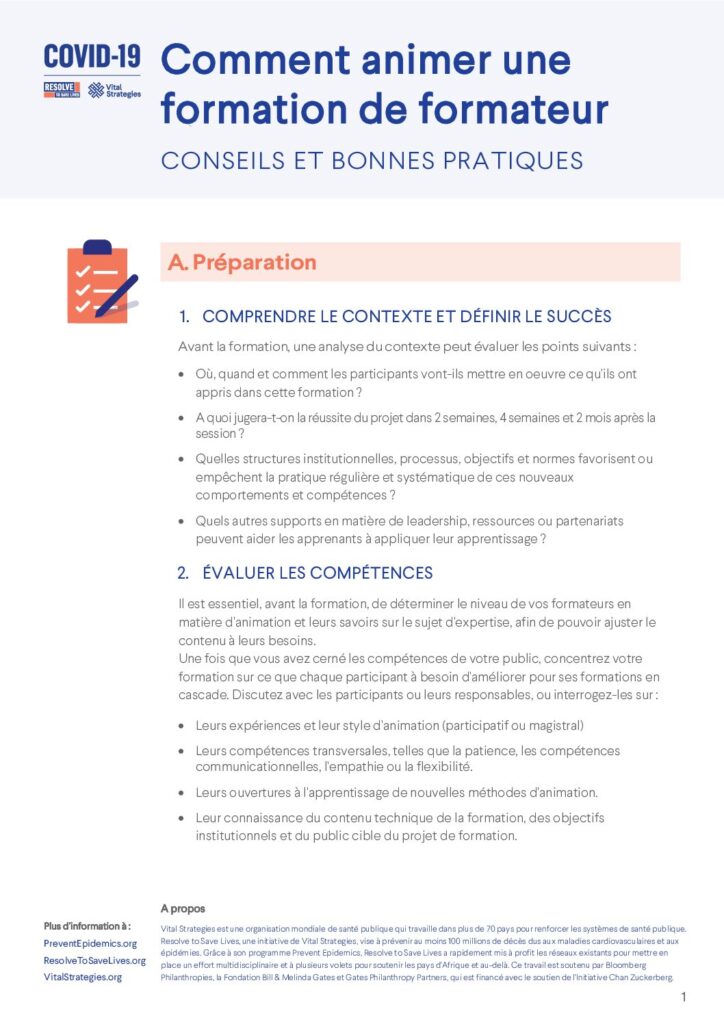
Conseils et bonnes pratiques pour animer une formation de formateur.
12 Characteristics of an Effective Public Health Emergency Law
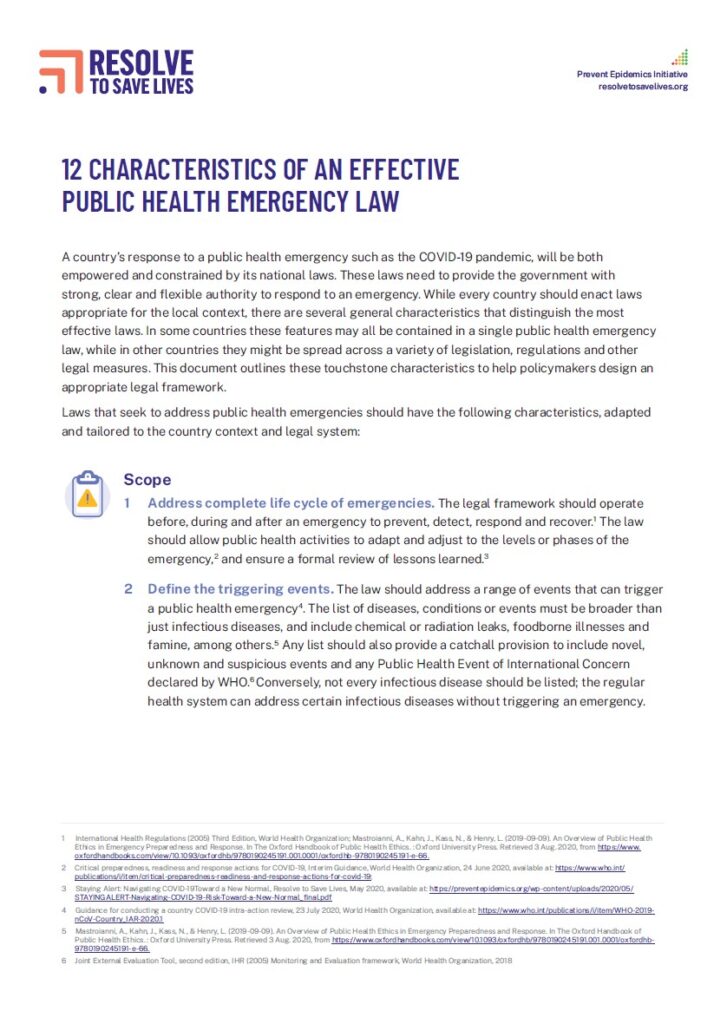
An outline of 12 characteristics that make a public health law effective, to help policymakers design appropriate legal framework.
Annex 1: How to create a COVID-19 alert-level system and supporting communication tools in resource-constrained settings
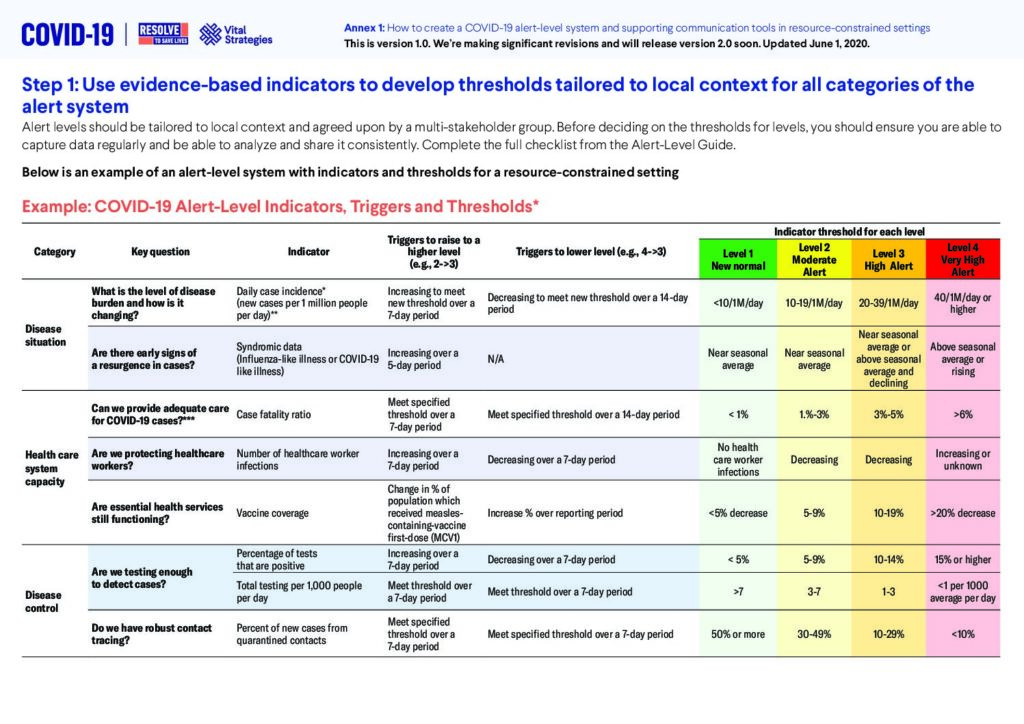
Step-by-step guidance on creating an alert-level system.
Strengthening Epidemic Preparedness at the Country Level
In partnership with public health institutions in eight African countries, Resolve to Save Lives released an issue brief outlining five proven approaches for national governments to significantly improve epidemic detection and containment in their communities. The model is based on joint efforts among African nations to mitigate the spread of COVID-19 and other infectious diseases […]
7-1-7 Pilot Project
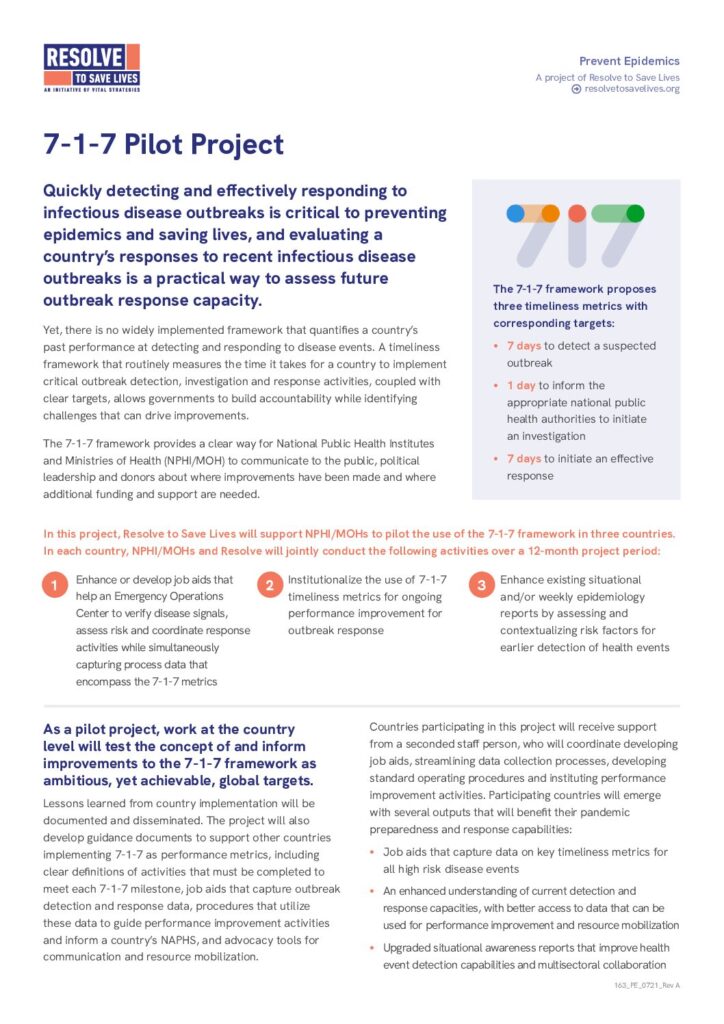
The 7-1-7 framework helps countries strengthen their outbreak detection and response by setting clear targets: 7 days to detect a suspected outbreak, 1 day to inform public health authorities, and 7 days to initiate a response. This pilot project tested the framework in three countries to improve pandemic preparedness and guide performance improvements.
Building resilient populations in the face of COVID-19
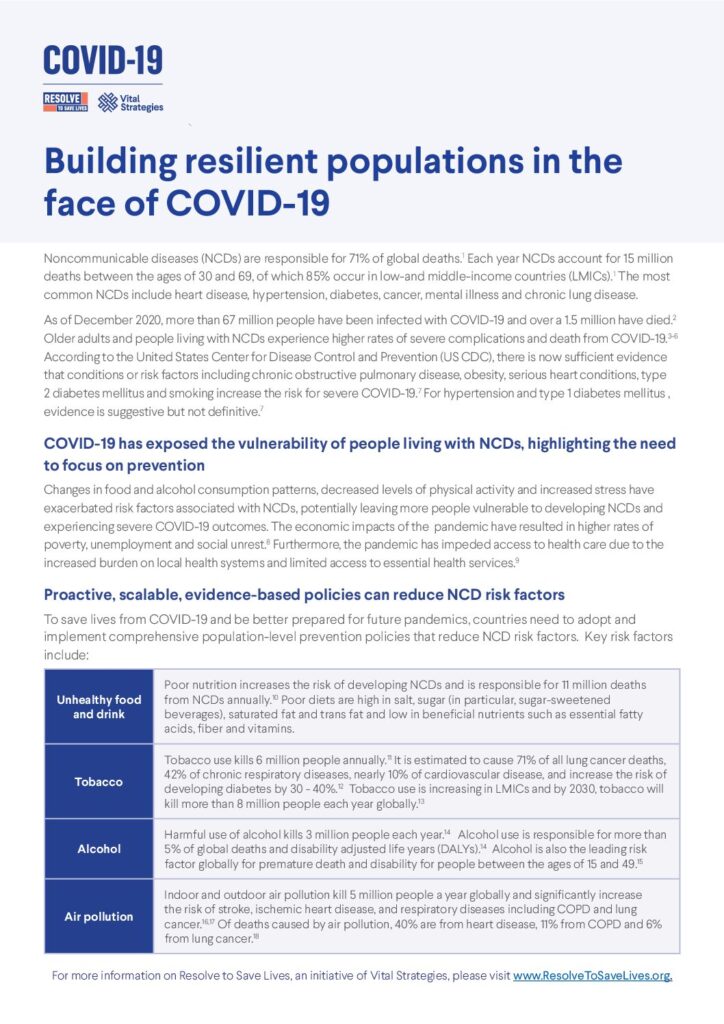
This document highlights the need to reduce noncommunicable disease (NCD) risk factors—such as poor nutrition, tobacco, alcohol use, and air pollution—in order to protect populations from severe COVID-19 outcomes and future pandemics. It recommends evidence-based policies, like trans fat elimination and tobacco control, to build resilience and promote healthier, longer lives.
Designing tools that work for healthcare workers
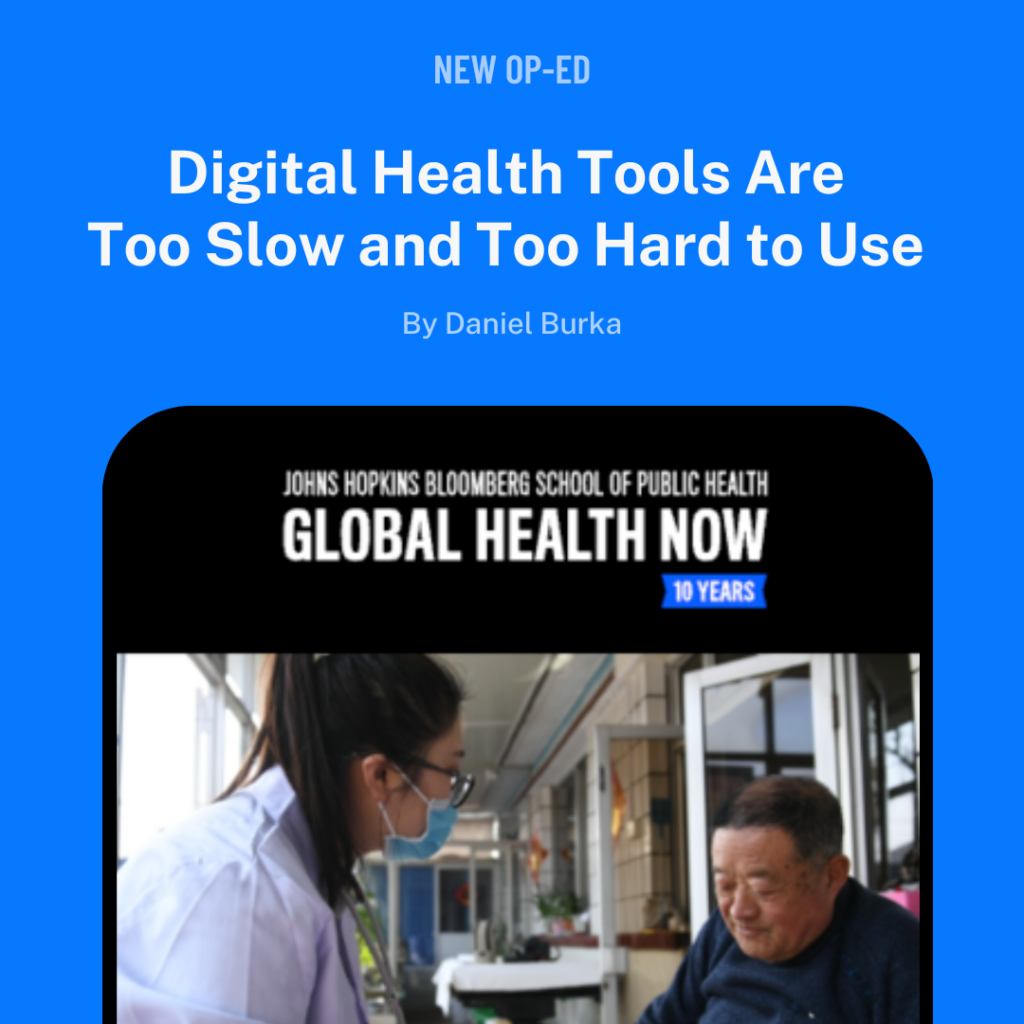
Daniel Burka, Director of Design for the digital team at Resolve to Save Lives, shares how any design team can create healthcare software that is easy to use, improves programs, and that health workers actually like.
Research Roundup: March to July 2024

At Resolve to Save Lives, we use our deep technical expertise to support countries in saving lives from the world’s leading killers. Check out these six peer-reviewed articles that RTSL staff contributed to last quarter!
REPLACE Initiative’s role in ending trans fat

Since the formation of the global partnership and launch of REPLACE, 43 countries have taken action against the harms of trans fat.
WHO’s HEARTS package significantly improves high blood pressure control
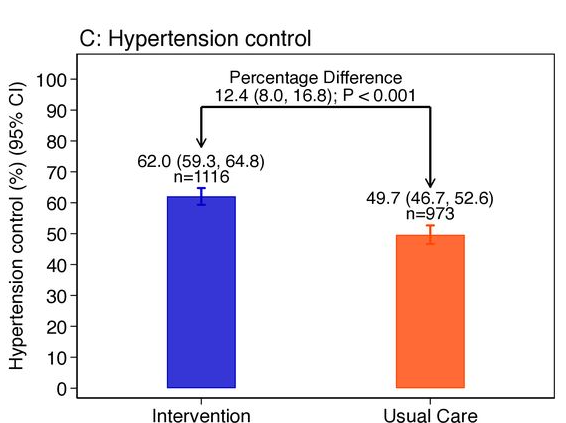
A new trial published in BMJ’s Heart Journal shows that the WHO-HEARTS technical package, developed and championed with support from Resolve to Save Lives, significantly improves high blood pressure treatment and control.
Drs. Tom Frieden and Tedros Adhanom Ghebreyesus on global progress eliminating trans fat

In BMJ and Al Jazeera: The world has made encouraging progress to eliminate trans fat, but more than 4 billion people remain at risk.
WHO’s 5-year milestone report on global trans fat elimination

By 2023, best-practice policies were in effect in 53 countries, covering 3.7 billion people or 46% of the world’s population, as compared to 6% just 5 years prior.
Milestone 5-year report on progress to eliminate toxic trans fat released
Statement from Dr. Tom Frieden, President & CEO, Resolve to Save Lives 24 JUNE 2024 (NEW YORK, USA)—“At the start of 2024, 53 countries had introduced trans fat regulations, protecting nearly half of the world’s population from this toxic chemical and preventing as many as 183,000 deaths each year. The new 5-year REPLACE report released […]
Growing adoption of 7-1-7 on display at the 2024 Global Health Security Conference

On June 20, 2024, the 7-1-7 Alliance hosted a packed networking breakfast at the Global Health Security Conference in Sydney for partners engaged in the adoption and use of the 7-1-7 target for the timely detection, notification and response of infectious disease outbreaks.
New report offers lessons on stopping disease outbreaks, amid global spread of H5N1
Resolve to Save Lives report shows how public health specialists around the world controlled bird flu and other outbreaks last year June 18, 2024 (New York, NY) – With the highly contagious H5N1 avian influenza (bird flu) spreading worldwide, Finland provides a lesson in how to bring an outbreak under control quickly. After a deadly outbreak […]
Fiscal policies to promote healthy diets: WHO guideline

A WHO guideline offering Member States recommendations on implementing fiscal policies, such as taxes and subsidies, to promote healthy diets by influencing consumer behavior through price adjustments at the retail level.