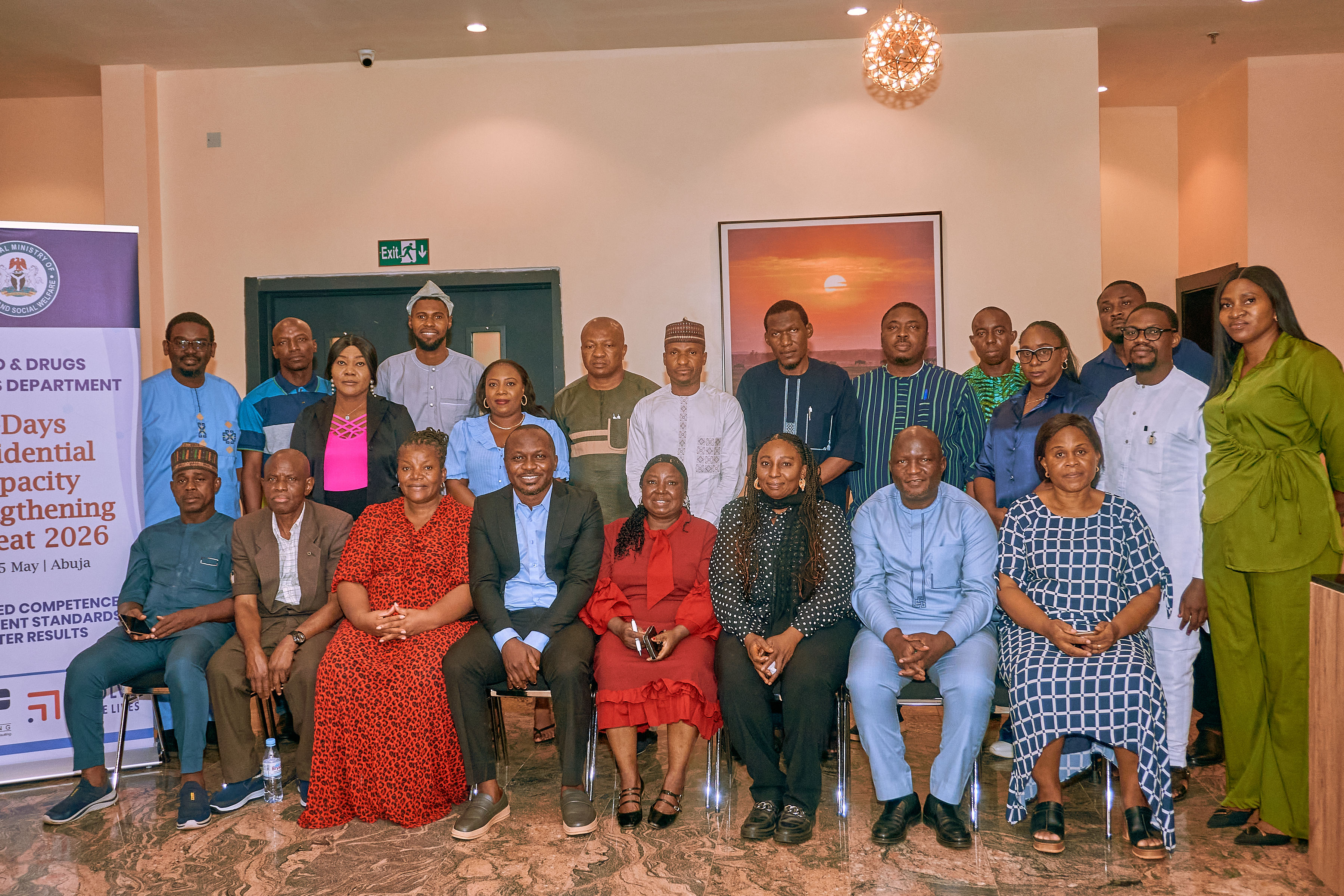
Strong institutions are essential for sustaining public health progress. Resolve to Save Lives (RTSL) supported a one-week capacity-strengthening program for 25 Food and Drugs Services (FDS) officers, part of Nigeria’s Federal Ministry of Health and Social Welfare, in Abuja.
The training aimed to improve coordination with regulatory agencies, strengthen program continuity, and support more effective implementation of key national policy reforms, including sodium reduction, front-of-pack labeling, and other policies related to healthier food and lead poisoning prevention.
In Nigeria, the Food and Drugs Services (FDS) Department of the Federal Ministry of Health and Social Welfare provides the policy direction and regulatory oversight that safeguard the safety, quality, and efficacy of food, medicines, cosmetics, and related consumer products. The Department also coordinates key agencies such as the National Agency for Food and Drug Administration and Control, the Pharmacy Council of Nigeria, and the Institute of Public Analysts in Nigeria, making its institutional strength critical to the success of national health initiatives.
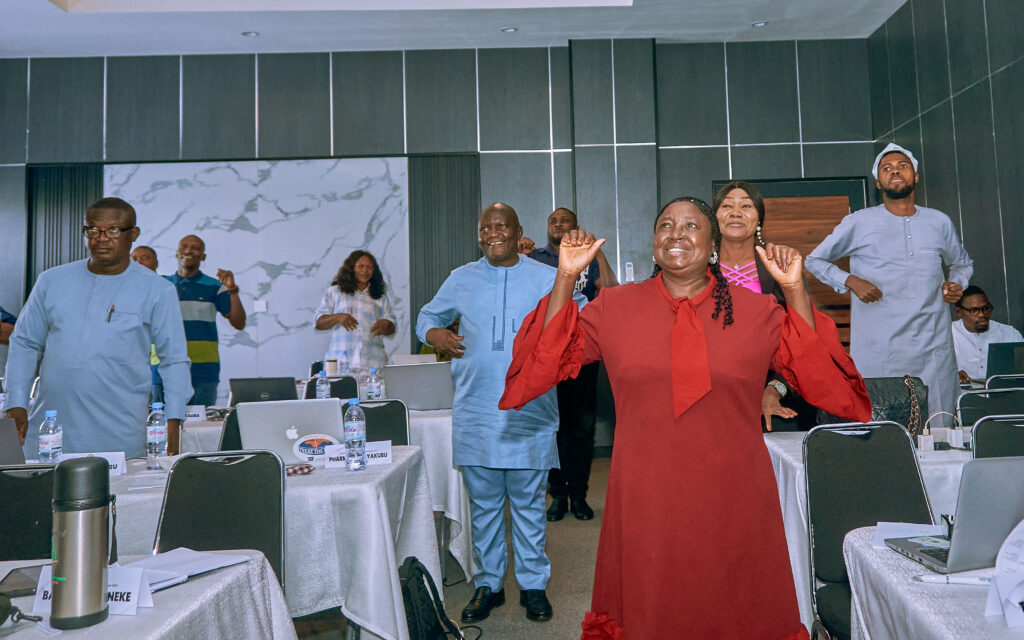
The workshop—designed in response to recent leadership transitions and an internal assessment that identified technical and operational gaps—combined interactive technical sessions, practical exercises, case studies, and leadership discussions focused on strengthening institutional effectiveness and improving program implementation across the Department. Participants reported that the training enhanced their knowledge, critical thinking, and ability to engage more effectively in technical discussions and decision-making processes.
Speaking on the impact of the workshop, Director of the Food and Drugs Services Department, Adeola Olufowobi-Yusuf, noted: “I am highly impressed by the quality and impact of this capacity-strengthening workshop. What stood out for me was the deliberate effort to make the training inclusive by bringing together participants from different divisions across the Department. This created an opportunity for broader learning, collaboration, and knowledge sharing that will ultimately strengthen the Ministry’s overall capacity. I believe the benefits will extend beyond individual participants to improve collaboration, performance, and service delivery across the Department and the Ministry as a whole.”
RTSL Nigeria’s Executive Director, Nanlop Ogbureke, noted that the workshop reinforces RTSL’s commitment to strengthening public health systems and regulatory environments to prevent noncommunicable diseases in Nigeria. She said, “Strengthening institutional systems and technical leadership within government agencies is essential for sustaining long-term progress, advancing effective policies, and improving overall health outcomes.”