At a glance

Closing the gap between data and action
Countries use the 7-1-7 target to track how quickly they detect, report and respond to infectious disease outbreaks. Early action reviews, where response teams examine what worked and what didn’t, are central to the approach. But reviews alone don’t stop outbreaks. Without money and authority behind them, they can produce detailed reports on bottlenecks that never turn into action.
The Nigeria Centre for Disease Control and Prevention found a way to close that gap by linking 7-1-7 milestones to the Basic Health Care Provision Fund, a federal mechanism that gives states catalytic funding for outbreak response. States that once cited a lack of funds as a reason for inaction can now draw on this fund for essentials such as vehicles and fuel to deploy response teams. This year, the agency also launched a national community of practice, where states share what’s working and learn from each other.
We spoke with Aperki Yahaya Kono, 7-1-7 coordinator at NCDC, about how Nigeria built this system and what other countries can learn from it.
-
What would you tell a country that is conducting early action reviews but not seeing the improvement it hoped for?
-
Yahaya: Identify a platform where the important stakeholders are present when early action reviews are conducted. Otherwise, what you end up doing is knowing your performance and identifying bottlenecks, and no action is taken. You have full documentation, a lot of data on timeliness and bottlenecks, and it is not translating into tangible improvements. Some actions do not require resources, but most require some level of investment. You have to identify the people who have both power and influence, and win them.
-
How did Nigeria make those resources available?
-
Yahaya: We found a way of integrating 7-1-7 into the guidelines for the Basic Health Care Provision Fund, a federal government mechanism that statutorily provides catalytic funds across all the states. States that had been telling us they have no funds no longer have an excuse for not taking small actions, because there is funding provided for outbreak investigation and response initiation. The challenge many of them had was that they either do not have vehicles to deploy a team, or they have the vehicles and no fuel, and that delays the response. You have the human capacity, but not the resources to deploy it.
-
You started a national community of practice this year. What does it do?
-
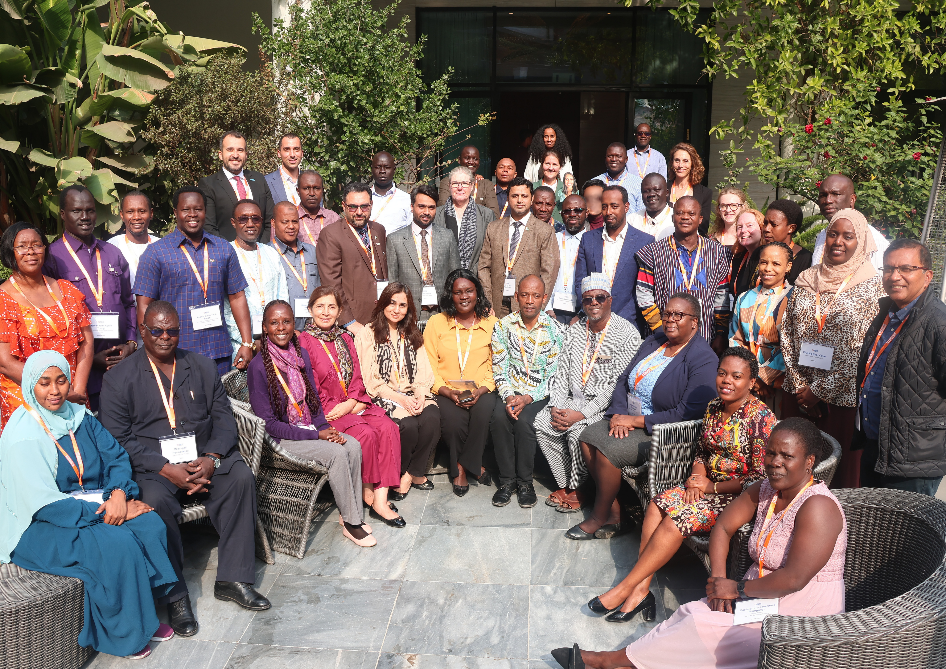
Yahaya: Seventeen of our 37 states are actively implementing 7-1-7, and they are at different stages. The community of practice brings them together quarterly, including state epidemiologists, disease surveillance and notification officers, NCDC state liaison officers and WHO state and zonal coordinators. In the first meeting, all 17 states presented what they had done since their training. In the second, we asked what domestic funding mechanisms they could use for timely detection, notification and response, and we spotlighted a state already using the Basic Health Care Provision Fund, comparing their performance before and after. When peer-to-peer interaction happens and states see what others are doing, it challenges them.