At a glance

Challenge: Plans exist, but action often stalls
Almost every country has a plan to fight epidemics. Under global health rules that 196 countries have signed, nations write National Action Plans for Health Security, roadmaps for closing gaps in disease surveillance, emergency response and health system readiness. But plans on paper don’t necessarily translate into better protection.
In South Africa, an early version of the country’s plan reached only 16% implementation after six months. In South Sudan, where health workers respond to cholera, malaria, measles and other outbreaks at the same time, dozens of donors funded separate pieces of the country’s health security work and no one could see the full picture. In Zanzibar, work on health security was split across health, agriculture, environment and finance offices that rarely coordinated, slowing down preparedness and response.
The problem was rarely a lack of technical knowledge. It was missing the hard, often underappreciated work of coordination and monitoring needed to carry a plan from paper into daily practice, and to hold everyone accountable for progress along the way.
Solution: PMEP, a leadership program for health security teams
Resolve to Save Lives designed the Program Management for Epidemic Preparedness (PMEP) program to close the gap between planning and doing. PMEP builds the leadership and management skills of national health security teams so they can lead their own countries’ preparedness work, without relying on support from outside experts.
Teams from South Africa, South Sudan and Zanzibar joined PMEP Connect, a 12-month program that pairs hands-on training with funding and regular peer exchange. Through PMEP, teams learned to use practical tools, such as a method for mapping who is funding health security work and a digital platform for tracking whether plans are being carried out, alongside skills such as building trust across ministries, engaging partners and keeping clear records.
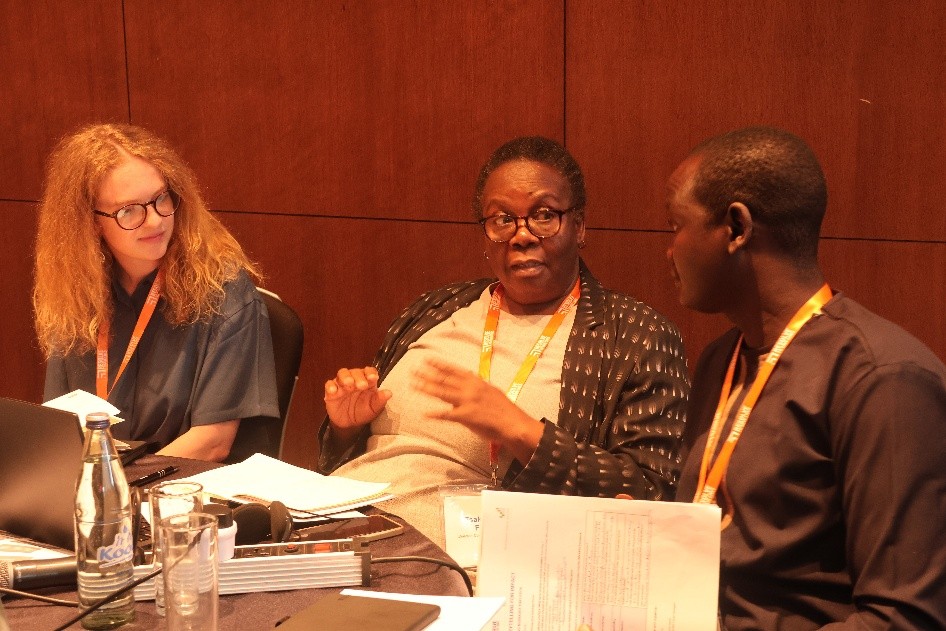
Much of PMEP’s value comes from teams learning from each other rather than starting from scratch. South Sudan’s national coordination team, for example, connected directly with colleagues from South Africa to learn how to build a monitoring system. Drawing inspiration from South Africa, the South Sudan team ultimately built a system suited to their own conditions and adopted it with confidence.
The skills strengthened in PMEP extend to the level of routine practice—down to how a meeting is run. South Africa’s National Focal Point restructured its quarterly reviews as no-blame spaces: a team behind on financing or legal reform says so out loud and works it through with the group, instead of hiding it.
For Zanzibar’s team, the change showed up in something as ordinary as taking minutes and following up on them. Before PMEP, decisions made in coordination meetings often went unrecorded, so action points were easy to lose track of between sessions. The team now documents who owns each task and when it’s due, then brings those minutes back to the next meeting to check on progress.
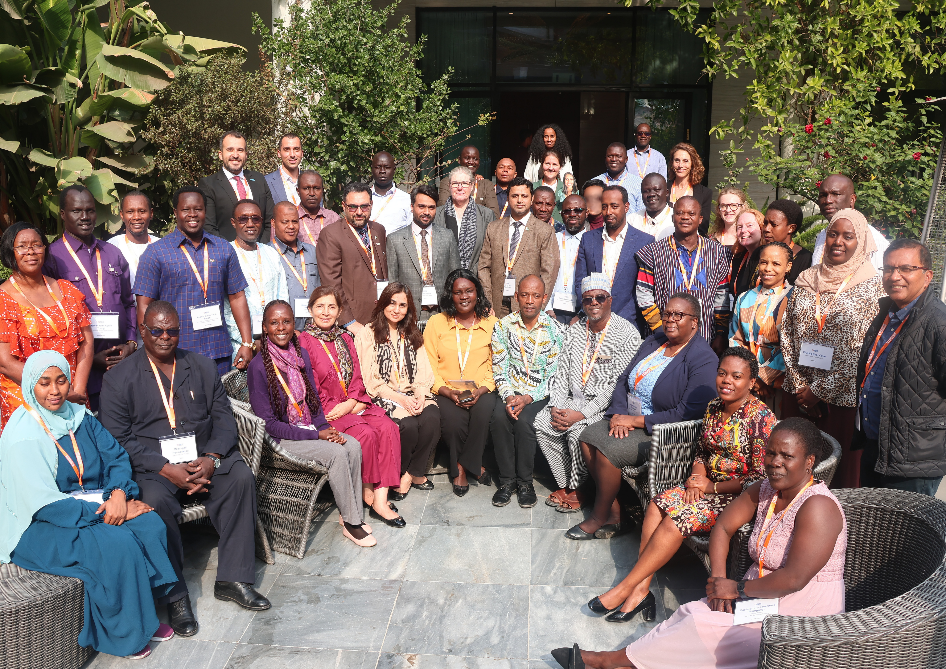
PMEP has built a network of more than 400 health security leaders across 24 countries in Africa, the Middle East and South Asia. Each team that joins takes what it learns and builds a solution suited to its own country, as South Africa, South Sudan and Zanzibar show.
Impact: Three countries, three stronger health security systems
After South Africa’s National Focal Point introduced quarterly, structured reviews of its health security plan, implementation rose from 16% to 35% in a single year, and all 19 technical areas began reporting progress consistently, up from fewer than half at the start. “These meetings have provided us with a platform to collaborate. Now [our plan] is moving in our country,” said a NAPHS coordinator from the South Africa team.
In South Sudan, the country mapped funding from 32 partners for the first time and found that barely 14% of its national plan was funded, evidence the government could use to make the case for more aligned support. “Our first [plan] had expired and had no monitoring tool. Now [our new plan] is developed, its monitoring tool and team are selected, and timeliness information is shared for timely decision-making,” said a PMEP participant from South Sudan.
In Zanzibar, stronger coordination across sectors helped the country mobilize about $2 million in new partner funding for priorities such as disease surveillance and rapid response training. “The leadership and operational skills I developed through PMEP have had a very positive impact on Zanzibar’s health security objectives,” said a PMEP participant from Zanzibar, describing how the program strengthened the country’s ability to coordinate partners and track progress.
The leadership and operational skills I developed through PMEP have had a very positive impact on Zanzibar's health security objectives.
PMEP participant from Zanzibar
Across all three countries, the deeper shift was teams learning to work differently together, holding regular reviews, sharing data honestly and following up on what they found. That shift is already spreading: South Africa’s Department of Agriculture is now engaging more consistently in health security planning, and Zanzibar’s approach has drawn interest from teams in mainland Tanzania.
“As more countries join PMEP, we’re seeing the same pattern,” said Julie Wahl at Resolve to Save Lives. “We’re not solving countries’ health security challenges for them. We’re supporting them to build the systems to solve those challenges for themselves—and for the millions of people counting on that work.”
Learn more about South Africa, South Sudan and Zanzibar’s experiences with PMEP Connect.