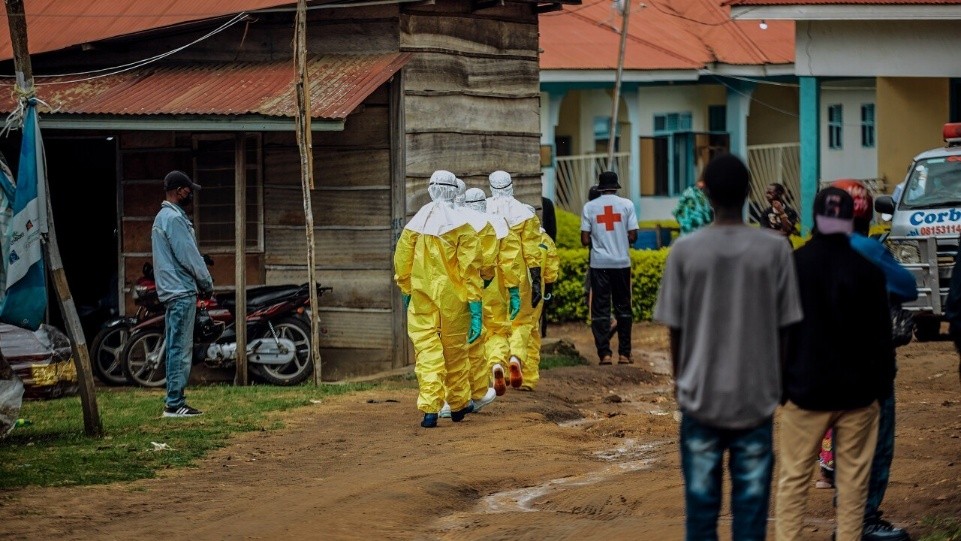
The Bundibugyo Ebola outbreak in the Democratic Republic of the Congo has become the largest ever recorded in the country, with nearly 4,000 confirmed cases and more than 1,800 deaths. With 60 to 70% of deaths occurring in communities rather than treatment centers, and contact tracing running well below target, the outbreak is spreading faster than it’s being tracked.
In her latest essay, Resolve to Save Lives Chief Program Officer Amanda McClelland makes the case for one of the most important and most demanding tools in outbreak response—safe and dignified burials. Drawing on two landmark studies, McClelland shows that a single unsafe burial causes an average of 2.58 secondary cases, but that when burials are done quickly and correctly, transmission drops enough to push an outbreak toward extinction.
A burial team is often the only people from a response effort that a grieving family ever meets. When that interaction is handled with care and respect, it can open the door to earlier case identification, better access to care and more accurate tracking of how the virus moves through communities. In this essay, McClelland argues that the frontline teams and communities doing this work under extraordinarily difficult conditions deserve recognition, resources and support.
Read the full essay here