Author:  Resolve to Save Lives
Resolve to Save Lives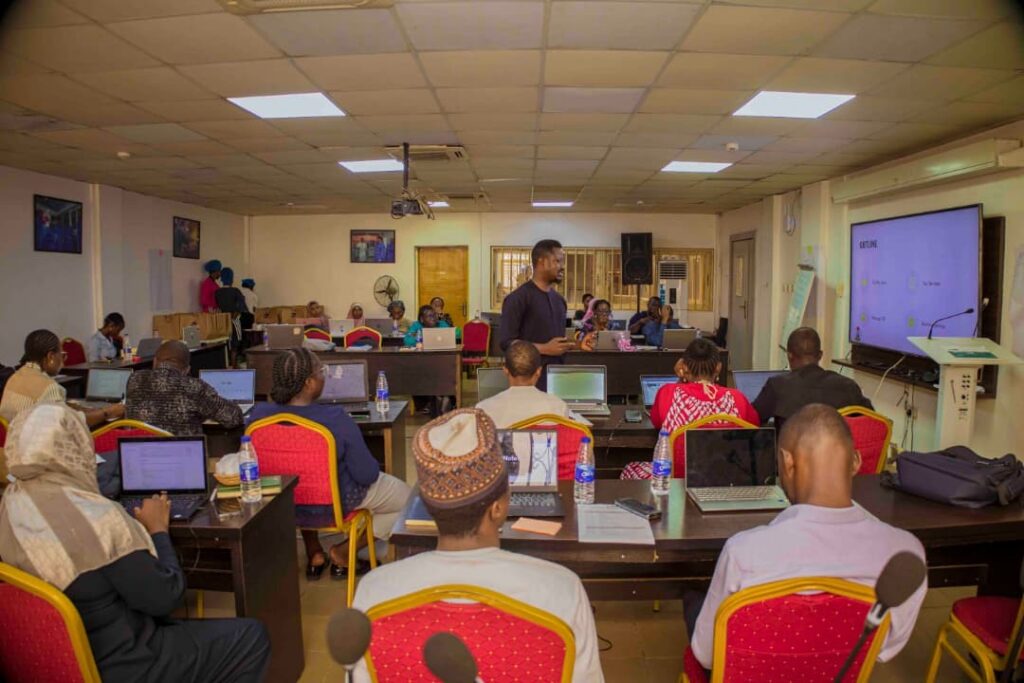
At a glance

Challenge: Manual data management left Nigeria's surveillance exposed
Nigeria has one of the most complex public health surveillance systems in Africa. The Nigeria Centre for Disease Control and Prevention (NCDC), the country’s national public health institute, operates two laboratories in Abuja and Lagos, and partners with a network of laboratories across all the states of the country. A significant share of outbreak detection depends on what happens in those labs. And for years, every one of them ran on manual collection, analysis and sharing of laboratory data.
Lab data was collected manually, compiled by hand and sent up the chain, a process that was tedious, prone to error and inadequate. When COVID-19 hit, data that decision-makers needed in hours sometimes took a week to be ready for use. Reporting was often retrospective, sometimes days or weeks behind events on the ground. At the moment Nigeria most needed fast, reliable information, its lab data management system was one of the biggest bottlenecks.
“This wasn’t a new problem,” said Celestina Obiekea at Resolve to Save Lives. “Every director general at NCDC had raised it as a priority. The need for a Laboratory Information Management System had been on the agenda for years. A few systems had been tried, but none had succeeded at scale.”
A national Laboratory Information Management System, or LIMS, offered the promise of a digital system that could collect, manage and transmit lab data in real time. In 2024, Georgetown Global Health Nigeria (GGHN) developed a LIMS for Nigeria that had potential to be adapted for both clinical and public health use, but NCDC lacked the funding needed to adapt and deploy it for public health surveillance. A solution existed, but the people who needed it couldn’t reach it.
Solution: A laboratory system built for Nigeria, by Nigeria
Resolve to Salve Lives worked closely with NCDC and GGHN to get the new system into the hands of the lab staff who needed it most. This was a coordinated effort across technical, operational and financial dimensions that demanded trust, clear roles and sustained commitment from all three partners.
“What made this work was that the system was conceptualized and built locally,” said Obiekea. “It wasn’t designed somewhere else and handed over. It took into consideration the real needs of the country, and that made all the difference in getting people to use it.”
RTSL provided the funding and coordination needed to deploy a customized version of the LIMS across NCDC’s two national laboratories and some of their network of partner labs across the country. The primary users, the bench staff who generate the data, were at the center of the design. The LIMS includes structured data fields and automatic transmission that removes the need for manual aggregation, allowing lab staff to simply enter the result once, accurately, then let the system handle the rest.
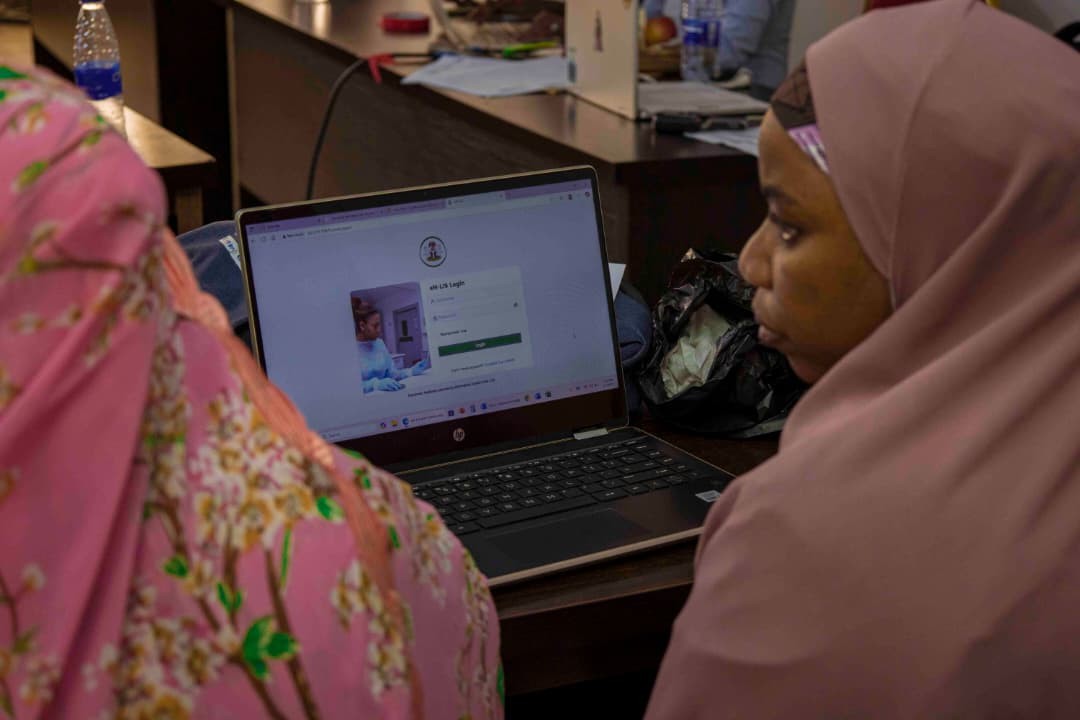
The LIMS is also integrated with Nigeria’s national electronic disease surveillance system, Surveillance Outbreak Response Management and Analysis System, SORMAS. Before the LIMS, SORMAS and the lab data lived in separate worlds that had to be reconciled manually, if at all. RTSL supported technical work to make the LIMS and SORMAS interoperable so that, for the first time, lab data and surveillance data could speak the same language.
Impact: A real-time view of what's happening across the country
Nigeria has gone from manual, paper-based lab data management to deploying a custom system that is transforming daily operations for a network of labs across the country. For the first time, real-time electronic lab data management is a reality across a significant portion of the country’s public health network.
With the LIMS live and interoperable with SORMAS, the manual reconciliation of lab and surveillance data is no longer necessary. Public health data flows automatically and can be collected, analyzed and acted on in real time. The week-long delays that plagued Nigeria’s COVID-19 response belong to a different era. Decision-makers now see a single, unified view of what is happening across the country’s labs, as and when it happens.
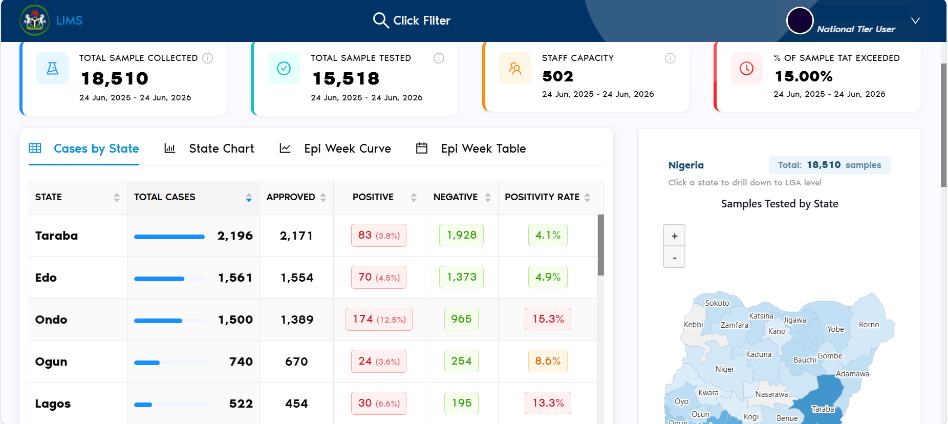
“Before the LIMS, retrieving sample information was always a cumbersome activity,” said James Onwuka at NCDC. “I had to physically be at the lab to go through mountains of paperwork. Now, I can retrieve, crosscheck and verify any information about samples that have been received in real time from any location.”
“Using the LIMS has made our work easier; we no longer have to manually send results twice to the different stakeholders,” added Oluwafunmbi Bamidele, a laboratory scientist at Federal Medical Centre in Owo. “Once we send the results once via the LIMS, that’s enough.”
The LIMS also brings Nigeria closer to meeting the 7-1-7 Target, the global standard that infectious disease outbreaks should be detected within seven days, reported within one and controlled within seven. Faster, more reliable lab data is foundational to that first seven days. Every hour saved in getting lab results into the hands of decision-makers is an hour gained in the race to contain an outbreak before it spreads.
“The partnership between RTSL, NCDC and GGHN also offers a model for other countries facing similar challenges,” said Obiekea. “What had been attempted repeatedly was achieved through strategic alignment, local ownership and targeted support. Partnerships like this are what it takes to get systems up and running and keep communities safe from health threats.”
What had been attempted repeatedly was achieved through strategic alignment, local ownership and targeted support. Partnerships like this are what it takes to get systems up and running and keep communities safe from health threats.
Celestina Obiekea, Senior Technical Advisor, Laboratory Systems Nigeria