At a glance

Challenge: Healthcare workers face a threat many can't recognize
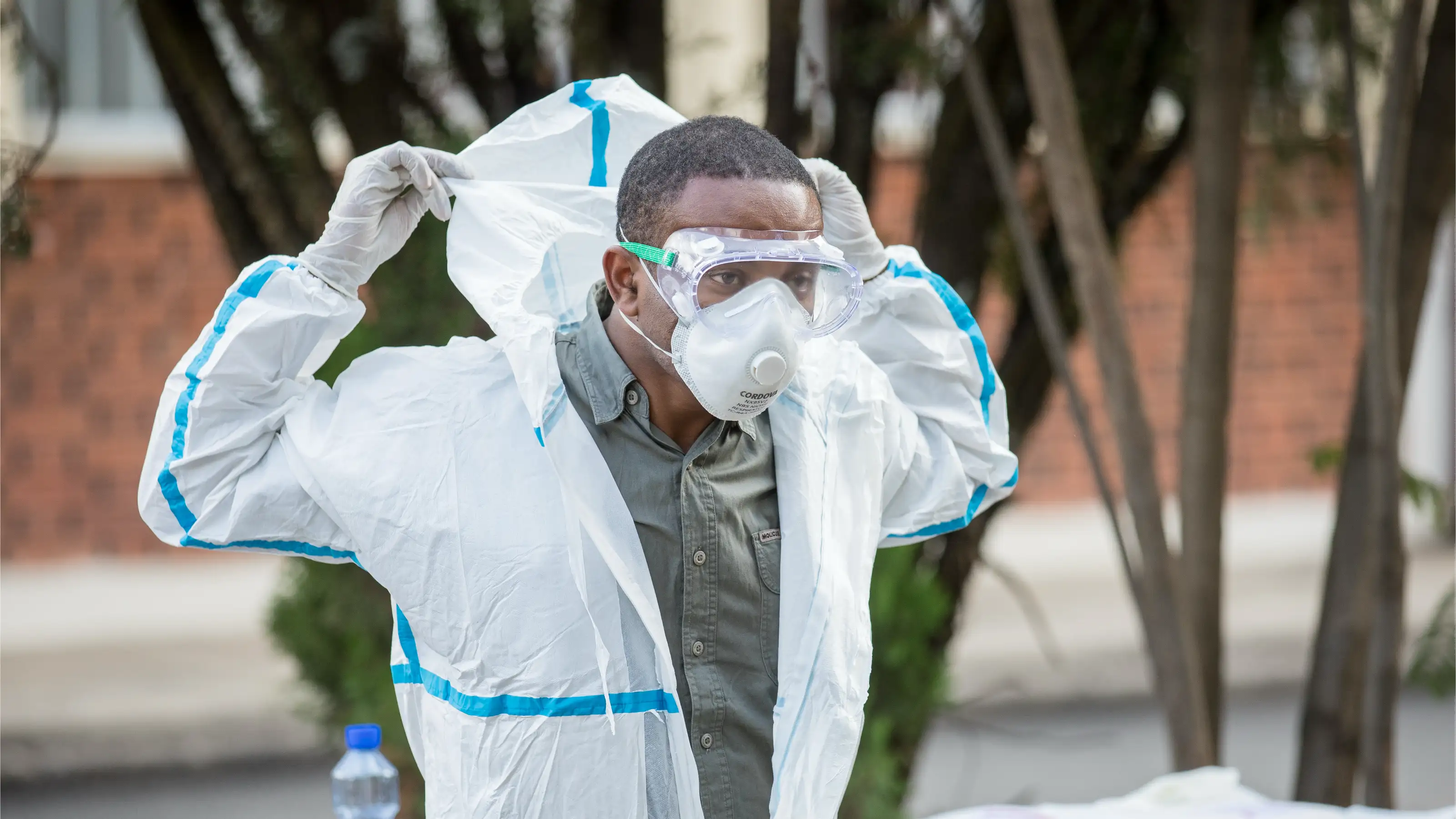
The Ebola outbreak caused by Bundibugyo virus in the Democratic Republic of the Congo has put frontline healthcare workers at extreme risk: they’re getting infected and dying at alarming rates. In Uganda, healthcare workers accounted for 20% of confirmed cases. In DRC, they make up more than 7% of cases.
Bundibugyo virus disease is rare, and early symptoms are mild and easy to mistake for malaria or other fevers. Without a test to confirm cases quickly, many healthcare workers lacked the ability to recognize what they were seeing until it was too late. The outbreak was also spreading for months before the first detected case, meaning healthcare workers weren’t on high alert and health facilities didn’t have the right control measures in place.
Detecting a case quickly matters for three reasons: it lets healthcare workers protect themselves, it gets patients into early care that can save their lives and it isolates cases before the virus spreads further. Pulling thousands of workers into classroom trainings isn’t realistic, and it’s not affordable. Healthcare workers needed a way to quickly build the skills to detect cases, protect themselves and treat patients, without stepping away from work.
Solution: A free course that finds healthcare workers where they are
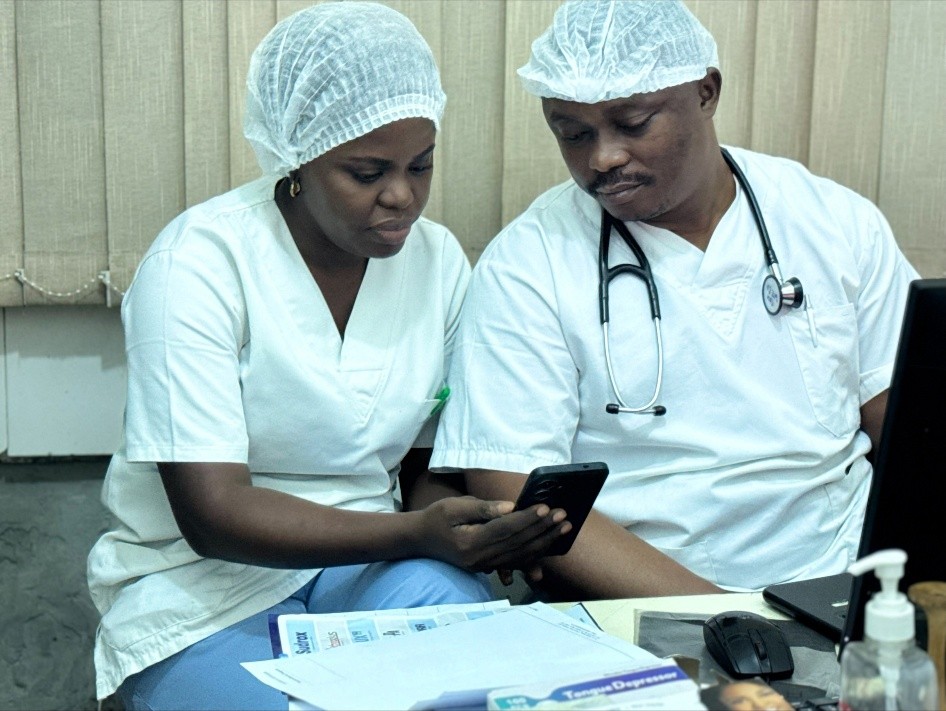
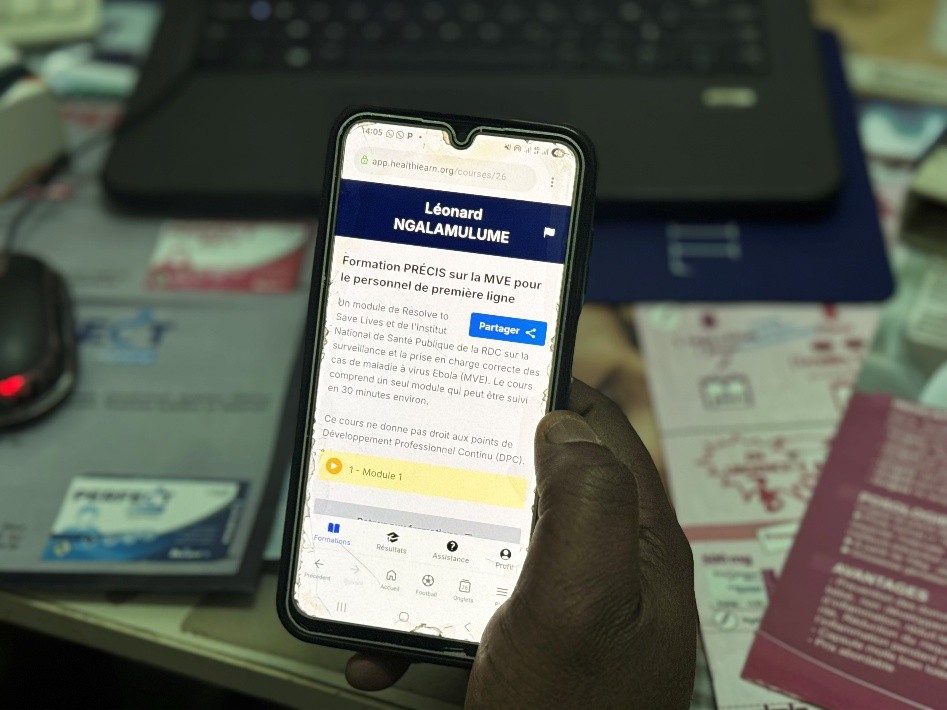
Resolve to Save Lives partnered with HealthLearn to set up a free, mobile-friendly training platform that reaches frontline healthcare workers directly on their phones. The platform hosts the Clinical Integrated Disease Surveillance and Response (cIDSR) course, a set of disease specific modules that help healthcare workers detect cases, protect themselves, treat patients and report to public health authorities. Healthcare workers can complete a module case study in less than an hour and return to it whenever they need a refresher.
“cIDSR puts life-saving training directly in the hands of the people who need it most, right when they need it, without pulling them away from their patients,” said Justine Landegger at Resolve to Save Lives.
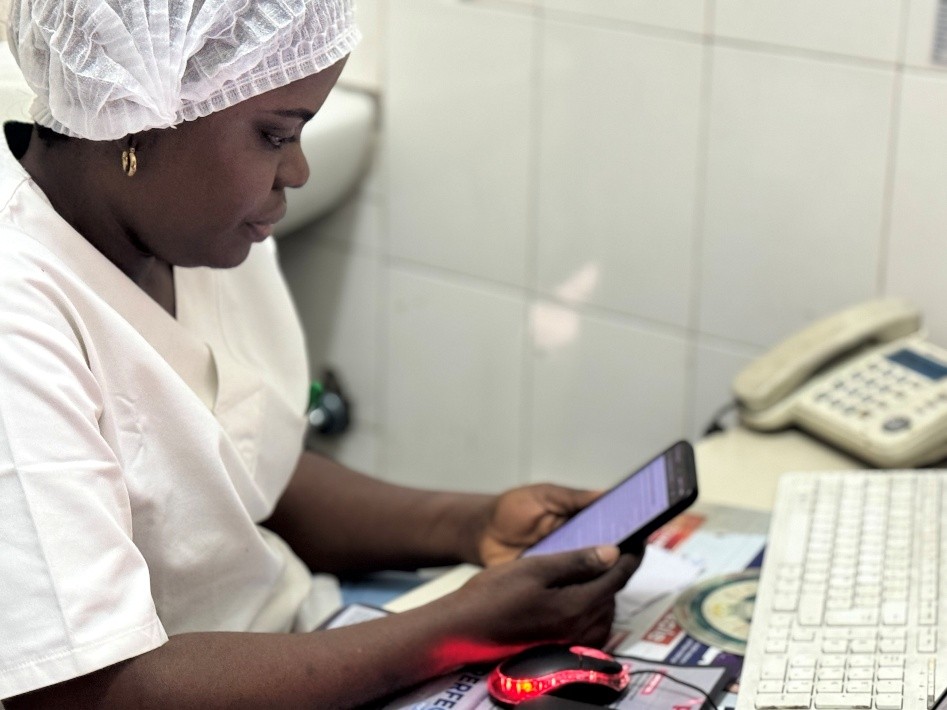
When the outbreak was declared, an Ebola module already existed, so RTSL and HealthLearn got it to healthcare workers in Uganda within a day. In DRC, the team translated the module into French, adapted it to the local context and built out the technical backend, delivering it to healthcare workers in a matter of weeks.
Reaching healthcare workers required going to where they already look for information. Evidence shows frontline workers in these settings typically hear about courses like this through WhatsApp groups and peer networks, not official websites. HealthLearn maintains a list of healthcare workers, including cell phone numbers and the locations they serve. During an outbreak, HealthLearn can send a message through WhatsApp to all the healthcare workers in an affected district or province.
“We begin sending notifications the moment a government or partner signals there’s an outbreak, so healthcare workers in the affected area know right away that a training module is ready for them,” Landegger said.
In Uganda, healthcare worker contacts were already on file. In DRC, the team worked through partners with established local dissemination channels. And as the outbreak’s regional risk became clear, RTSL and HealthLearn adapted the content into English and French regional courses usable on any African cell phone. Scaling the national course for use at the regional level—a first for RTSL and HealthLearn—will protect healthcare workers and patients well beyond the outbreak’s borders.
Impact: Thousands of healthcare workers trained in days, not months
Over 25,200 healthcare workers across Uganda, DRC and the wider region have completed a cIDSR Ebola module. In Uganda, 3,920 healthcare workers completed the course with a 22% learning gain. In DRC, 10,432 completed it with an 11.4% gain. The regional courses, still new to most learners, showed even larger gains: 26% among 10,558 workers who took the English version and 27% among 270 who took the recently released French version, evidence that RTSL is reaching healthcare workers who are new to the material.
“This course is the fastest way to get someone genuinely ready for clinical care in an Ebola treatment unit,” said Dr. Radjabu Bigirimana at the Africa Centres for Disease Control and Prevention. “The case history and management section was the most immediately useful part for me. It mirrors the real clinical sequence: take a focused history, recognize what it’s telling you, act.”
Resolve to Save Lives and HealthLearn are now building video testimonials to reach more healthcare workers through popular channels like WhatsApp, developing new modules for additional diseases and working to make the course count toward national-level continuing professional development credits, so this approach can continue making an impact in future outbreaks.
“This outbreak showed us that when training meets health workers where they already are, on their phones, in their language, we can protect people at the speed an outbreak demands,” Landegger said.