Author:  Resolve to Save Lives
Resolve to Save Lives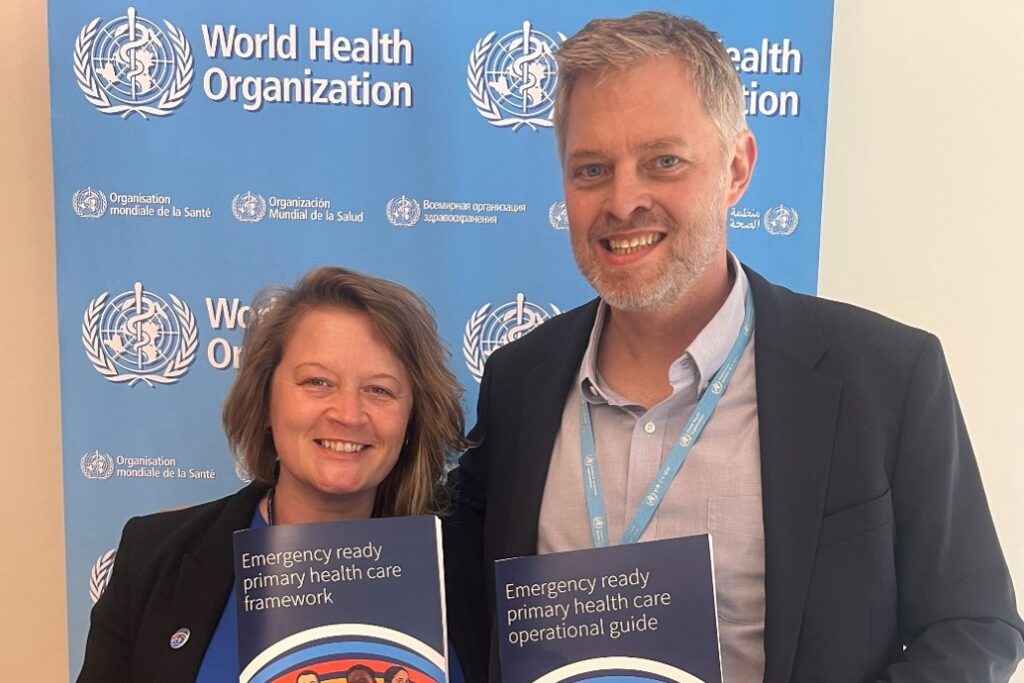
At a glance

A global framework for frontline preparedness
Primary healthcare systems are where most people first seek care, which makes them the frontline of emergency preparedness, detection and response. Yet across the world, preparedness and primary healthcare remain poorly integrated, leaving communities vulnerable when health emergencies strike.
Resolve to Save Lives and WHO developed the Emergency-Ready Primary Health Care Framework and Operational Guide to close that gap. Built on lessons from pilot programs in Ethiopia, Nigeria, Sierra Leone and Uganda—as well as from COVID-19, Ebola, cholera and other emergencies—the Framework gives countries a practical, all-hazards model to embed preparedness into routine primary care. It integrates disease surveillance, infection prevention and control, clinical care and community protection into a single approach that countries can adapt to their own contexts.
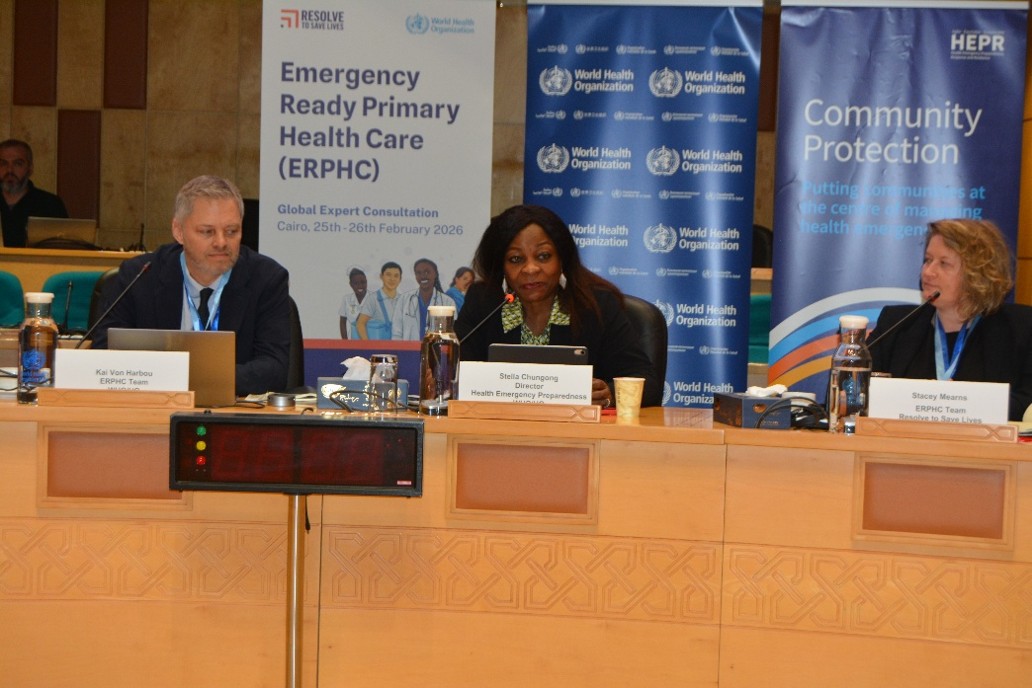
At the 79th World Health Assembly, RTSL and WHO launched the Framework to a packed room of ministers, country delegations, development partners and frontline practitioners. Representatives from Ethiopia, Kazakhstan, Nigeria and Syria shared how they are already putting Emergency-Ready Primary Health Care into practice, demonstrating that stronger frontline systems mean earlier outbreak detection, faster response and greater community protection.
We spoke with Dr. Kai von Harbou, who leads WHO’s Community Protection and Resilience Unit within the Health Emergencies Programme, about how the Framework came together, what it means to have it validated at the global level and what the partnership with RTSL will focus on next.
-
Can you tell us about your role at WHO and how you first came across Resolve to Save Lives' epidemic-ready primary health care work?
-
I lead WHO’s Community Protection and Resilience Unit within the Health Emergencies Programme, where my work focuses on preparedness and response to health emergencies at the community level. Through that role, I became increasingly interested in how preparedness can be embedded into routine health systems rather than activated only during crises.
I first came across Resolve to Save Lives’ Epidemic-Ready Primary Health Care work through discussions on preparedness and health security. What resonated immediately was the shared recognition that the first line of defence against outbreaks is often the primary health care system. That common vision created a strong foundation for collaboration and ultimately for the development of the global framework.
-
The Emergency-Ready Primary Health Care Framework and Operational Guide grew out of earlier country-level work on epidemic-ready primary health care. How did that evolution shape the final framework—and what does it mean to have it validated at a global level?
-
The framework benefited enormously from practical experience. It was not developed in isolation but informed by country implementation, lessons from COVID-19, Ebola, cholera and other emergencies, and extensive consultation with experts, practitioners and partners from around the world.
Having the framework validated at a global level is important because it demonstrates broad consensus around a simple but powerful idea: preparedness must be operationalized where people first access care. The framework provides a common language and practical approach that countries can adapt to their own contexts while remaining aligned with broader health security and health system strengthening agendas.
-
The launch at the World Health Assembly drew a packed room. What was the energy like, and what did the response from delegates tell you about where the global conversation on primary health care and health security is heading?
-
The energy was exceptionally positive. What stood out was the diversity of participants, including ministers, country representatives, development partners, frontline practitioners and public health experts, all engaging with the same core challenge: how to move from preparedness plans to operational preparedness capabilities.
The response reinforced that countries increasingly see primary health care and health security as mutually reinforcing rather than separate agendas. There is growing recognition that resilient frontline systems are essential not only for delivering routine services but also for detecting, responding to and recovering from emergencies. That shift in thinking is very encouraging.
-
When you imagine a minister of health or a frontline health system practitioner picking up this framework, what do you hope they do first—and what difference do you think it could make for the communities they serve?
-
I hope they begin by asking a simple question: if an outbreak occurred tomorrow, how ready is our primary health care system to detect it, respond to it, and continue delivering essential services?
The framework is designed to help translate that question into practical action. For communities, the difference could be significant. Stronger frontline preparedness means earlier detection of threats, faster response, greater trust between communities and health services, and fewer disruptions to routine care during crises. Ultimately, it means better protection of lives and livelihoods.
-
What comes next for the partnership between WHO and Resolve to Save Lives on emergency-ready primary health care—and what would success look like in five years?
-
The launch of the framework is really the beginning rather than the end of the journey. The next phase will focus on supporting countries to operationalize the framework, generating evidence from implementation, strengthening workforce capacities, and integrating preparedness into routine primary health care systems.
In five years, success would mean that Emergency-Ready Primary Health Care is no longer viewed as a separate initiative but as a normal expectation of resilient health systems. We would like to see countries routinely assessing and strengthening preparedness capacities at the frontline, community health workers and primary care teams fully integrated into preparedness efforts, and communities benefiting from health systems that are better able to withstand and respond to emergencies.