At a glance

As Brazil’s tourism gateway, Rio de Janeiro welcomes constant international travel, creating ongoing health security challenges that require rapid outbreak detection and response. They needed a way to strengthen outbreak response performance and give health teams clear benchmarks for timely action.
Rio adopted the 7-1-7 target in January 2025—developing a custom 7-1-7 tracking system with real-time dashboards, enabling health teams to monitor timeliness performance daily and identify bottlenecks immediately.
We spoke with Caio Ribeiro, Rio de Janeiro’s health surveillance coordinator. He works as part of the Center for Strategic Information on Health Surveillance (CIEVS) network, which operates at the national, state, regional, and municipal levels to alert and rapidly respond to public health emergencies.
This interview has been lightly edited for clarity and brevity.
-
How did you first become interested in the 7-1-7 target?
-
Caio Ribeiro: In 2022, Vital Strategies, with funding from Resolve to Save Lives, invited us and other Brazilian jurisdictions to participate in a retrospective review. We applied the 7-1-7 target to nearly a dozen past outbreaks that had occurred in schools, primary health facilities, prisons, and on cruise ships to explore its potential benefits.
That’s when we saw what 7-1-7 could do for us—improving detection, notification, and response. The evaluation revealed that while we were following procedures correctly and acting appropriately, we could optimize our actions and monitor them more systematically over time. We were interested immediately.
It took approximately two years from that initial evaluation to full implementation. The biggest challenges were raising awareness among response professionals about the importance of the metrics and creating tools for data entry and monitoring.
-
Why did you decide to use 7-1-7 in Rio?
-
The city of Rio de Janeiro has over six million inhabitants and is Brazil’s tourism gateway—which brings both opportunities and health security challenges. We needed a way to strengthen our outbreak response performance and give health teams clear benchmarks for timely action.
The 7-1-7 target does exactly that. It helps us monitor how quickly we’re detecting and responding to public health events, and it shows us where we need to improve.
-
How are you collecting 7-1-7 data?
-
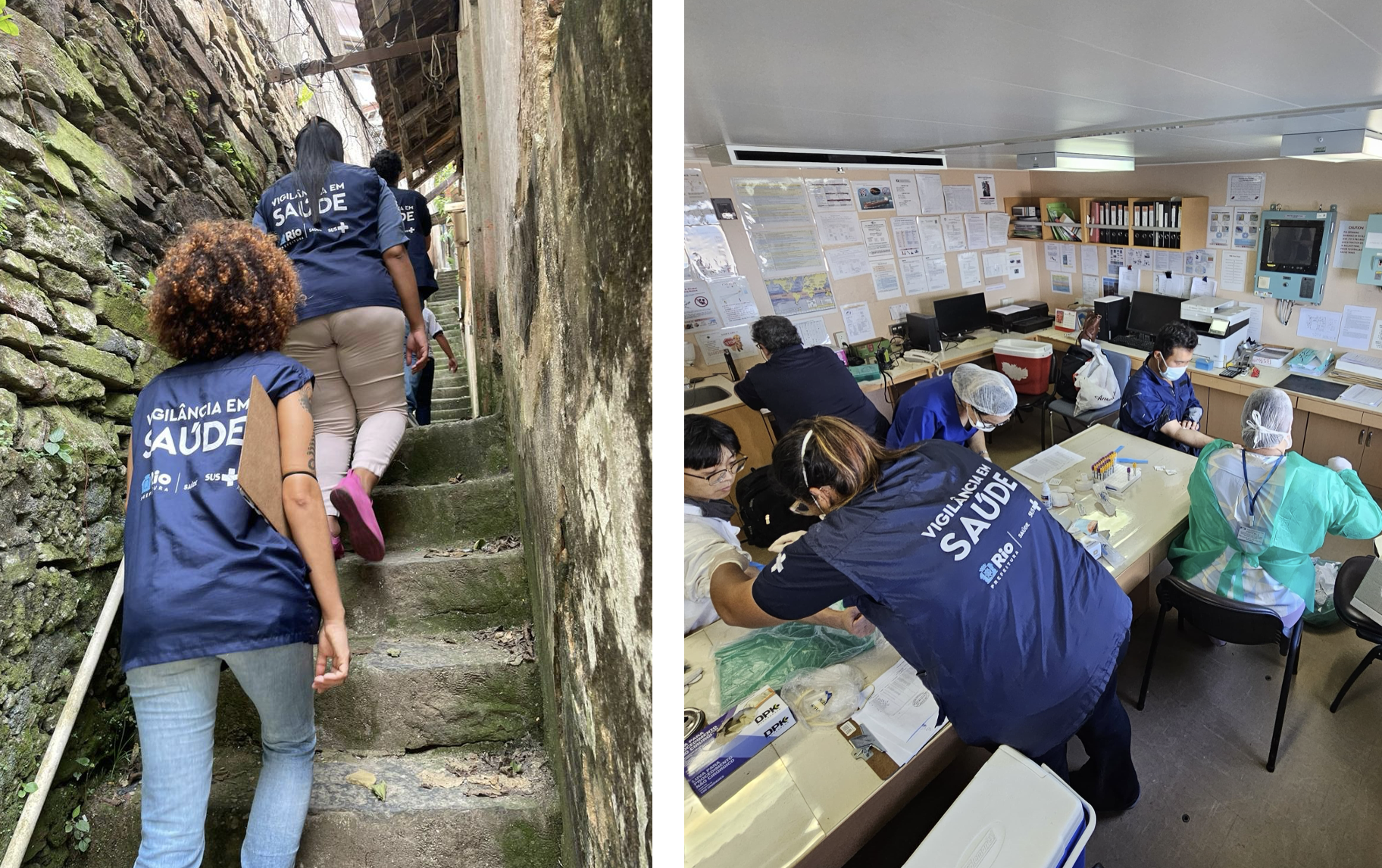
In recent years, Rio de Janeiro’s Municipal Health Department has invested significantly in health surveillance, including establishing rapid response units (RRUs) to detect and respond to public health events.
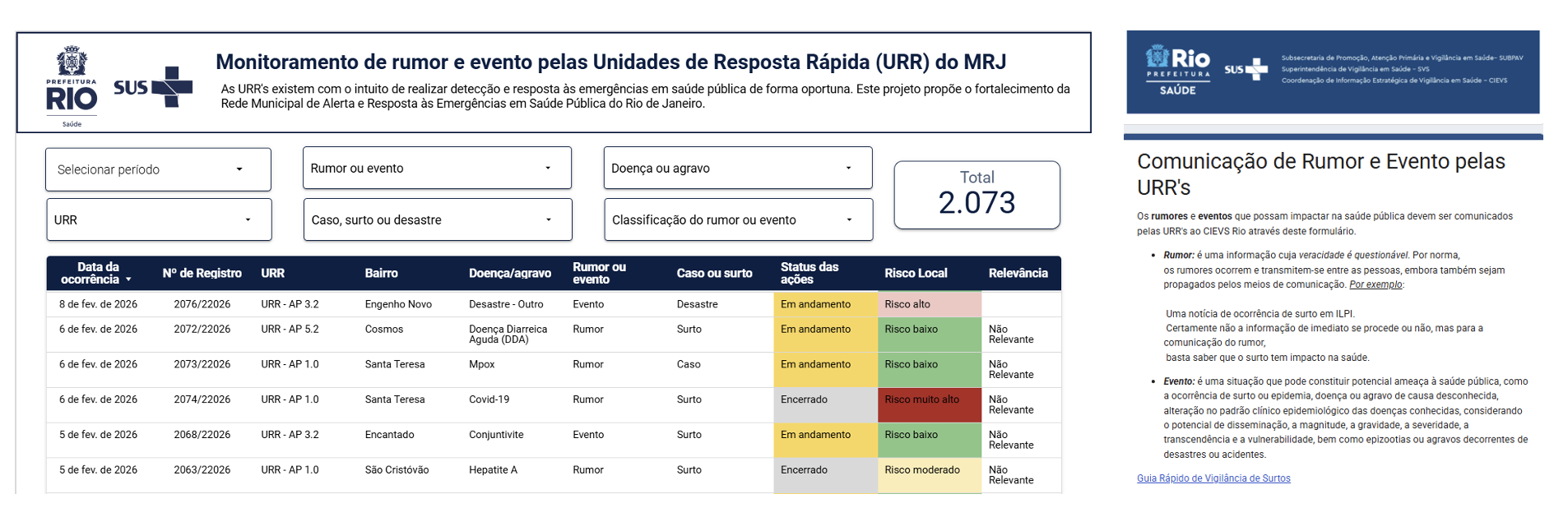
We developed a custom electronic form for RRUs and surveillance experts to document all events they detect and investigate. While official information systems for notifiable diseases already existed, we needed a system to capture all public health events—whether rumors or confirmed—and monitor our performance against the 7-1-7 target. We launched this system in January 2025 and have been evaluating our timeliness from day one.
The data flows automatically into a database that calculates whether we met the 7-1-7 target for each event and displays results on a custom online dashboard accessible to leadership.
We apply 7-1-7 to any disease or health problem that meets the definition of a public health event or could evolve into an emergency: disease outbreaks, unusual diseases, and other relevant events like disasters. All events are also entered into official information systems to ensure proper reporting and documentation.
-
How does your leadership use 7-1-7 data?
-
Our Health Surveillance Superintendency maintains a dashboard of indicators calculated monthly to monitor all surveillance activities in the city. This includes the proportion of events meeting 7-1-7’s detection, notification, and response targets. Leadership also has access to the real-time online dashboard I mentioned earlier, allowing them to monitor timeliness performance daily.
This visibility enables several concrete actions:
- First, we can provide targeted guidance to specific health teams when we identify delays or gaps. We can pinpoint exactly where bottlenecks are occurring and offer immediate support.
- Second, 7-1-7 data helps us identify training needs. When we see patterns—certain teams consistently struggling with notification times, for example—we know where to focus capacity building.
- Third, the data has informed the development of contingency plans, standard operating procedures, and other technical documents. By understanding our strengths and weaknesses across different types of events, we can create more realistic and effective protocols.
Perhaps most importantly, 7-1-7 has helped sustain our rapid response capacity. We have a specialized team dedicated exclusively to rapid response for public health events and emergencies. Using 7-1-7 metrics, we can demonstrate with data the importance of these professionals in implementing timely prevention and control measures. This evidence has been crucial for maintaining funding and support for the team.
-
What are your plans for 2026?
-
We plan to continue using 7-1-7 to improve timely action to detect and contain public health events in our city. We’ll track performance at each stage and use those insights to respond faster. Timeliness directly impacts effectiveness—the quicker we act, the better our prevention and control measures work.
-
How has 7-1-7 helped you improve preparedness, surveillance or outbreak response?
-
Yes, absolutely. 7-1-7 has transformed how we monitor surveillance and response across the city. It’s increased awareness among our teams and helped us identify exactly where training and support are needed.
Since adopting 7-1-7 in January 2025, we’ve observed an increase in outbreak detection and reporting. In February, we registered 27 outbreaks. By March, that number rose to 46—a 70% increase that has continued in subsequent months. This isn’t because we suddenly have more outbreaks; it’s because our professionals are more alert to potential threats and know the importance of rapid reporting.
We’ve responded to outbreaks in prisons, maritime vessels, schools, and long-term care facilities. In each case, 7-1-7 enabled rapid communication both within and across sectors—leading to faster, more effective responses that strengthened our entire municipal surveillance network.
In one case, we detected a COVID-19 outbreak involving four incarcerated individuals in a large municipal prison. Using 7-1-7, we achieved each stage––detection, notification, and initiation of response, including sample collection—within one day. This speed enabled rapid identification of the outbreak, timely laboratory confirmation and immediate implementation of containment measures. We prevented the virus from spreading through the rest of the facility, which is an extremely high-risk environment for transmission.
7-1-7 was decisive in containing a potentially explosive outbreak to just four cases with rapid response and limited impact.