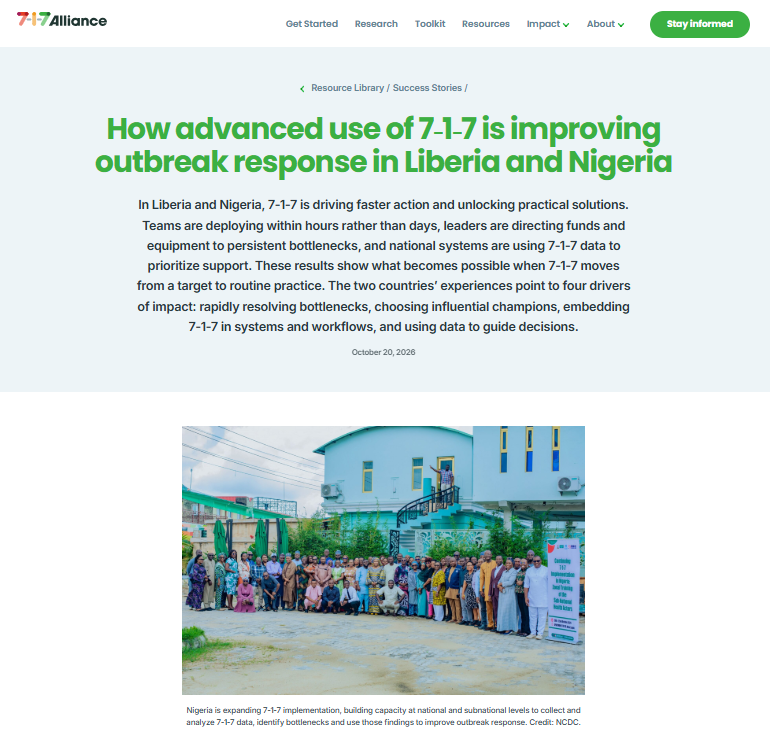
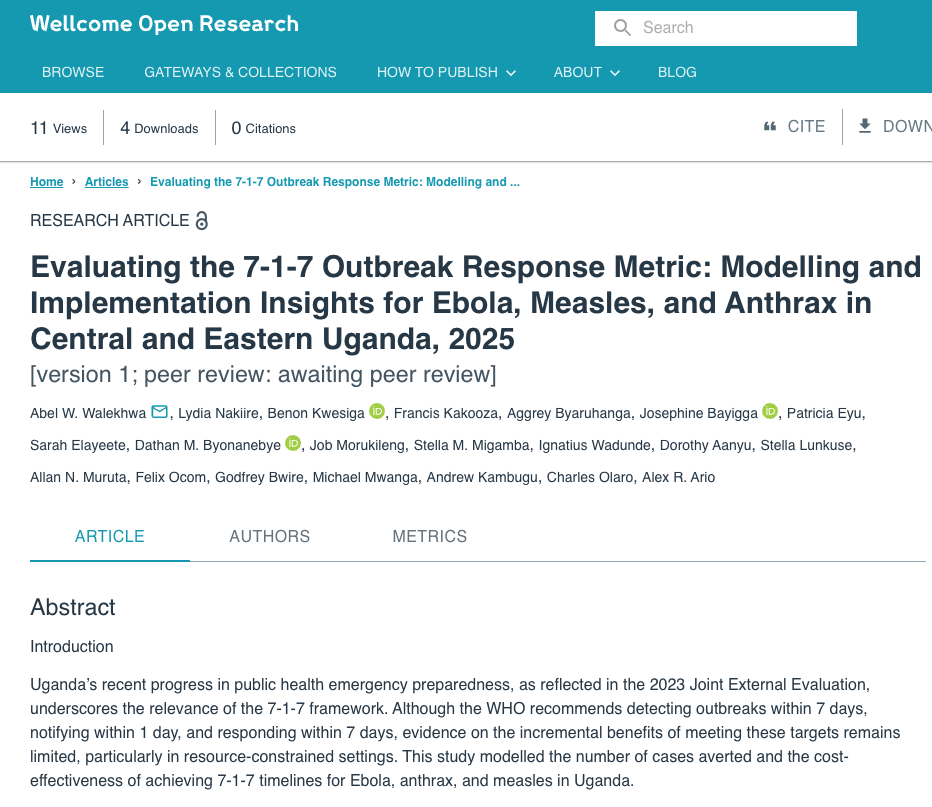
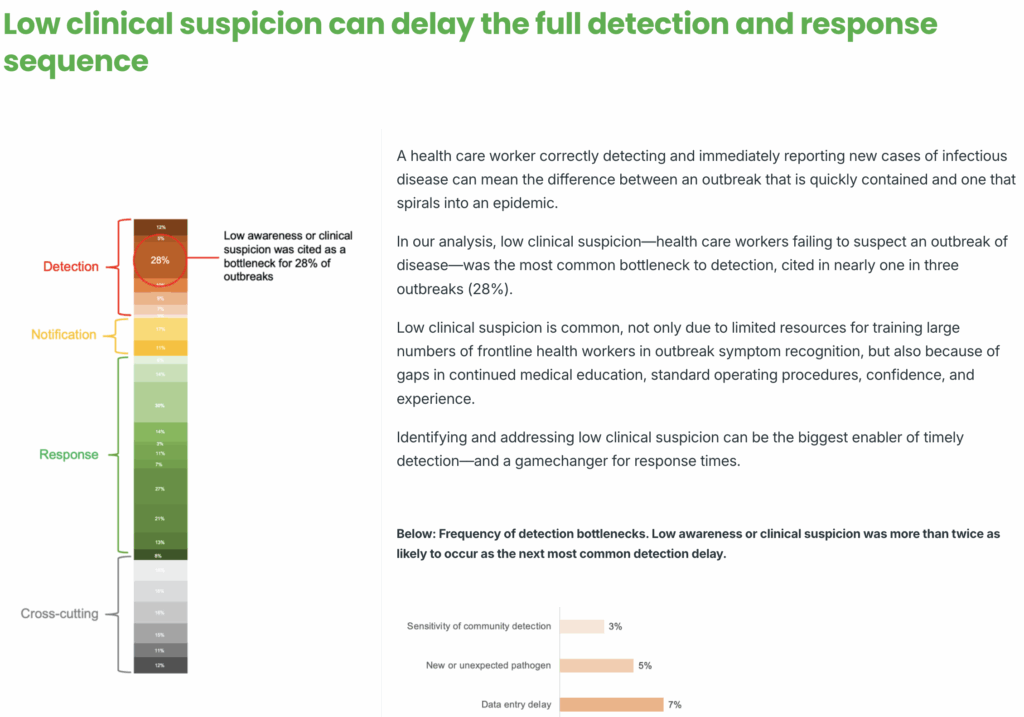
In Nigeria’s capital, an mpox outbreak response is delayed a full day while the team waits for a driver. In Liberia, surveillance reports arrive late because officers must share a single laptop. Small barriers like these slow outbreak response, and 7-1-7 is helping countries find and fix them. Nigeria and Liberia are now putting the 7-1-7 target to advanced use, building it into national surveillance systems, reporting tools and funding decisions.
The results show what becomes possible when 7-1-7 moves from a target to routine practice. Teams now deploy within hours instead of days, leaders direct funds and equipment to persistent bottlenecks and national systems use 7-1-7 data to decide where support is needed most. Together, the two countries point to four drivers of impact: resolving bottlenecks quickly, choosing influential champions, embedding 7-1-7 in systems and workflows and using data to guide decisions.
Read the full story on the 7-1-7 Alliance website.