Resolve to Save Lives (RTSL) is working with Nigeria’s Federal Ministry of Environment, the Federal Ministry of Health and Social Welfare, and the Environmental Health Council of Nigeria (EHCON) to strengthen Nigeria’s capacity to prevent, detect, and respond to lead poisoning. A key part of this effort is building the knowledge and skills of Environmental Health Officers, who play an important role in environmental health surveillance, identifying sources of lead exposure, and supporting action to protect communities.
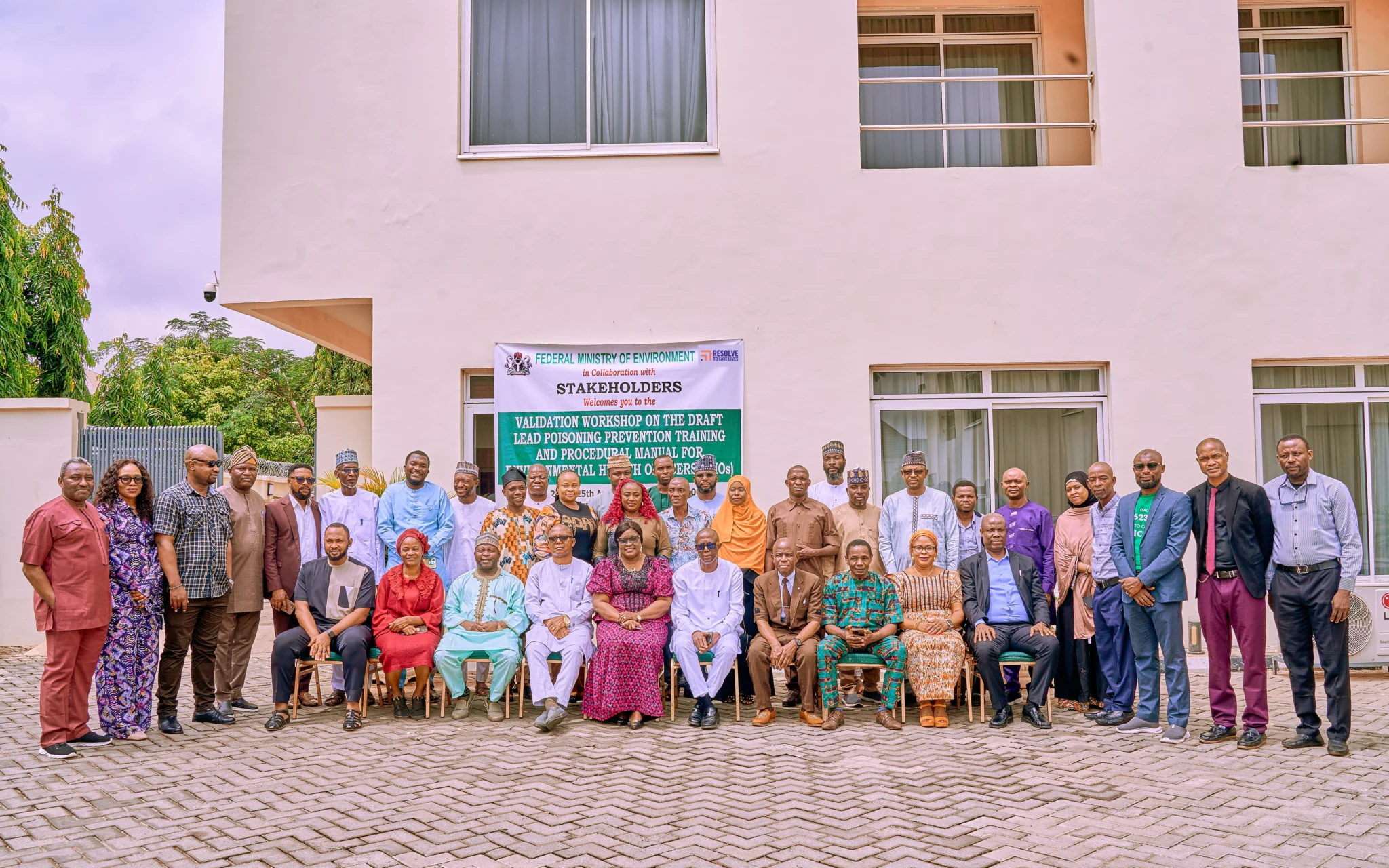
The Federal Ministry of Environment, with support from RTSL, recently convened government and technical stakeholders to validate a new training toolkit for Environmental Health Officers on lead poisoning prevention, detection, and response. The toolkit includes a training manual, standard operating procedures (SOPs), and job aids designed to provide practical guidance and support a more consistent approach to lead poisoning prevention and response across Nigeria.
At the validation workshop, stakeholders reviewed the materials, confirmed that feedback from the development process had been incorporated, and endorsed the final training manual and accompanying resources.
The toolkit was developed in July through a collaborative process involving representatives from key government ministries and agencies, state environmental health and sanitation officers, academic institutions, and other technical stakeholders. Participants included the Federal Ministry of Health and Social Welfare, Federal Ministry of Water Resources, Nigeria Centre for Disease Control and Prevention (NCDC), National Agency for Food and Drug Administration and Control (NAFDAC), National Environmental Standards and Regulations Enforcement Agency (NESREA), and the National Biosafety Management Agency.
The validated resources will help strengthen the capacity of Environmental Health Officers to identify potential sources of lead exposure, support environmental health surveillance, and contribute to lead poisoning prevention efforts across Nigeria.
The validated resources will help strengthen the capacity of Environmental Health Officers to identify potential sources of lead exposure, support environmental health surveillance, and contribute to lead poisoning prevention efforts across Nigeria, including through improved detection of risks associated with cosmetics and other consumer goods.
With the toolkit now validated, the Federal Ministry of Environment plans to train Environmental Health Officers in selected states using the approved materials. The training will help strengthen frontline capacity to identify lead exposure risks, support timely interventions, and advance Nigeria’s efforts to reduce lead exposure and protect communities from its harmful health impacts.