Ethiopia National Infection Prevention and Control Strategy and Roadmap 2021/22-2025/26
Ethiopia’s national IPC strategy and roadmap for 2021-2026 is intended to guide and outline the strategic interventions required to prevent, reduce and control the development of healthcare-associated infections (HAIs) and antimicrobial resistance (AMR), ultimately improving patient safety and health outcomes.
Ethiopia national IPC reference manual, Volume 2: Advanced and special settings
Full title: National infection prevention and control reference manual for healthcare service providers and managers, Volume 2: Advanced and special settings infection prevention and control, Third edition. The manual is divided in two volumes: Volume I covers general IPC and Volume II addresses more advanced IPC and special settings. The document serves as a standardized […]
Ethiopia national IPC reference manual, Volume 1: General infection prevention and control
Full title: National infection prevention and control reference manual for healthcare service providers and managers, Volume 1: General infection prevention and control, Third edition. The manual is divided in two volumes: Volume I covers general IPC and Volume II addresses more advanced IPC and special settings. The document serves as a standardized IPC reference manual […]
Unleashing the full potential of 7-1-7
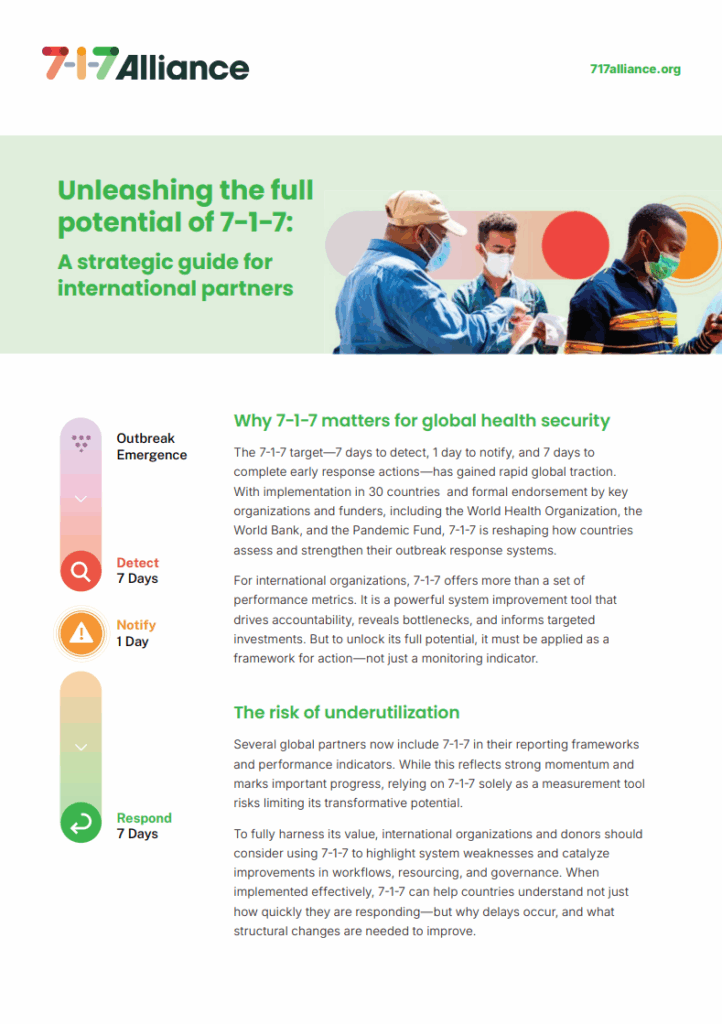
A strategic guide for international partners on the powerful system improvement tool that drives accountability, reveals bottlenecks, and informs targeted investments.
Providing the medicines patients need to control high blood pressure
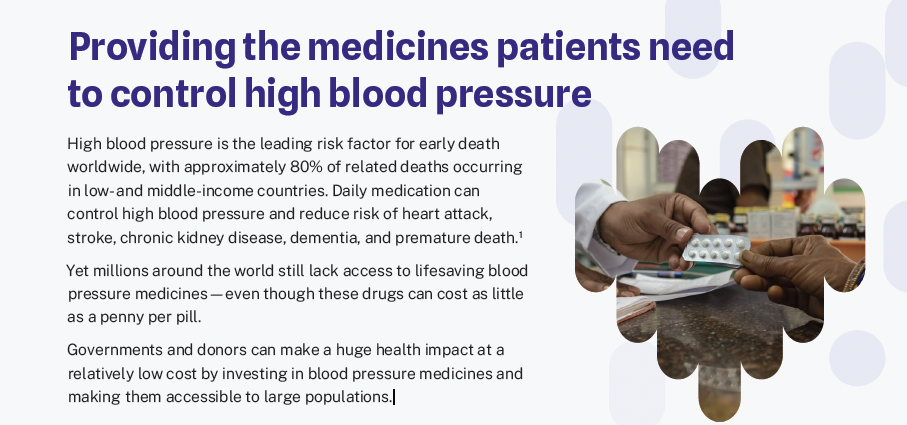
High blood pressure is the leading risk factor for early death worldwide, with approximately 80% of related deaths occurring in low- and middle-income countries. Daily medication can control high blood pressure and reduce risk of heart attack, stroke, chronic kidney disease, dementia, and premature death.1 Yet millions around the world still lack access to lifesaving […]
Position paper: Mandatory sodium reduction targets for processed foods
This position paper from Global Health Advocacy Incubator developed in partnership with Resolve to Save Lives, outlines the key steps needed to establish effective mandatory sodium reduction targets, informed by country experiences where these policies have been successfully implemented. It also offers clear, evidence-based recommendations to guide policymakers and advocates in shaping and advancing mandatory […]
Proven ways to address obesity, improve health, increase government revenue, and reduce healthcare costs
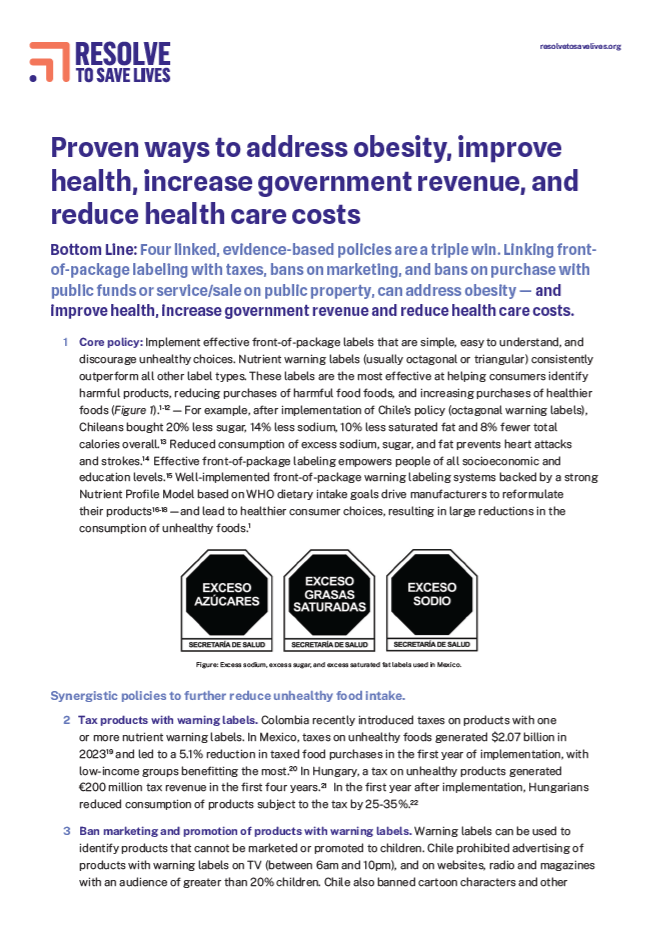
Linking front-of-package labeling with taxes, bans on marketing, and bans on purchase with public funds or service/sale on public property, can address obesity — and improve health, increase government revenue and reduce healthcare costs.
Front-of-package labeling systems
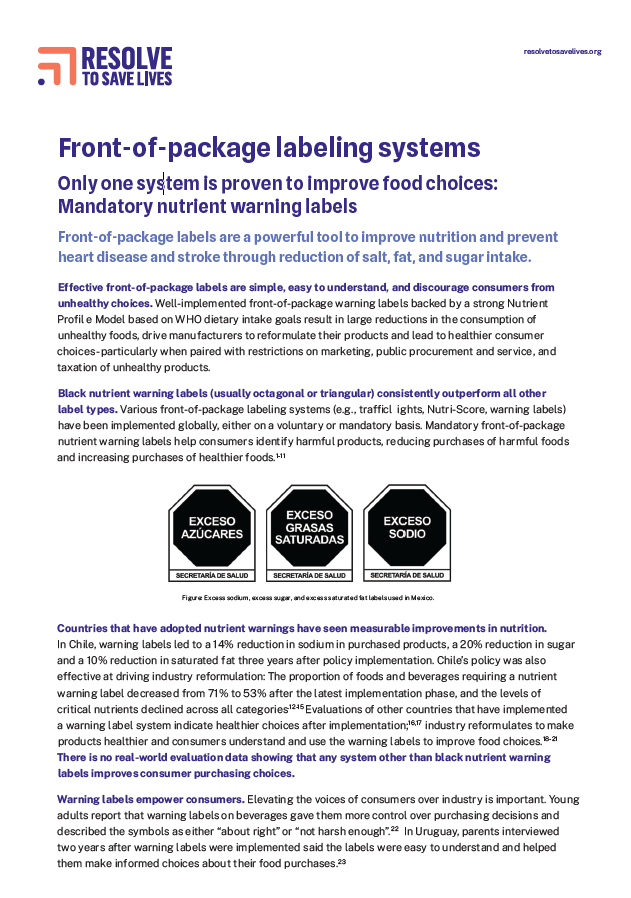
Front-of-package labels (FOPL) are a powerful tool to improve nutrition and prevent heart disease and stroke through reduction of salt, fat, and sugar intake. Only one system is proven to improve food choices: Mandatory nutrient warning labels.
Lower-sodium salt substitutes: Frequently asked questions
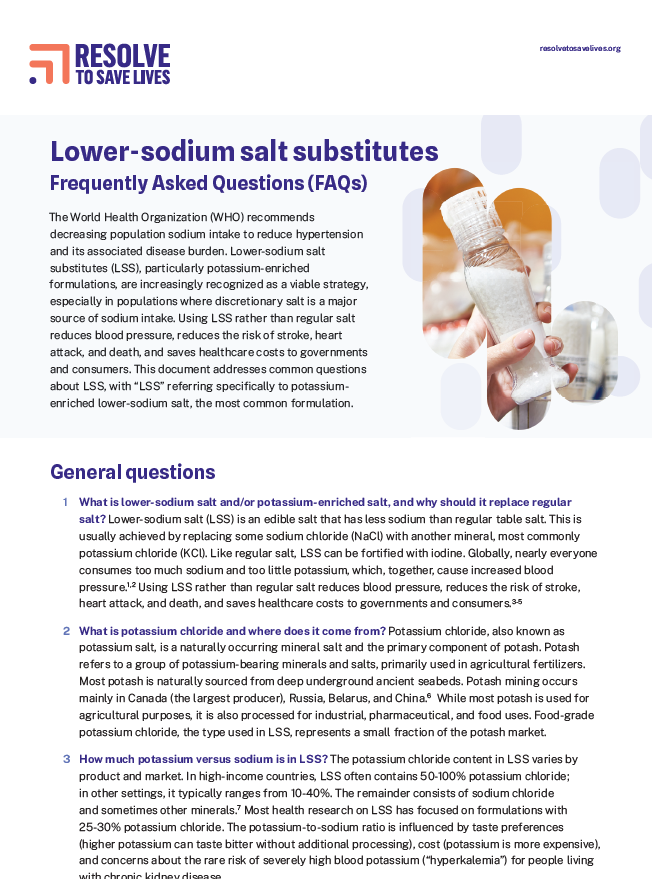
FAQ about lower-sodium salt substitutes (LSS)—an important part of a comprehensive sodium reduction package.
From signals to systems: Strengthening epidemic readiness through climate-informed strategies
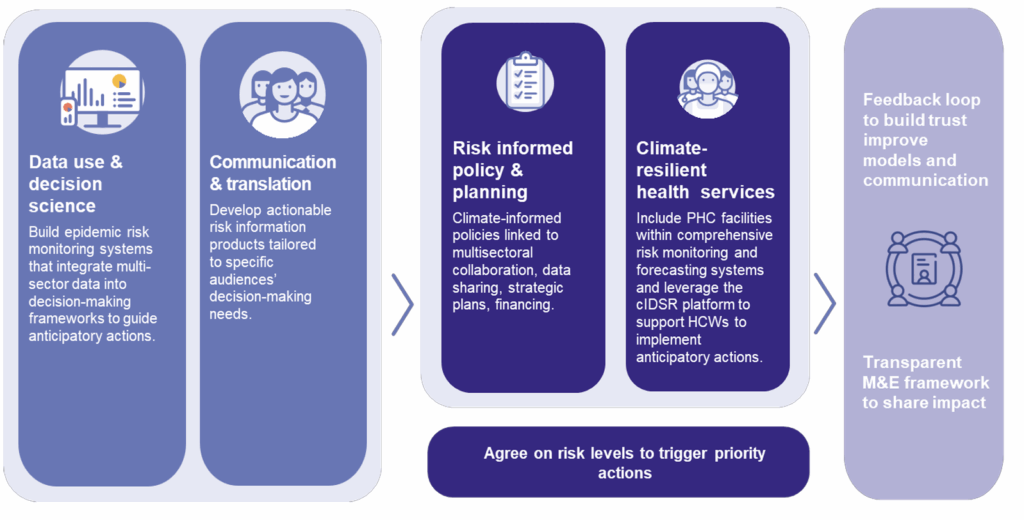
This issue brief outlines how Resolve to Save Lives is supporting governments to strengthen epidemic readiness by integrating climate data into health systems. Key strategies include building epidemic risk monitoring systems using real-time climate data, improving communication of climate-health risks, embedding climate-sensitive protocols into health policy and developing resilient primary healthcare infrastructure. These efforts aim […]
Foundations for sustainable health: A blueprint for building epidemic-ready and climate-resilient primary healthcare
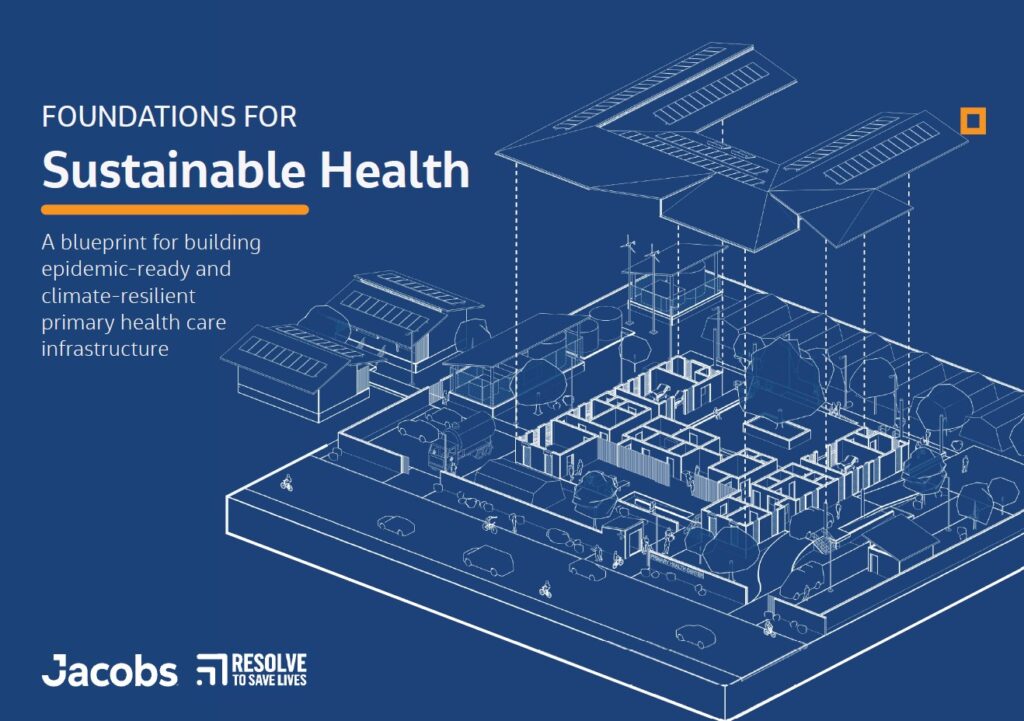
This blueprint outlines our model for epidemic-ready, climate-resilient and sustainable primary healthcare infrastructure using an all-hazard approach. We urge national governments to embed resilience into health and infrastructure planning. We call on donors to support integrated, scalable investments and help countries learn from what works. And we encourage facility leaders and communities to codesign and implement […]
From 18 countries to yours: Actionable 7‑1‑7 bottleneck insights
The 7-1-7 Alliance to identifies global patterns in the barriers to outbreak detection, notification and response and provides an example of how countries can leverage their own 7-1-7 bottleneck data to inform investments, prioritization and accelerate performance improvement.
Ethiopia National Non-Communicable Diseases Management Protocols
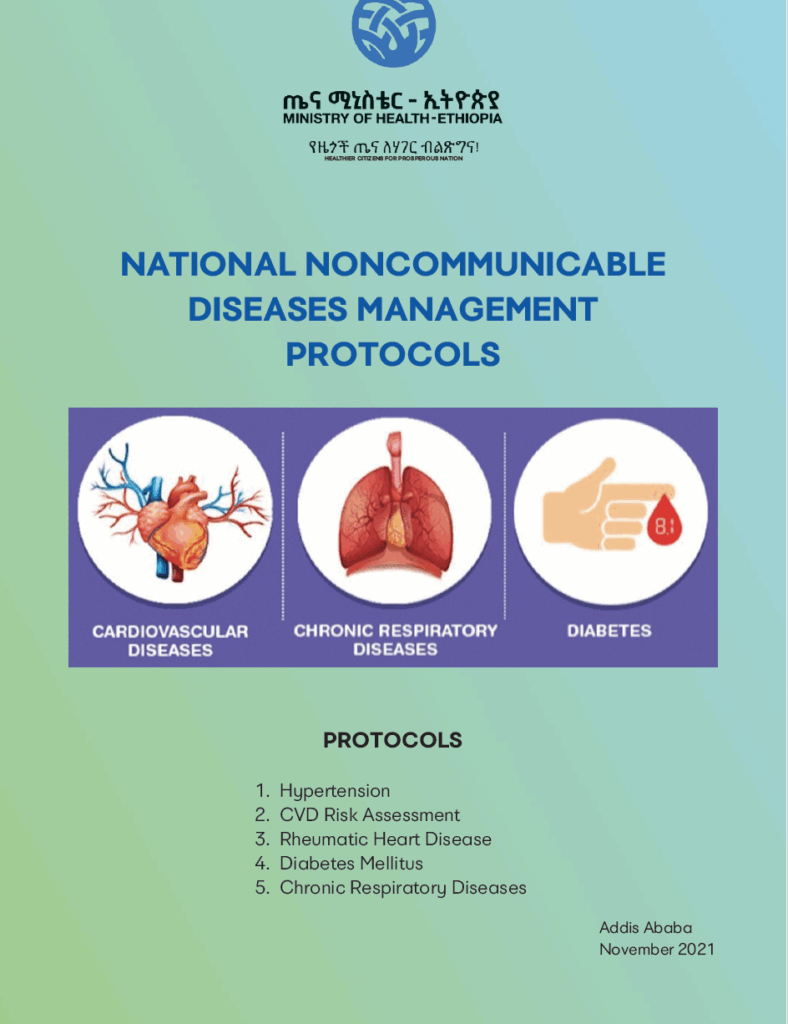
Ethiopia’s National NCD management protocols for: Hypertension Diabetes Rheumatic heart disease Chronic respiratory diseases Cardiovascular Disease (Risk Assessment)
Ethiopia Pharmaceuticals Procurement List: Third Edition
The Third Edition of Ethiopia’s Pharmaceuticals Procurement List, published in 2024 by The Ethiopian Pharmaceuticals Supply Service (EPSS).
VEN Classification of The 3rd Pharmaceuticals Procurement List

The Ethiopia VEN Classification grades medicines on the country’s 3rd Pharmaceuticals Procurement List as Vital, Essential, or Non-essential, serving as a tool to prioritize pharmaceutical procurement based on the criticality of medicines to public health, ensuring that the most crucial medicines are consistently available. This initiative not only strengthens the pharmaceutical supply chain but also […]
Common Non-Communicable Diseases and their Pharmaceuticals Management: Facilitator’s Guide

A facilitation guide for a three-day training course designed for pharmacy professionals in Ethiopia to enhance their knowledge, skills, and attitude in the effective management and rational use of medicines and health technologies for NCD management. After completion of this course, trainees will be able to: Describe major NCDs in accordance with the national […]
Improved hypertension care requires measurement and management in health facilities, not mass screening
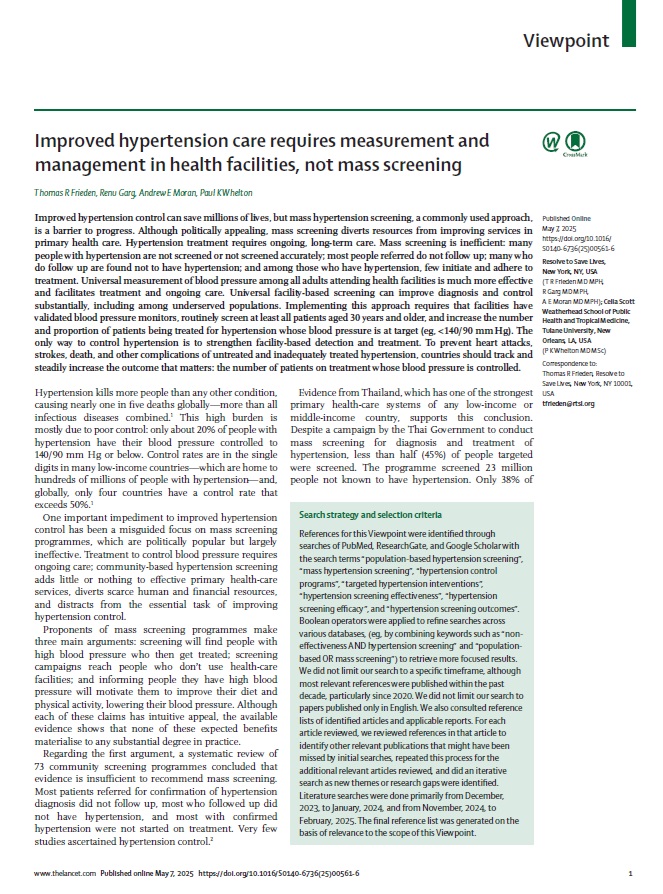
In The Lancet, we challenge the common practice of conducting mass public blood pressure screenings and note that measuring blood pressure in patients attending primary care facilities is a much more efficient and effective way to prevent heart attacks and strokes.
Epidemic-Ready Primary Healthcare (ERPHC) framework and technical package
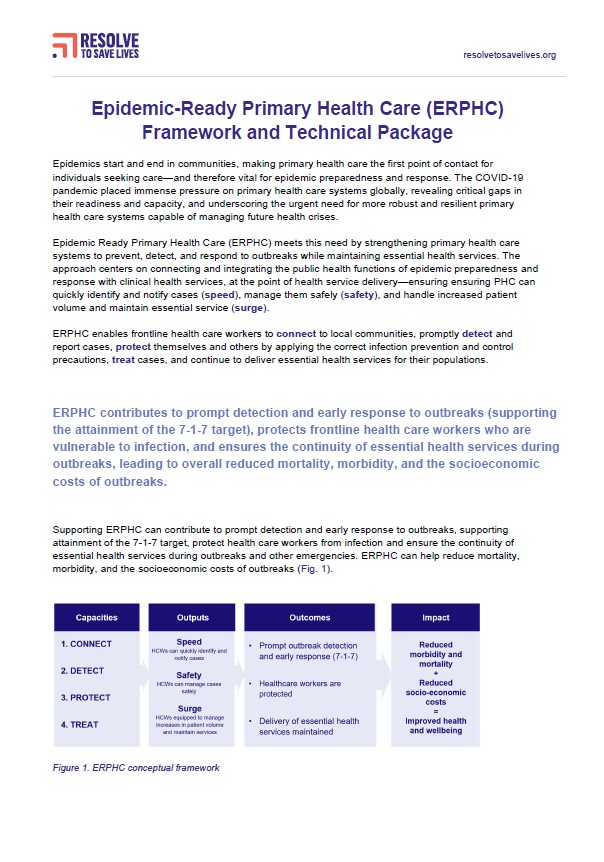
This technical toolkit explains how Epidemic-Ready Primary Healthcare (ERPHC) ensures PHC systems can quickly identify and notify cases (speed), manage them safely (safety), and handle increased patient volume and maintain essential service (surge). It outlines capacities, core activities and outcomes for implementation and includes a proposed implementation model.
Actionable 7‑1‑7 bottleneck insights: Resources for rapid outbreak investigation
This resource from the 7-1-7 Alliance is part of a series that highlights the value of effective bottleneck analysis with 7-1-7 and brings to the front solutions to the top barriers to outbreak detection, reporting and response.
Policy brief: Front-of-package warning labels give consumers the freedom to choose healthy
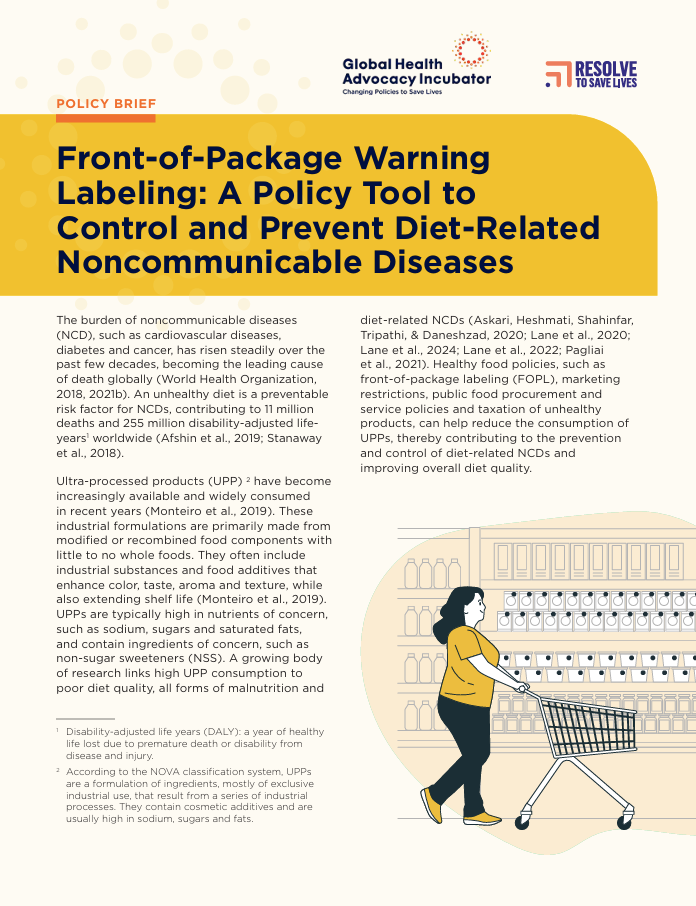
This policy brief developed by Global Health Advocacy Incubator (GHAI) and Resolve to Save Lives highlights the critical role of mandatory front-of-package warning labeling (FOPL or FOPWL) in combating diet-related noncommunicable diseases (NCDs) such as diabetes, cardiovascular diseases, and obesity and saving millions in healthcare costs. Warning labels empower consumers with easy-to-understand nutrition information to […]
Development and Implementation of a Public Health Event Management System, Nigeria, 2018–2024
In a study published in Emerging Infectious Diseases, Resolve to Save Lives and colleagues explore the role of event management systems (EMS) in epidemic intelligence, focusing on the Nigeria Centre for Disease Control and Prevention’s (NCDC) SITAware software. EMS are essential for integrating surveillance signals and managing incident response, though international standards for their development […]
9 million lives saved and counting
Resolve to Save Lives’ partnerships for heart health between 2018 and 2023 will result in 9 million fewer deaths worldwide. Here’s how we supported countries to make rapid progress, and how we measured our impact.
Recommendations: Strengthening country architecture for epidemic preparedness
Five recommendations for strengthening health security at the country level—developed and refined hand-in-hand with governments and partners.
Guide to developing nutrition standards
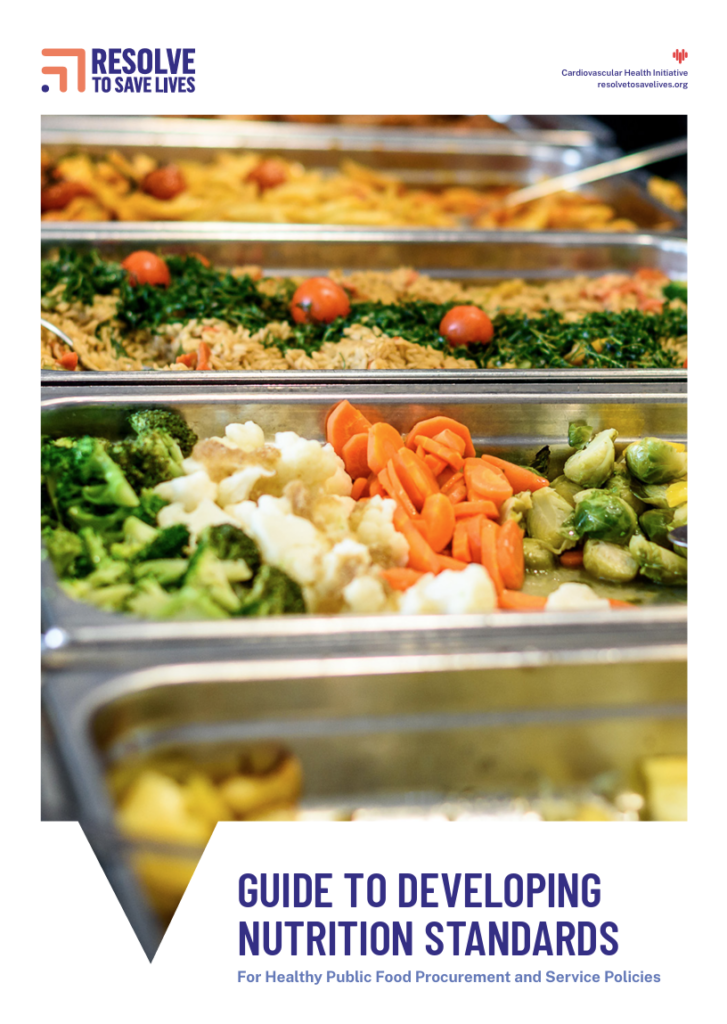
Nutrition standards guide developed by Resolve to Save Lives that governments can use to ensure food and beverages purchased, served and/or sold in government settings such as schools, public hospitals, childcare or child development facilities, correctional facilities and government workplaces are healthy and low in sodium.
A research agenda for urban health security
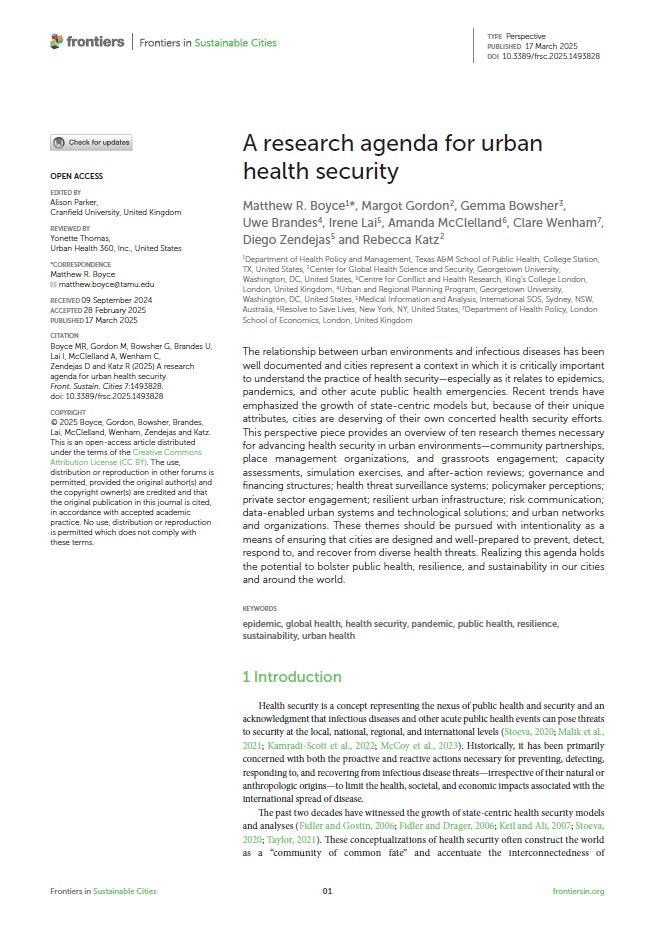
In a perspective piece published in Frontiers in Sustainable Cities, Resolve to Save Lives and partners outline ten key themes for strengthening health security in urban environments. Given cities’ unique vulnerabilities to infectious diseases, the paper highlights areas such as community partnerships, governance and financing, risk communication and resilient infrastructure as critical for epidemic preparedness. […]
National guideline for the prevention and management of hypertension in Nigeria

National treatment guideline adopted in Nigeria to support the management of high blood pressure and improve access to medications.
Improving follow-up visits among individuals with hypertension: Quality Improvement project in the District Hospital, Seoni, Madhya Pradesh, India, 2021–2022

A quality improvement (QI) initiative conducted by the India Hypertension Control Initiative (IHCI) between January 2021 and September 2022 led to an increase in monthly follow-up visits from 21% to 37% and a decrease in missed health visits from 66% to 22%. Of the individuals counseled by ASHA home visits, 74.9% returned for follow-up. The […]
Fourth time a charm?—How to make the UN high-level meeting on noncommunicable diseases effective
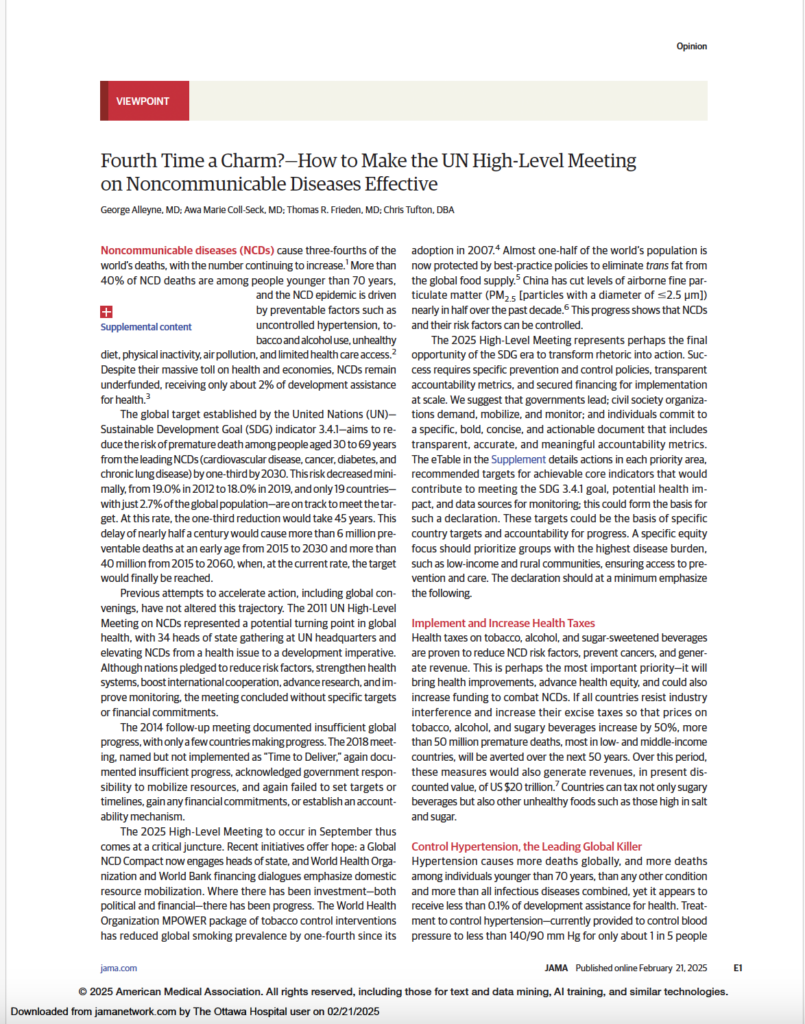
In a new article published in the Journal of the American Medical Association (JAMA), Dr. Tom Frieden and colleagues call for a focused strategy and more investment to address the world’s leading killer diseases. The article outlines specific, effective, and measurable steps countries can take to make progress and increase the chances that the upcoming […]
Trans fat elimination: Maximizing lives saved through policy implementation and enforcement

Once a best-practice trans fat elimination policy is passed and adopted, it must be implemented and enforced. This advocacy document developed by Resolve to Save Lives serves as a guide for the monitoring and enforcement of best practice policies that eliminate industrially produced trans fat from a country’s food supply.
Managing cardiovascular disease with WHO HEARTS

A two-page advocacy brief developed by Resolve to Save Lives to highlight the key elements of WHO’s HEARTS technical package for managing cardiovascular disease: