You’ve been redirected from preventepidemics.org.
Prevent Epidemics is part of resolvetosavelives.org.
How we save lives / Epidemic prevention / Strengthening country architecture for epidemic preparedness
Strengthening country architecture for epidemic preparedness
Five recommendations for strengthening health security at the country level—developed and refined hand-in-hand with governments and partners

Global health security must begin with preparedness and response architecture at the country level.
Activate political leadership and a multisectoral coordination mechanism.
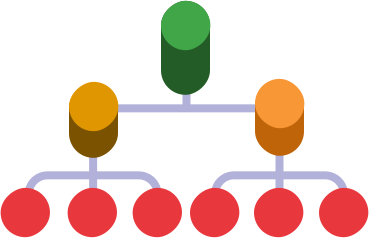
Countries require effective leadership to prevent epidemics. The highest levels of government must commit to sustaining political will, dedicating domestic financial resources, and ensuring accountability. Well-defined responsibilities and coherent strategy, along with multisectoral coordination and dedicated support structures, can help various ministries understand and implement their roles and obligations under the International Health Regulations (2005) and establish frameworks for clear decision-making that are informed by risk, rather than politics.
Learn More
Establish multidisciplinary teams dedicated to preparedness.
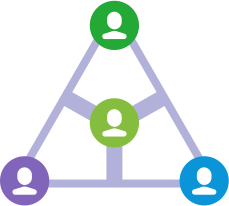
Developing and implementing a National Action Plan for Health Security (NAPHS), which functions as a blueprint for preparedness activities, is a complex process that requires multi-sectoral, multi-system coordination of numerous tasks spread across the 19 JEE tool technical areas. RTSL has partnered with governments to design, fund and deploy dedicated, multidisciplinary preparedness teams working across government offices to help plan, finance and coordinate these activities and accelerate epidemic preparedness.
Download
Adopt an accessible tracking system for implementation of national preparedness plans.

Putting a NAPHS into action requires tracking implementation and funding status, identifying and addressing emergent bottlenecks in a timely manner, and efficient planning and coordination across different government offices. To address these challenges, RTSL has worked with dedicated preparedness teams to pilot a collaborative monitoring tool that helps generate an accurate and shared understanding of NAPHS implementation progress. This tracker provides an efficient way to summarize and communicate progress to inform decision-making and promote accountability among implementing departments and agencies.
Download
Set up timeliness metrics to drive continuous improvement.

Measuring a country’s ability to respond to health threats requires a review of how all elements of the health security system work together to detect and respond to disease threats. 7-1-7 is the only start-to-end assessment of the speed with which disease threats are detected, public health authorities are notified and an effective response is mounted, generating a clear and accurate picture of how well health security systems are working in real time. The 7-1-7 approach to continuous systems improvement uses a simple set of three timeliness targets to help identify bottlenecks and enablers to optimal performance:

Learn More
Streamline partnerships and align donors and technical assistance providers.
Fragmentation is an enduring feature of the global health landscape and undermines the effectiveness of health security efforts. Donors and partners lack coordination, and their activities are often duplicative, while important gaps remain unaddressed. Dedicated preparedness teams can effectively engage with stakeholders and secure buy-in for project implementation. Flexible funding that can be allocated across priority projects— and is tracked and reported against donor commitments—will reduce duplication and allow for contextualized decision-making based on country needs.
Learn More
- Health security bulletin helps coordinate epidemic preparedness in Ethiopia
- Providing fast, flexible funds shortens time to respond to disease threats in Nigeria
- Improving the ability to test for yellow fever: A low-cost, country-led intervention in Nigeria
- With a simple tool, DRC is more effectively managing outbreak funds

Downloads
Strengthening Epidemic Preparedness at the Country Level