Resolve to Save Lives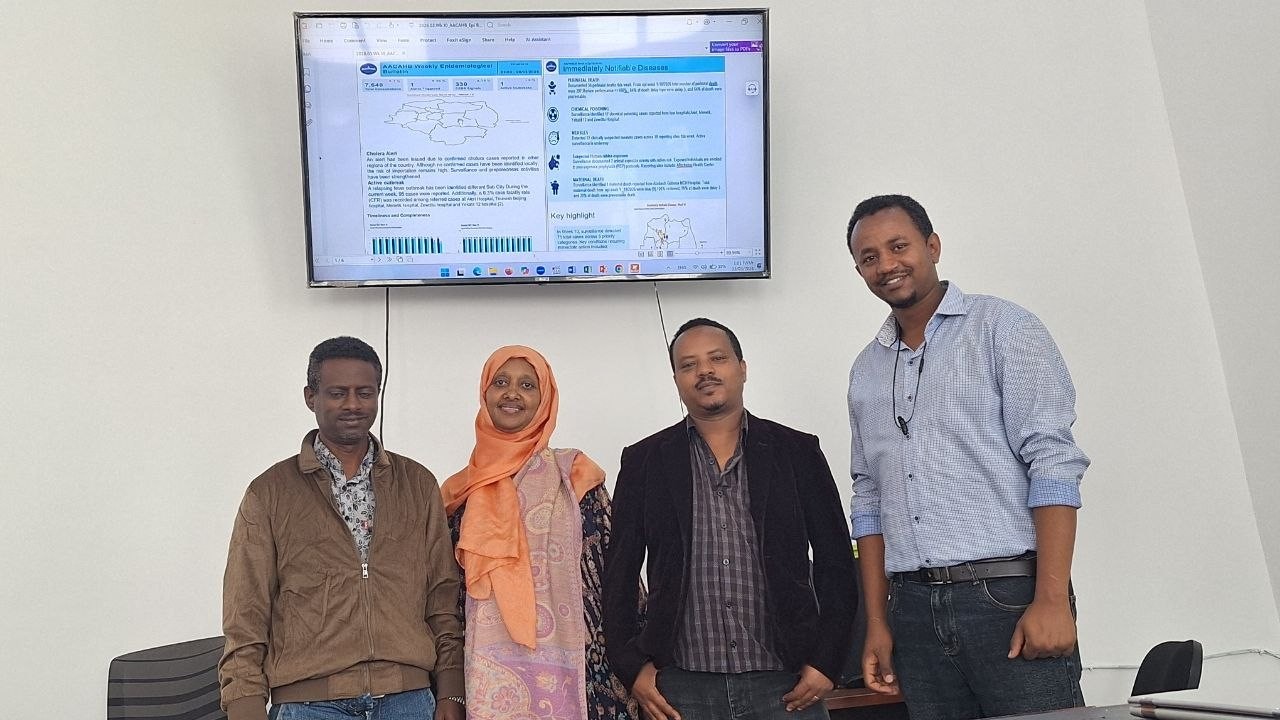
Epidemiological bulletins are a critical tool in epidemic prevention. When health bureaus can quickly identify which threats are rising, communicate clear signals to leadership and act on reliable data, outbreaks get contained before they spread. Without that foundation, surveillance systems generate noise rather than intelligence and responses come too late.
Resolve to Save Lives partnered with the Addis Ababa City Administration Health Bureau (AACAHB) to transform how the city monitors and responds to health threats, cutting bulletin production time from five days to just 40 minutes. The bureau’s bulletins previously relied on fragmented personal files across individual laptops, with no single source of truth. RTSL supported the team to establish a centralised Google Drive repository, develop standardized bulletin templates, build automated R-based scripts for data cleaning, analysis and bulletin production, and embed the workflow in a formal, team-owned standard operating procedure.
Bulletins now run a few focused pages covering the top three to five priority events, down from 15–17 pages covering all diseases, giving leadership cleaner, more actionable intelligence. Rather than spending meetings resolving data compilation problems, leadership now engages directly with findings, discusses what the data means and decides on action. A weekly data quality assurance meeting catches anomalies faster, and the bureau’s director reports that outbreaks are now detected the same day, or within hours, of the first alert. Other directorates are already requesting similar tools, a sign that the approach is gaining traction across the institution.
As Daniel Damtew, a senior director at AACAHB, put it: “Unlike many previous capacity-building initiatives, this program enabled trainees to produce their own outputs using R by selecting and working on priority diseases relevant to their context. This approach has fostered ownership, practical application and sustainability.”