Author:  Resolve to Save Lives
Resolve to Save Lives
At a glance

Challenge: Digital tools replicated paper-based systems, leaving patient needs invisible
Rwanda has made remarkable strides in building its primary healthcare system. But until recently, nearly all of its primary health facilities operated entirely on paper. Nurses, midwives and community health workers managed patient records by hand, transcribing data into spreadsheets, manually tracking follow-ups and relying on memory to flag patients who needed urgent attention. There was, in short, a significant tech vacuum.
The consequences were real. High risk pregnancies would land up in high level facilities, often too late. Patients living with chronic health threats such as high blood pressure or diabetes could fall through the cracks between visits. And frontline healthcare workers, already stretched thin, had no system to alert them when a patient’s condition was deteriorating.
Rwanda’s Ministry of Health recognized that digitizing primary healthcare was essential to improving patient health outcomes. Together with its partners, the Ministry developed eBuzima, an electronic medical record for use at the health center level. While eBuzima faithfully replicated the paper-based process, significant opportunities remained to optimize workflows, redesign the system around the needs of frontline health workers, and build the trust, usability, and responsiveness required for sustained adoption and improved health outcomes.
Solution: A digital tool designed to meet nurses’ needs
Resolve to Save Lives partnered with the Ministry, healthcare workers and developers to enhance and redesign eBuzima. From the outset, the approach was grounded in one principle: the people who would use this tool every day had to shape its design. “Had we not gone to that level at the beginning, building that trust with nurses from the start, we wouldn’t have collectively achieved what we did,” said Debarshi Bhattacharya at Resolve to Save Lives, who leads the digital primary healthcare initiative in Rwanda.
“We visited health facilities to observe workflows, understand pain points and ask nurses directly: what do you want this system to do? What do you not want it to do? Those conversations became the foundation for eBuzima’s design, defining the non-negotiables and guiding every development decision.”
Two facilities served as thought partners throughout the redesign of the tool. Through this partnership, the team identified and built several key enhancements for the system, including a patient worklist that flags unstable or high-risk cases for follow-up, integration with Rwanda’s national health insurance portal to automatically validate patient coverage, bulk lab processing to reduce administrative burden and consolidated patient summaries that give nurses a complete picture on a single page.
Resolve to Save Lives also embedded a user experience team at the Ministry to conduct ongoing facility visits, track issues centrally and work directly with developers and trainers at the Ministry to co-create solutions. When early prototypes using dummy data failed to hold nurses’ attention, the team developed a prototype software patch to populate the system with real facility data so nurses could see their own patients reflected on screen.
“This work has been essential in supporting the Rwandan Government’s primary healthcare digitization efforts and ensuring the needs and realities of frontline healthcare workers shape the tools,” said Mireille Sekamana at Resolve to Save Lives, who oversees the user research team embedded at the Ministry.
Impact: Improved quality of care and patient follow up
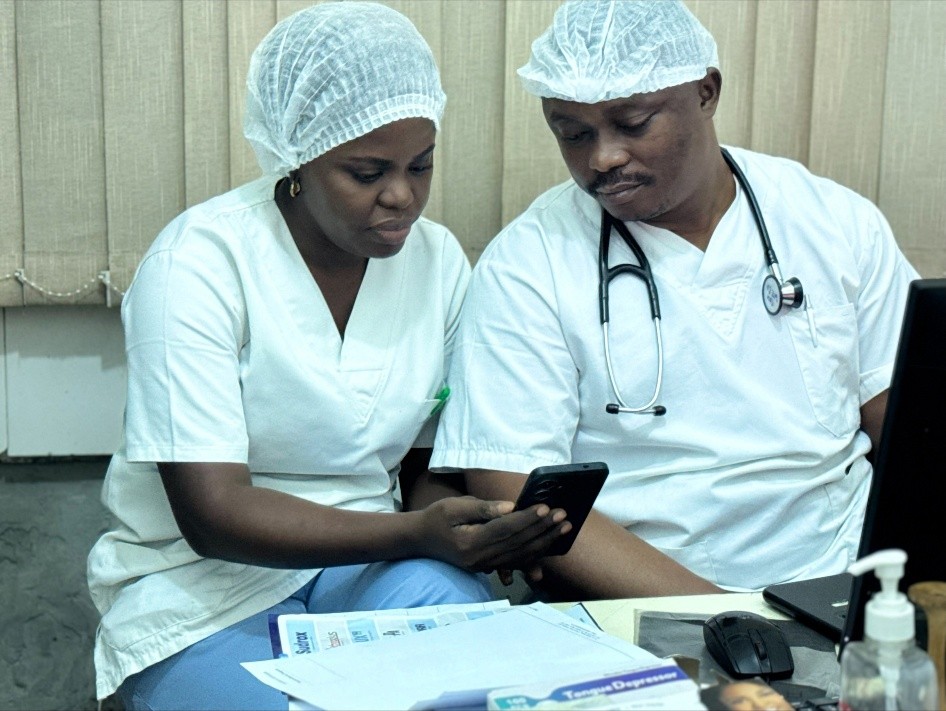
eBuzima is supporting nurses and other health workers to provide the best care possible—and even saving lives. At one health center, a nurse reviewing her patient worklist noticed a pregnant woman with a history of cesarean section who had passed her scheduled referral date to the hospital for delivery. Without the worklist, the patient may have been missed entirely. Because of it, the nurse immediately made the referral.
“That is the promise of well-designed digital health tools. Not replacing clinical judgment, but making sure nothing falls through the cracks”, said Andrew Muhire, Chief Digital Officer at the Ministry of Health.
eBuzima is now deployed across around 70% of Rwanda’s approximately 500 health centers, with all facilities sharing a single, centrally managed version of the system. About 60,000 community health workers operate within the same primary healthcare ecosystem, and plans are underway to connect eBuzima with community-level tools to ensure seamless follow-up and alerts across care settings.
“eBuzima has considerably improved our quality of care and patient follow-up, particularly through the worklist functionality,” said Sister Bonheur Uwakijijwe at Kicukiro Health Centre in Kigali. “The worklist makes it possible to quickly identify unstable or high-risk patients. This facilitates regular follow-up and enables staff to contact them in a timely manner to prevent complications and ensure better care.”
Together with their healthcare worker partners, Resolve to Save Lives and the Ministry are continuing to develop eBuzima by streamlining workflows and building toward a unified patient record that connects care across facilities. The goal is a system that will ultimately support nurses in making timely, informed clinical decisions for every patient.