









How we save lives / Incubator projects / Health taxes
Health taxes
Health taxes can be a triple win: healthier people, lower health care costs, and more government revenue
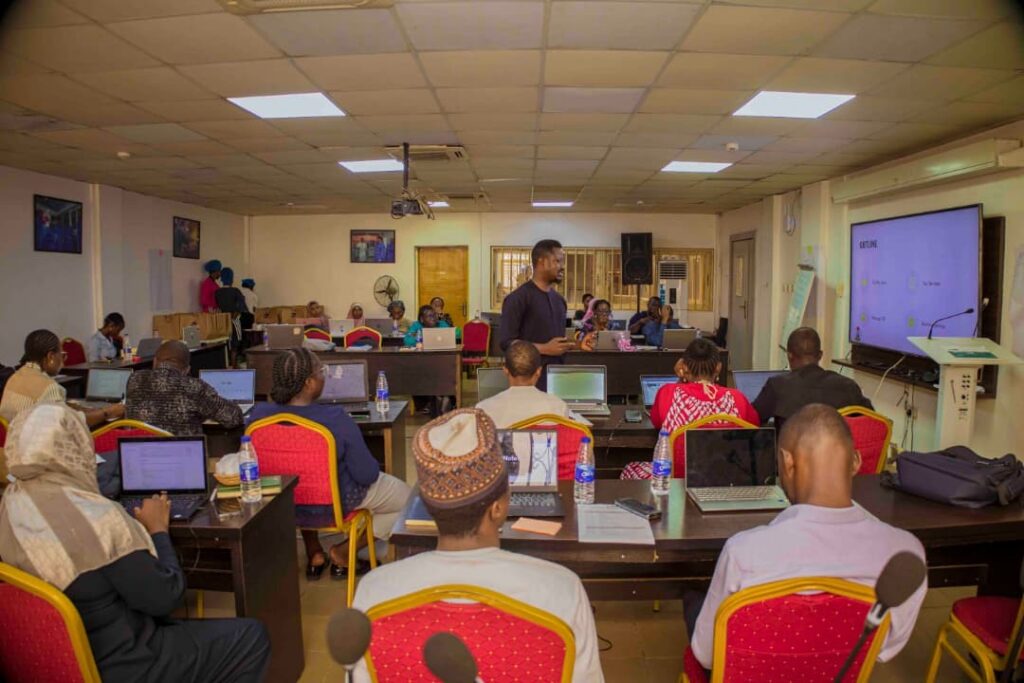
Right: Participants in “Law & Health Security: Strengthening Nigeria’s Legal Preparedness”. Credit – Resolve to Save Lives
Challenge
Countries face a growing burden of disease driven by tobacco, alcohol, and sugar-sweetened beverages, while budgets are constrained as global aid shrinks.
Solution
Resolve to Save Lives works with partners to support country-led implementation of health taxes.
Impact
Health taxes could prevent more than 15 million premature deaths in the next 50 years, while raising billions for governments.
What are health taxes?
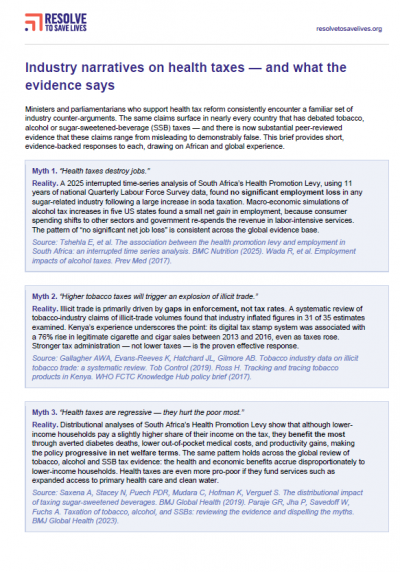
Taxes on tobacco, alcohol, sugar-sweetened beverages and unhealthy foods cut consumption of these harmful products, especially among children and lower-income populations who face the highest health risks.
The result? Fewer deaths, lower health care costs, and new revenue to fund essential public services, including primary health care.
Taxes on four harmful products
How health taxes are a triple win
Better health, lower health care costs, higher revenue
Well implemented health taxes are a triple win:
Healthier people, with lower rates of cancer, heart attack, stroke and other diseases
Lower health care costs for families and governments
More government revenue, that can fund key health programs
Countries need sustainable funding
Countries face a growing burden of disease driven by tobacco, alcohol, and sugar-sweetened beverages. At the same time, foreign health assistance is declining, leaving critical gaps in national budgets. Countries need a sustainable, domestic source of funding.
According to Bloomberg Philanthropies, if countries increased excise taxes to raise prices on tobacco, alcohol, and sugar-sweetened beverages by 50%:
- More than 50 million premature deaths could be prevented worldwide over the next 50 years
- $20 trillion in additional government revenue could be generated.
A healthier future
According to Bloomberg Philanthropies, using taxes to raise prices on tobacco, alcohol, and sugar-sweetened beverages by 50% could have an enormous impact:
premature deaths prevented worldwide over the next 50 years
in additional government revenue generated.
Expanding taxes to unhealthy foods high in sugar, sodium, and saturated fats would further increase these health and fiscal gains.
Health taxes work
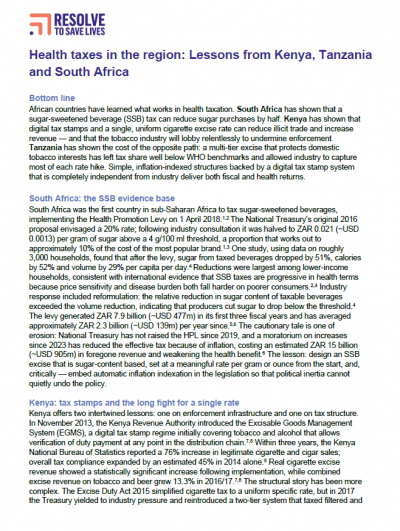
- Rwanda’s tobacco taxes cut smoking rates from 13% to 7% since 2014, preventing thousands of tobacco-related deaths while generating reliable revenue.1
- South Africa’s sugar-sweetened beverage tax reduced consumption by 24% among young children, potentially averting thousands of diabetes cases and saving millions in treatment costs.2
- Kenya’s alcohol taxes collected approximately $400 million in 2023.3
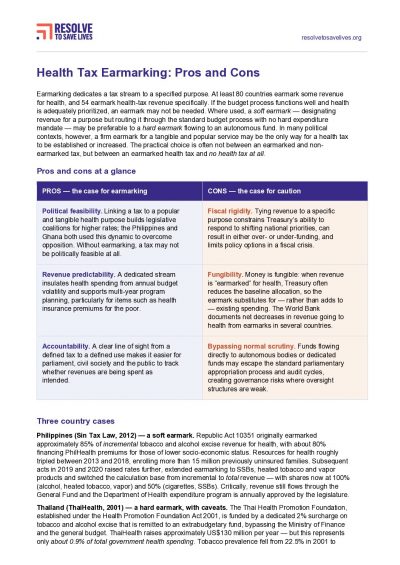
- Ghana’s earmarked health taxes fund the National Health Insurance Scheme, expanding healthcare access to vulnerable populations.
- Colombia’s 20% tax on unhealthy foods raised more than $750 million in 20254, and consumption of UPPs fell by 4% after just 1 year of the policy5.
- In Mexico, taxes on unhealthy foods generated $2.07 billion in tax revenue in 2023 and led to a 5% reduction in taxed food purchases in the first year of implementation.6
Almost no countries in Africa tax tobacco optimally
How RTSL supports health taxes
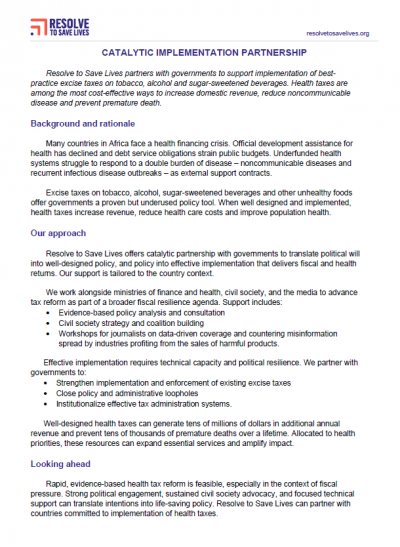
RTSL partners with governments and other partners to design and implement health taxes, one of the most powerful tools against today’s leading killer diseases. Our approach combines technical rigor, operational know-how, and political strategy to deliver lasting wins.
As a result, countries can gain fiscal independence to fund their own health priorities—from hospitals to health workers—and build resilience.
Zambia is leading the way. Facing recent aid reductions, Zambia’s President has championed “health sovereignty.” In 2025, the country passed increased excise taxes on alcohol, tobacco, and sugar-sweetened beverages.
Our approach combines technical rigor, operational know-how, and political strategy to deliver lasting wins.
Assess
Country-specific fiscal modeling: current tax structure, revenue gap, health impact projections, and political landscape analysis.
Design
Tax policy that fits the country’s fiscal architecture, trade obligations, and administrative capacity. Best-practice rates, inflation indexing, enforcement infrastructure.
Implement
Embedded fiscal expertise in Ministries of Finance. Tax stamp procurement. Revenue tracking and evaluation. Ongoing technical support through the budget cycle.
Build support
Civil society advocacy, journalist engagement, and public communications that counter industry misinformation and build the political coalition for reform.
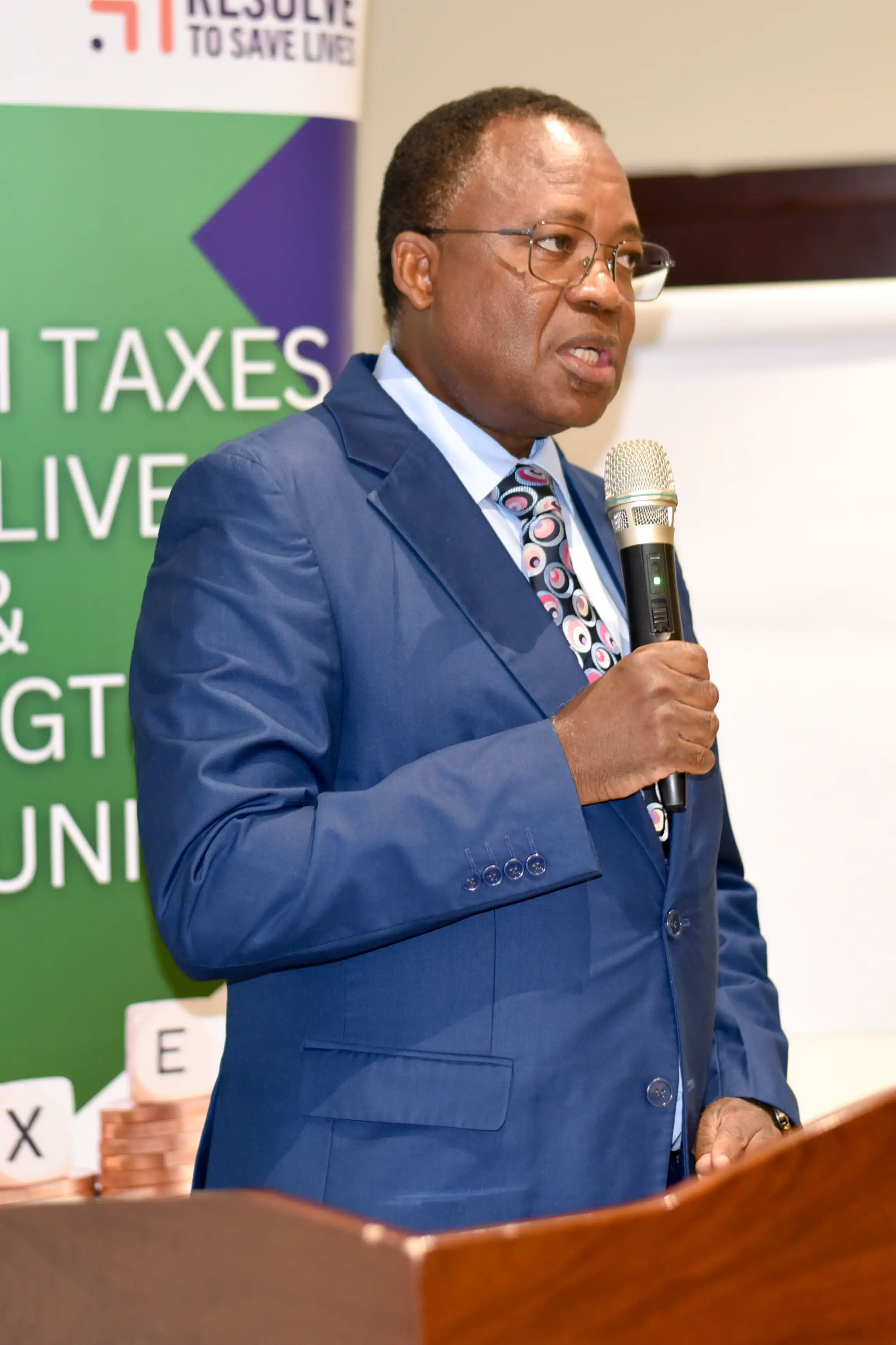
Above, left: Dr Christopher Kalila, MP for Lukulu District, Zambia and member of the Parliamentary Committee on Health and community development
Above, right: Ms. Sibongile Mwamba, MP for Kasama District, Zambia
Health taxes in action
Latest resources
Latest news on health taxes
Contents
- Institute of Policy Analysis and Research – Rwanda 2022 report: https://elibrary.acbfpact.org/acbf/collect/acbf/index/assoc/HASH013c/b705cc5b/b36e2389/872f.dir/ACBF%20Report%20IPAR.pdf
- Public Health Nutrition research paper: https://pmc.ncbi.nlm.nih.gov/articles/PMC11822614/
- Kenya Revenue Authority annual report 2023: https://www.treasury.go.ke/wp-content/uploads/2024/09/Kenya-Revenue-Authority-2022_2023.pdf
- Colombia Tax Authority Revenue Monthly Report: https://www.dian.gov.co/dian/cifras/EstadisticasRecaudo/Estadisticas-de-recaudo-mensual-por-tipo-de-impuesto-2000-2025.zip
- GHAI “Colombia’s Health Taxes are Working” : https://www.advocacyincubator.org/news/2026-02-26-colombias-health-taxes-are-working
- Batis, C., Rivera, J. A., Popkin, B. M., & Taillie, L. S. (2016). First-year evaluation of Mexico’s tax on nonessential energy-dense foods: an observational study. PLoS medicine, 13(7), e1002057.