Resolve to Save Lives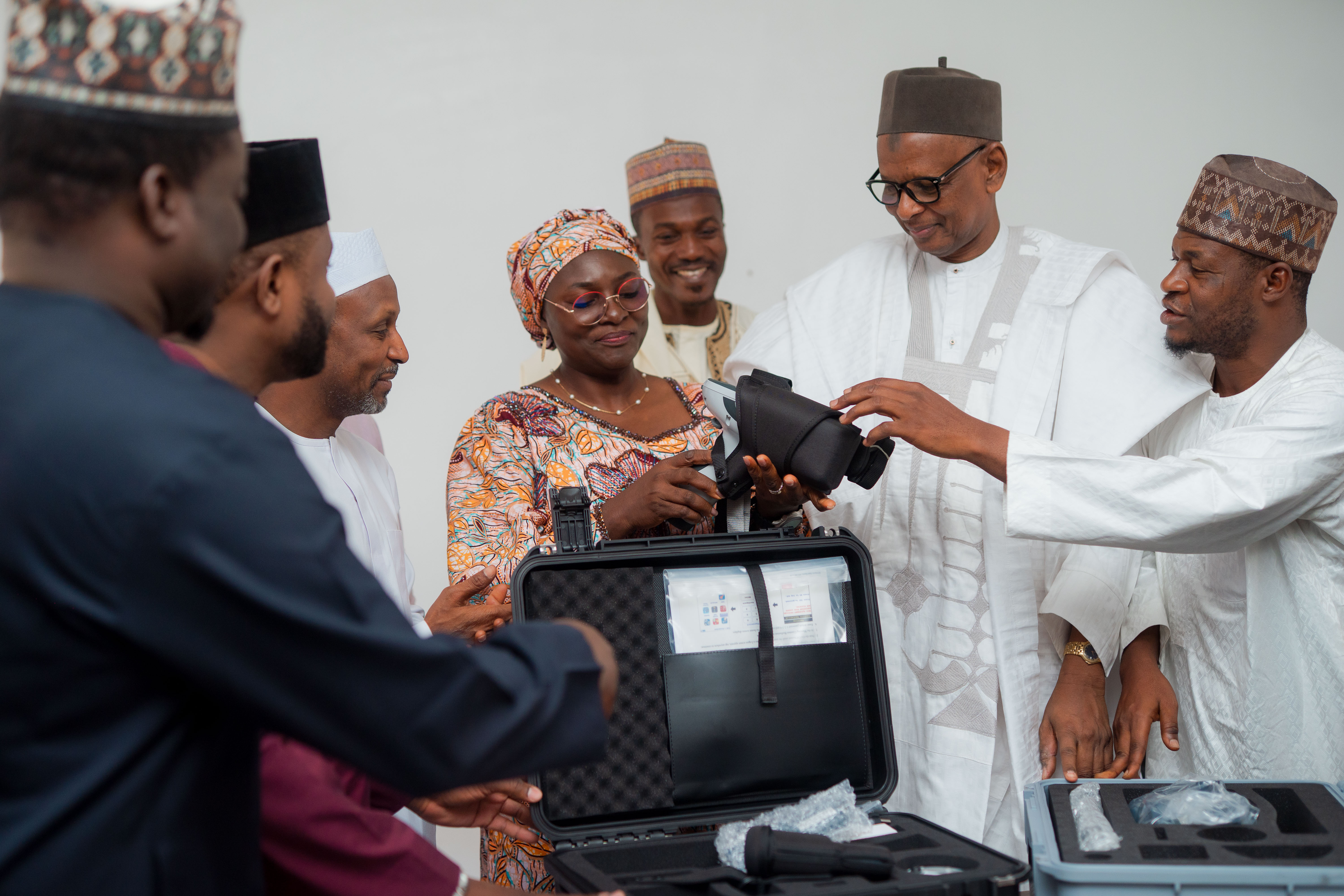
Lead—which contributes to an estimated 1.5 million cardiovascular-related deaths annually—remains in many common household items such as cosmetics, spices, and cookware. Resolve to Save Lives (RTSL) donated an X-Ray Fluorescence (XRF) device to Nigeria’s Kano State Government, strengthening the state’s ability to rapidly screen consumer products for lead and other harmful heavy metals.
Part of our broader initiative in Nigeria to build a national model for reducing lead exposure, the device will allow the Kano State Government to conduct field screening of a wide range of consumer products and use the results to drive both regulatory and public health decisions. The XRF device will be housed with the Kano State Ministry of Environment and Climate Change, which will conduct field testing and share results with the Ministry of Health to inform public health action.
The donation builds on earlier efforts to strengthen Kano State’s capacity to prevent lead exposure. In October 2025, RTSL supported the Kano State Ministry of Health and key stakeholders to develop the Kano State Plan for Lead Poisoning Prevention. We also partnered with the Standards Organisation of Nigeria to train scientists and regulatory officials, including representatives from Kano State, in the use of XRF devices to detect lead in cosmetics and other consumer products. More recently, RTSL also supported the Federal Ministry of Health and Social Welfare and the Kano State Government in developing a draft action plan to domesticate the National Policy on Cosmetics Safety and Health in Kano.
Speaking at the donation ceremony, Nanlop Ogbureke, Executive Director, RTSL Nigeria, said, “This donation represents another important step in our shared commitment to preventing lead exposure and protecting the health of the people of Kano State.” She also reaffirmed RTSL’s commitment to supporting Kano State’s lead detection and prevention efforts and called for close collaboration between the Ministries of Environment and Health to ensure that screening data is used to identify contaminated products, guide investigations, and inform action to protect communities.
Receiving the device on behalf of the Ministry, the Kano State Commissioner for Environment and Climate Change, Dr. Dahiru Muhammad Hashim, represented by the Permanent Secretary, Barrister Mustapha Muhammad, said the device will strengthen the Ministry’s capacity to screen products for lead and other heavy metals in line with the state’s prevention plans, while also enhancing regulatory enforcement.
In the short term, the Ministries of Health and Environment will establish a joint core team responsible for operating the device, conducting product screening, and translating results into concrete regulatory and public health action.