CSO Budget academy / Leveraging COVID-era funding wins for epidemic preparedness in Ghana
Leveraging COVID-era funding wins for epidemic preparedness in Ghana
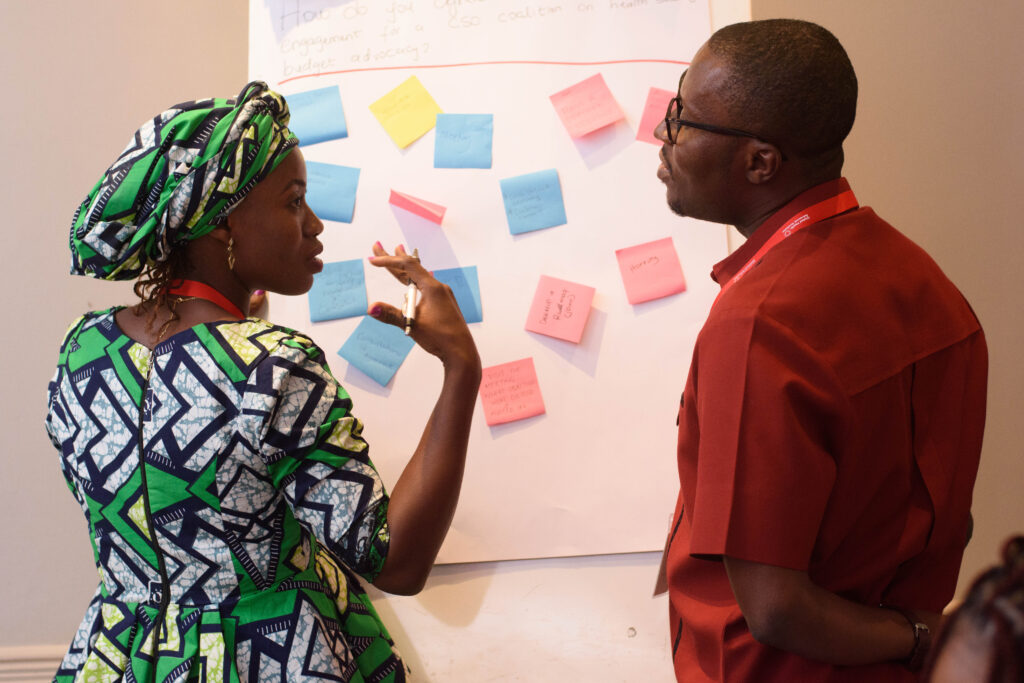
Civil Society Advocacy for Domestic Investment in Epidemic Preparedness
From 2018 to 2025, Resolve to Save Lives, the Global Health Advocacy Incubator and more than a dozen civil society organizations from nine countries—Ethiopia, Ghana, Kenya, Nigeria, Senegal, South Africa, Tanzania, Uganda and Zambia—partnered to increase domestic investment in epidemic preparedness.
Activities spanned coalition building and toolkit development, advocacy and media training and targeted engagement with political and financial leaders to make the case for investments in epidemic preparedness. The program is a testament to civil society’s potential to change policy, catalyze change, bolster domestic resources and safeguard communities.
Background
In Ghana, domestic spending on health security was often overlooked. In 2017, Ghana underwent a Joint External Evaluation (JEE) to assess its readiness to prevent, detect and respond to epidemics. The JEE identified that Ghana had no dedicated funding for epidemic preparedness, despite regular outbreaks of cholera, meningitis, yellow fever, and polio, among others. Though Ghana’s response to COVID-19 has generally been well-regarded, it exposed related issues, including, inadequate infrastructure and healthcare worker staffing along with delays in testing and failure to provide adequate personal protective equipment for healthcare workers, leading to unnecessary infections on the job. And despite signing on to the Abuja Declaration in 2001, which committed Ghana to spending 15% of its budget on the health sector, spending has consistently fallen short of this target, leaving Ghana unprepared.
There were no discussions about domestic epidemic preparedness funding. We had to make it more compelling for the government to prioritize it.
Stephen Atasige GHAI In-Country Coordinator
It was in this context that Resolve to Save Lives (RTSL) and the Global Health Advocacy Incubator (GHAI) began work in September 2020 to increase domestic financing for epidemic preparedness in Ghana in partnership with SEND GHANA, a local policy research and advocacy organization. An initial landscape analysis zeroed in on three key findings:
-
Ghana had a general health security funding deficit and insufficient funds earmarked for emergency operations centers.
-
Without clear processes to allocate emergency contingency funding, distribution was ad hoc, inefficient, and delayed.
-
The JEE recommended establishment of an emergency fund and clear guidance on how and when it would be used.
Establishing the campaign
This understanding of the context led to the advocacy goal of increasing central government commitment and funding for the National Action Plan for Health Security (NAPHS). While Ghana had completed its NAPHS in 2018, political and financial support for its implementation had been largely absent. Advocates also decided to explore the possibility of funding at the local government level; the landscape analysis showed that local governments were meant to have epidemic preparedness plans and funding sources in place to support response activities but did not.
The whole idea was to build partnership and network with other organizations to be able to advocate because we believe advocacy is about numbers. Our voice may not get far, but if we have others joining, then we can get somewhere.
Harriet AgyemangCountry Director, SEND GHANA
The campaign was multi-faceted and sought to engage a wide constituency in support of improved epidemic preparedness, at both the national and subnational level. With 25 years of experience, SEND GHANA had deep roots in civil society spaces and convened a powerful CSO coalition whose members drafted advocacy plans. They also mobilized and trained epidemic preparedness champions, including religious leaders and traditional rulers, as well as national and subnational CSOs. These influencers, along with youth advocates, disseminated messages about the need for increased funding for epidemic preparedness to their communities, supported by bespoke media toolkits. Scholars were also key players and were enthusiastic in bringing advocacy tools into their academic work.
We acquired knowledge through the project, not just for us the implementers, but also for our partners that we worked with – the journalists, the champions, and others. We all increased our knowledge around epidemic preparedness and response and the need for it and the strategies we could use.
Harriet AgyemangCountry Director, SEND GHANA
SEND GHANA, together with the GHAI in-country coordinator, regularly engaged the government by creating forums for dialogue with policy makers, members of parliament, and civil society on the impacts of epidemics and the importance of epidemic preparedness funding both at the national and district level. SEND GHANA also held regional budget fora to gather community input on budget priorities for epidemic preparedness funding and establishment of emergency operation centers. These inputs were collated and provided to the Ministry of Finance to inform its budget development processes, including at Citizen’s Budget Input Forums held by the ministry. The team also strategically partnered with the National Centre for Early Warning and Response Mechanism (NCCRM), operating under the office of the Ghanaian presidency, which was mandated to advise on issues of epidemic preparedness and response. The NCCRM regularly used convening powers to create a conversation at the community level and spur community engagement to encourage decision-makers to allocate resources.
SEND GHANA extensively engaged the media through press conferences, press releases, interviews on radio and TV, and the creation of documentaries, and deployed its newly honed social media skills. Journalism fellowships supported training on how to accurately report on issues of epidemic preparedness, and awards ceremonies highlighted impactful reporting.
Timeline and successes
| Sep 2020 | Ghana campaign begins |
|---|---|
| Jan 2021 | Tema Metropolitan Assembly in the Greater Accra region, Ketu Municipal Assembly in the Volta region and Birim South in the Eastern region include epidemic preparedness and response funding which increased in subsequent years |
| Dec 2021 | Epidemic preparedness response and funding priorities included in Medium-Term National Development Policy Framework |
|
2022 |
Ministry of Finance increases Ministry of Health budget in response to SEND GHANA submission |
| Jan 2023 | Ministry of Finance requests that SEND GHANA develop a proposal for a public health emergency fund |
| Jan 2023 | Adaklu district in the Volta region includes epidemic preparedness and response in budget for first time |
| Jan 2024 | Afigye Kwabre Municipal Assembly in the Ashanti region included epidemic preparedness and response in budget for first time |
Rapidly, the advocacy focus crystalized around establishing the Public Health Emergency Fund as the vehicle to fund epidemic preparedness goals at the national level. To mobilize domestic resources to battle COVID, Ghana had established a COVID-19 Levy and National COVID-19 Trust Fund, which were major successes, mobilizing GHS 1.141billion (US$ 110M) in 2022 alone, over 10% of the ministry of health budget. It became clear that as the COVID-19 crisis wound down, these vehicles could be repurposed for ongoing epidemic preparedness and response activities.
Gaining traction
Government acknowledged that they had not done well on the JEE and had a medium-term plan that a fund would be established. But beside being in the plan, it seems no one even knew. The awareness built through radio and engaging the media, engaging in in-person conversations, really brought this to people that we haven’t done well, and government has made commitments and has not implemented the commitments. And it then gave us leverage for others to join us.
Harriet AgyemangCountry Director, SEND GHANA
As a direct result of this advocacy work, Ghana’s Medium-Term National Development Policy Framework for 2022-2025,2 released in December 2021, increased prioritization of epidemic preparedness and response activities and, crucially, mentioned the establishment of a public health emergency fund. But having the fund referenced in the plan was only a first step. The plan could be used in advocacy, but first policymakers needed to hear about the goals within the plan which required concerted effort.
Extensive advocacy for a public health emergency fund was bolstered by a citizen’s petition addressed to the President, the Speaker of the Parliament, the Chairpersons of the Parliament’s Health and Finance Committees, the Ministers of Health and Finance, and other relevant policy makers. This, along with years of sustained engagement, led the Ministry of Finance in January 2023 to invite SEND GHANA to develop a proposal for the fund. The team worked extensively. For example, it held workshops to get input on the proposal, which was presented to government in late 2023. Ongoing interactions led to clear and vocal support from presidential advisors, cabinet officials, and members of parliament. The ministry of health agreed to fast-track the legislation and requested technical assistance to support the drafting process.
Despite progress, an election in late 2024 and a change in government in 2025 brought the process to a halt. During the electoral period, the advocacy team highlighted the importance of funding for epidemic preparedness and response. This helped prompt the new government to commit to taking action on epidemic preparedness. The team has continued to engage with officials, but while significant progress has been made with the new administration, the formal adoption of a Public Health Emergency Fund remains uncertain.
Impact and next steps
Although no formal fund has been established, the Ministry of Finance cited submissions by SEND GHANA urging increased funding for the NAPHS as a reason for increasing the 2022 Ministry of Health budget. But because the Ministry of Health retained discretion over how the new funds could be spent and no resources were specifically ring-fenced for epidemic preparedness, the impact was limited.
At the subnational level, mirroring the national model, SEND GHANA worked with champions, CSOs, media, and local governments in 15 districts to spur new epidemic preparedness funding. Advocates partnered with traditional rulers, religious leaders and NGOs to sensitize local government officials and assembly members about the importance of epidemic preparedness funding. Media, and in particular radio stations, were used to create a conversation at the community level and spur community engagement to encourage decision-makers to allocate resources. The coalition was able to incite five of these localities to allocate funding toward epidemic preparedness while several others are actively considering funds or establishing preparedness plans.
Though Ghana’s public health emergency fund is yet to be established, the groundwork has been laid in the ecosystem of players knowledgeable on and devoted to epidemic preparedness. This includes the civil servants and members of parliament who remain in office, along with the many CSOs and champions trained and equipped with fact-based arguments. There also remain many journalists trained in how to effectively cover issues of epidemic preparedness in print, radio, and television.
In 2023, and in the absence of an established mechanisms, Resolve to Save Lives, at the request of Ghana Health Service, was able to provide emergency funds to support a rapid response which helped limit a Lassa Fever outbreak to 27 cases and 1 fatality. The provision of emergency funds by an outside organization once again drew attention to the urgent need to allocate domestic funding sources for epidemic preparedness and response.
With ongoing changes to global and country health architecture and funding landscape, the Ghanaian government has taken steps to free up more domestic funding to be used in the health sector. It has given advocates hope that there will be new domestic funding pots available for epidemic preparedness.
This project has ended but any platform we get we will still raise the issues until we see that the fund has been passed into an act by parliamentarians. We aren’t stopping.
Harriet AgyemangCountry Director, SEND GHANA
The recently concluded 2025 Joint External Evaluation once again recommended the creation of a public health emergency fund, creating a new impetus to drive this ecosystem of Ghanaian advocates and policymakers to make lasting change.
We said to district leaders if you always want to wait for the national government, you won’t be able to respond, so you need to think about your own funding. Using your own funds has flexibility rather than national funding which has a lot of guidelines. That approach worked for us which is why we have some of them working hard to get a fund established and others allocating funding through their annual budgets.
Harriet AgyemangCountry Director, SEND GHANA
Lessons learned and legacy
As one of the initial countries to carry out epidemic preparedness funding advocacy, Ghana served as a testing ground for future campaigns and a model for other efforts. Some key lessons learned included:
- For early adopters like Ghana, documenting and sharing lessons is critical. The team spent a great amount of time analyzing the budget in Ghana, leading to the creation of a National Budget Basics course to help others understand how to analyze their own health budgets. Similarly, Ghanaian advocates benefited from other materials such as the Budget Advocacy Framework, which helped build local capacity.
- The experience in Ghana revealed that advocacy goals are highly vulnerable to external factors. The campaign had a golden opportunity with the potential transformation of the COVID levy—it did not need to make the case for a new untested mechanism. And advocates had time, resources and momentum. But an election changed the key players who had been supporting the creation of the public health emergency fund, requiring advocates to start over with a new government. Successful advocacy often requires both flexibility and perseverance, and building and sustaining relationships over time — not just in a transactional way, but through genuine connection with people who may move on yet remain important allies.
- To capture the attention of busy policy makers, comprehensive strategies using media, communities, CSOs, influencers, youth advocates and convenings can create tremendous momentum—particularly when efforts are well-coordinated, backed by evidence-based argumentation, and amplified by the voices of youth.
- At the district level, advocates experienced real fiscal and bureaucratic limitations. Without access to international financing mechanisms and donor funds, localities are much more fiscally constrained than the central government. At the local level, allocations needed to be created on paper, accounts had to be opened, and committees established to guide spending. This was time consuming and complex, and advocates learned to navigate delays.
- When advocates are seen as credible and invest time in building relationships, policymakers can be invaluable partners. At the district level, SEND GHANA took time to listen to the concerns of policymakers, understand the barriers they faced, and adopted a supportive—not confrontational—approach. At the national level, a regular exchange of information helped advocates fine tune strategy and have back channels to understand how actions would be received.
It’s inspiring to see how advocacy can really change people’s interest and get policymakers like MPs to support an idea they haven’t considered before. There are MPs that then make statements independently in support just because we have sensitized them enough to understand.
Stephen AtasigeGHAI In-Country Coordinator