Team-based care

High-quality routine blood pressure care from healthcare workers, not just physicians

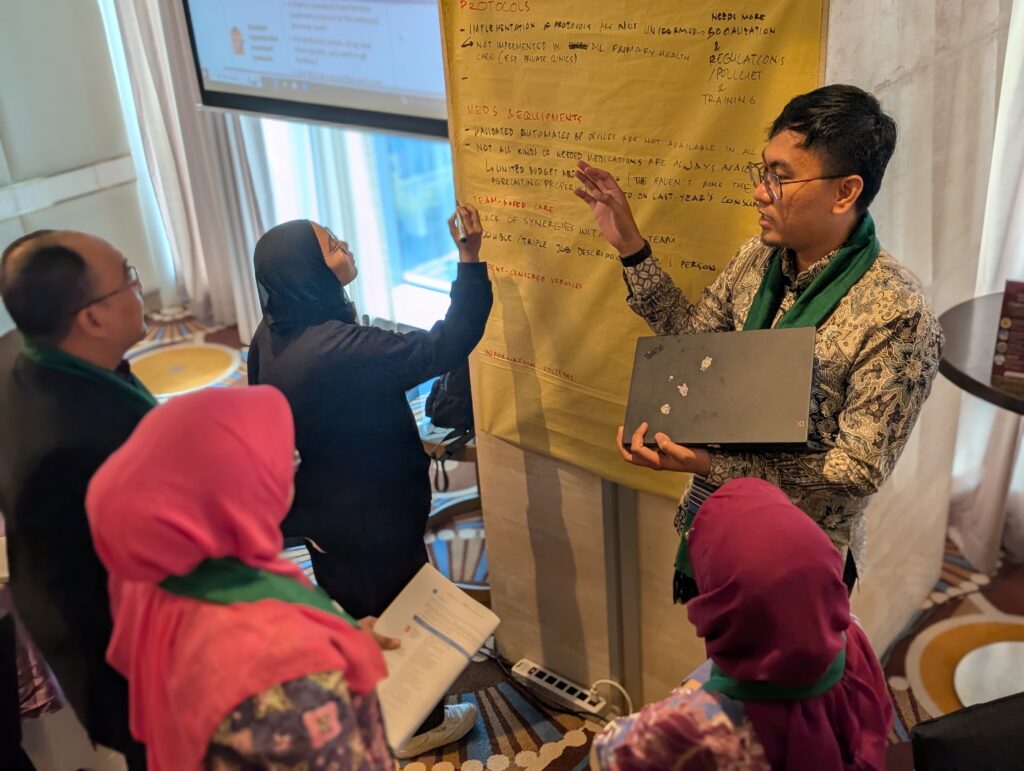
Right: Participants in “Law & Health Security: Strengthening Nigeria’s Legal Preparedness”. Credit – Resolve to Save Lives

Team-based care for hypertension control

Challenge

More than a billion people live with high blood pressure, but there aren’t enough physicians for the life-long routine care needed to help keep everyone’s high blood pressure controlled.

Solution

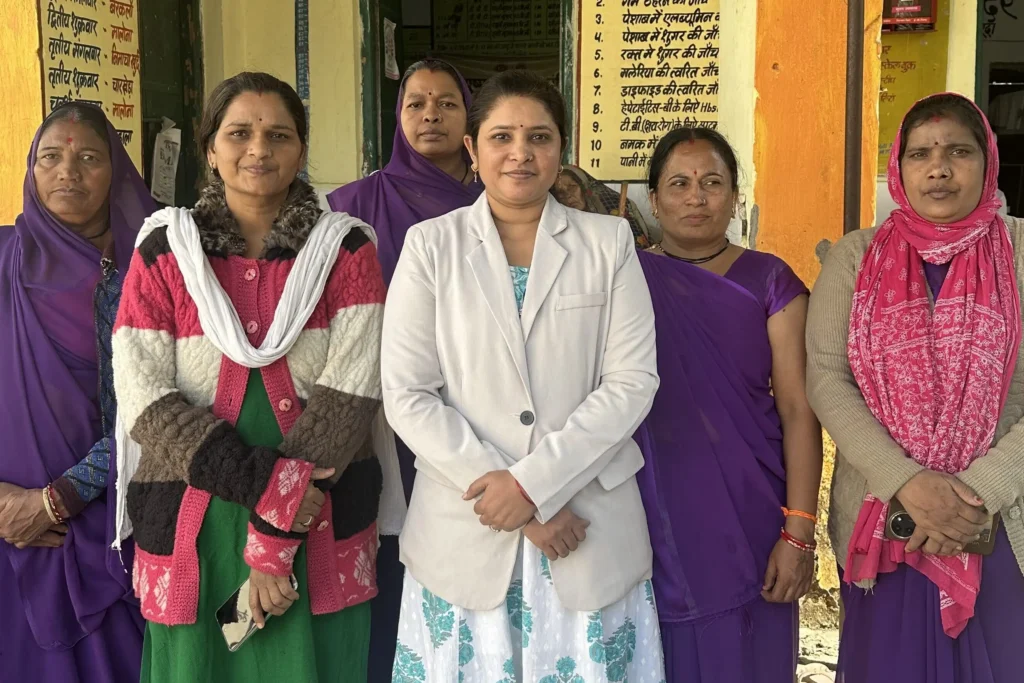
Under team-based care, healthcare workers such as nurses, community health workers, and pharmacists train to work together to provide quality blood pressure care in non-specialty clinics.

Impact

Healthcare workers trained to provide quality routine care work together to treat more patients each day and allow doctors to focus on complex cases, improving primary healthcare for everyone. 

What is team-based care?

With team-based care, non-physician healthcare workers such as nurses, community health workers, and pharmacists take on routine but time-consuming tasks like measuring blood pressure, refilling prescriptions, counseling, and initiating treatment.

Activities suited to each cadre in a team-based care model

Activities suited to each cadre in a team-based care model
  Cadre
Activity
Doctor
Nurse
Community health worker
Pharmacist
Clerk
BP screening & measurement          
History & assessment          
Diagnosis & treatment initiation   •  •  •   
Education & counselling          
Treatment adjustment   • • •  
Medication refill     •     
Complex cases          
Patient follow-up          
Referral to other facilities    •      
Updating patient records after task performed          
Patient data management          

Well-suited for cadre

Cadre can perform, but suitable to delegate

•Can perform under proper training and supervision, and with legal authority
How team-based care works

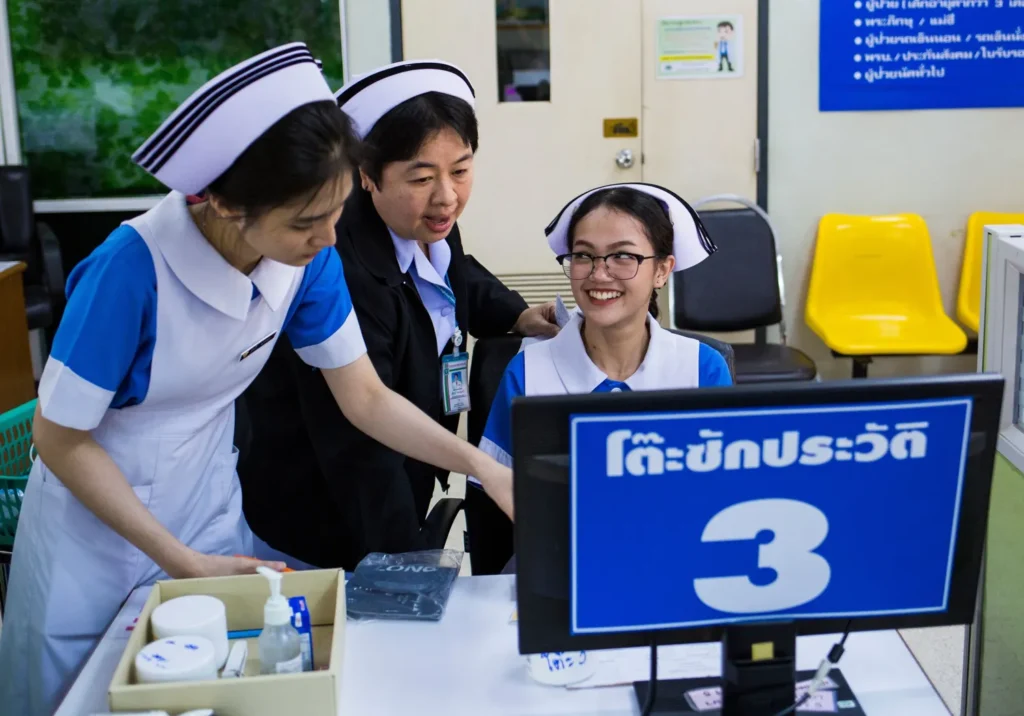
Imagine that you’re a physician in a busy clinic that serves hundreds of patients a day. You’d have only three or four minutes with each patient—time to take blood pressure, but not much else.  

With team-based care, non-physician healthcare workers are trained to perform  routine tasks that are part of blood pressure care, a small shift in responsibilities can make a big difference:

  • More healthcare workers are available to see patients.
  • Patients can receive regular follow-ups at a facility closer to home—like a local primary healthcare clinic—where specialized providers may not always be present.
  • Doctors are freed up to provide supervision and to focus on complex cases.
  • Clinics run more smoothly, improving outcomes for everyone seeking care, not just people living with high blood pressure.

How we support team-based care

We work with partners to make team-based care a part of their blood pressure management programs. We support: 

  • Simple, standardized treatment protocols, which make it possible for healthcare workers to safely treat uncomplicated high blood pressure.
  • Training in blood pressure management for healthcare workers, including on-demand training on smartphones, supportive supervision and mentoring.
  • Validated digital blood pressure devices, which make it easy to take blood pressure accurately, every time. See box below.
  • Digital health records that travel with the patient to any facility or doctor they choose. 
  • Telemedicine services so healthcare workers can receive real-time support from specialists when needed.

Technology that powers team-based care: Validated digital blood pressure devices

We need good data to make life-or-death decisions about blood pressure management. Inaccurate blood pressure readings can leave patients vulnerable to heart attack and stroke.

Validated automated blood pressure devices reduce human error and make it possible for nurses and community health workers to take accurate blood pressure readings consistently.   

But regulation is weak, and most automated blood pressure devices in global markets aren’t independently validated. This and other challenges—low trust, limited awareness, poor availability, and affordability constraints— mean digital blood pressure devices are not used widely enough.  

RTSL partners with hypertension control programs to promote exclusive use of these monitors, ensuring accurate blood pressure measurement every time.

Team-based care in action

JACC-Lessons learned article cover

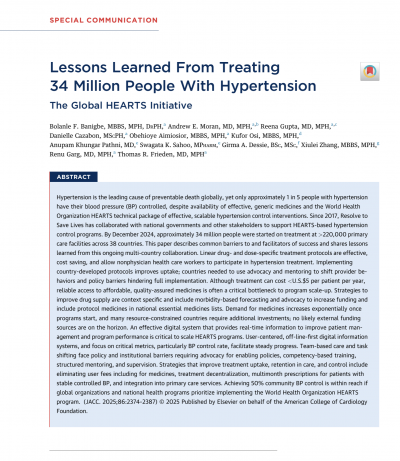
Lessons learned from treating 34 million people with hypertension

Journal of the American College of Cardiology
December 1, 2025
Hypertension is the leading cause of preventable death globally, yet only one in five people with high blood pressure have it under control despite availability of effective, low-cost medicines and…
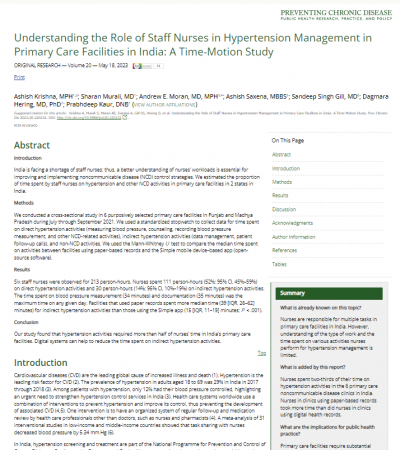
Understanding the Role of Staff Nurses in Hypertension Management in Primary Care Facilities in India: A Time-Motion Study

Understanding the role of staff nurses in hypertension management in primary care facilities in India: A time-motion study

Ashish Krishna et al.
May 31, 2023
Study estimating time spent by staff nurses on hypertension and other NCD activities in primary care facilities and time savings from the Simple app
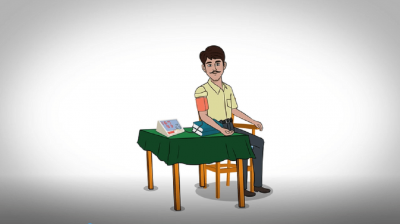
Video: Measuring Blood Pressure Accurately

Measuring Blood Pressure Accurately

Resolve to Save Lives
December 1, 2023
Short video with a step-by-step guide for healthcare workers on how to accurately measure blood pressure
Team-Based Hypertension Management in Primary healthcare

Team-based hypertension management in primary healthcare

Resolve to Save Lives
September 30, 2021
A guide that expands upon the WHO’s team-based care module of the HEARTS technical package, providing guidance and resources to assist in implementing team-based care for hypertension at the primary…
Screenshot 2024-03-29 at 9.21.50 AM

Validated Automated Blood Pressure Devices

Resolve to Save Lives
February 29, 2024
Fact sheet from Resolve to Save Lives on why validated, digital blood pressure monitors are preferred.

Latest news