Securing packaged food policy wins
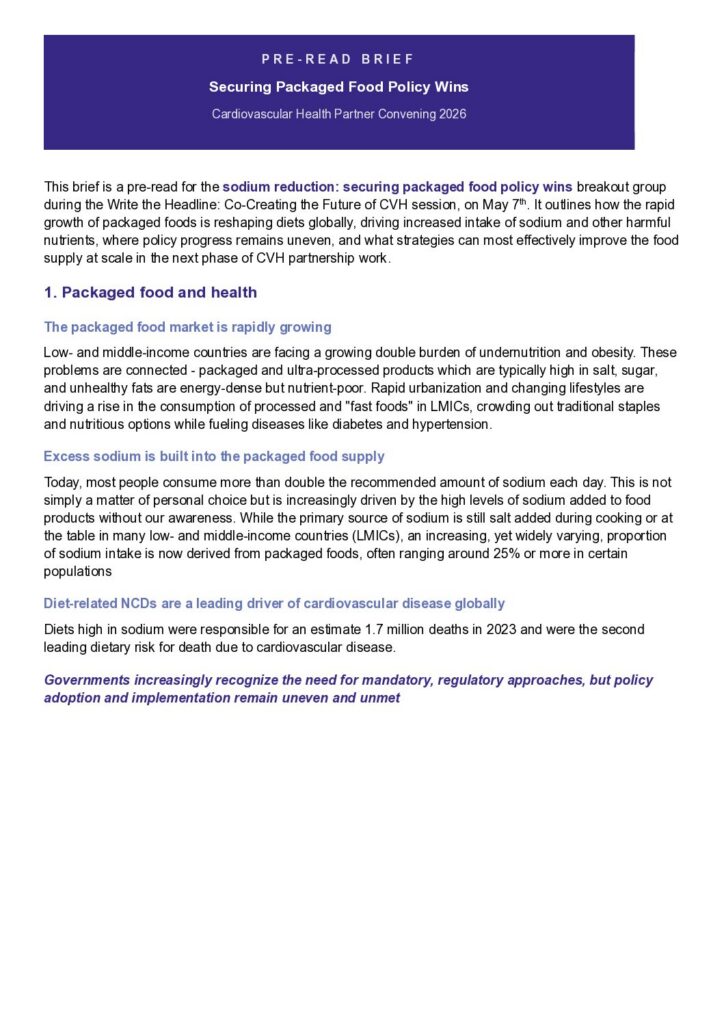
This brief is a pre-read for the sodium reduction: securing packaged food policy wins breakout group during the Write the Headline: Co-Creating the Future of CVH session, on May 7th.
ERPHC and 7-1-7: A Measles Case Study in Sierra Leone
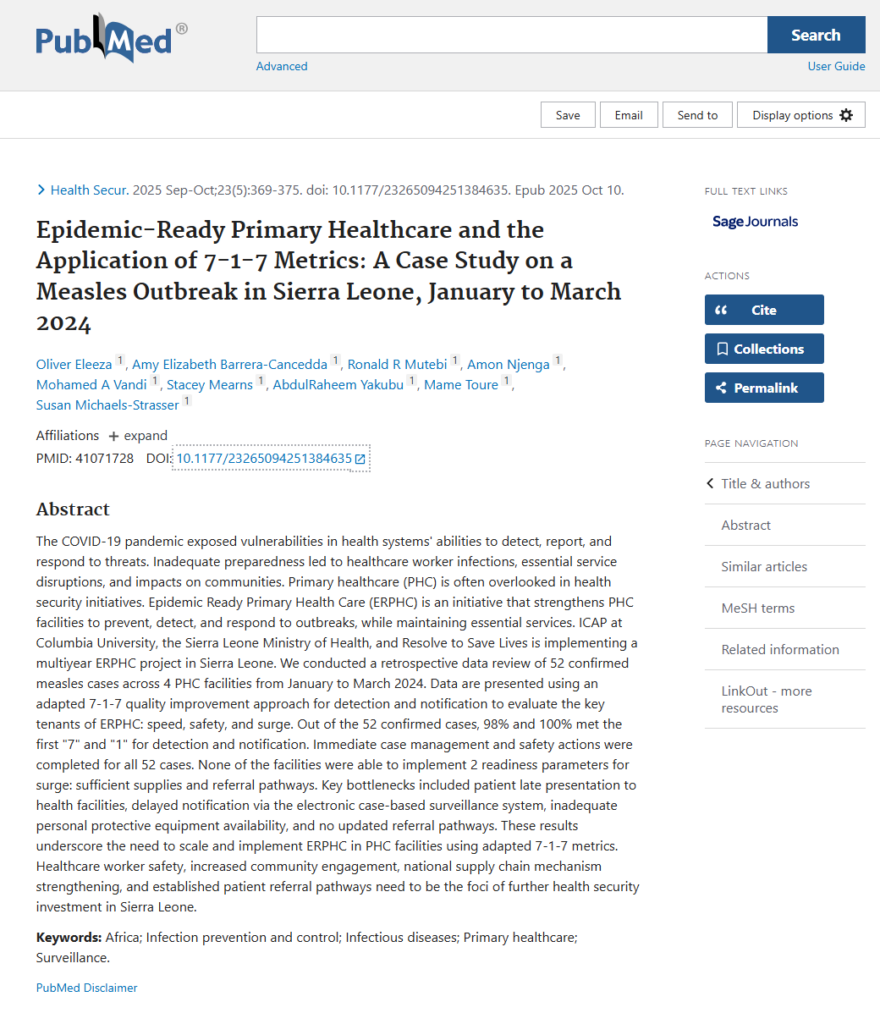
This study from Resolve to Save Lives and partners published in the Journal of Health Security evaluates 52 confirmed cases of measles during a 2024 outbreak in Sierra Leone. The cases occurred across four primary health care facilities and were analysed using an adaptation of the 7-1-7 target, a quality improvement tool measuring speed, safety […]
White paper: Low-sodium salt substitutes for hypertension and cardiovascular disease control in India
This white paper summarizes current evidence and concludes that low-sodium salt substitutes (LSSS) can play an important role as a population-level sodium reduction strategy in India. Developing recommendations for its use, and improving awareness, acceptability, affordability, and access, could help reduce the burden of hypertension and other cardiovascular diseases.
Consensus on the Use of Potassium-Enriched Low-Sodium Salt Substitutes (LSSS) as a Public Health Intervention in India
A consensus statement on the use of potassium-enriched low-sodium salt substitutes (LSSS) in India developed by RTSL and TGI in consultation with doctors, nutritionists, public health specialists, and representatives from government and other organisations. The statement recommends priority actions for India to use LSSS as a public health strategy to address high blood pressure and heart disease in India. Read the […]
Strengthening frontline worker outbreak preparedness and response knowledge in Nigeria and Uganda
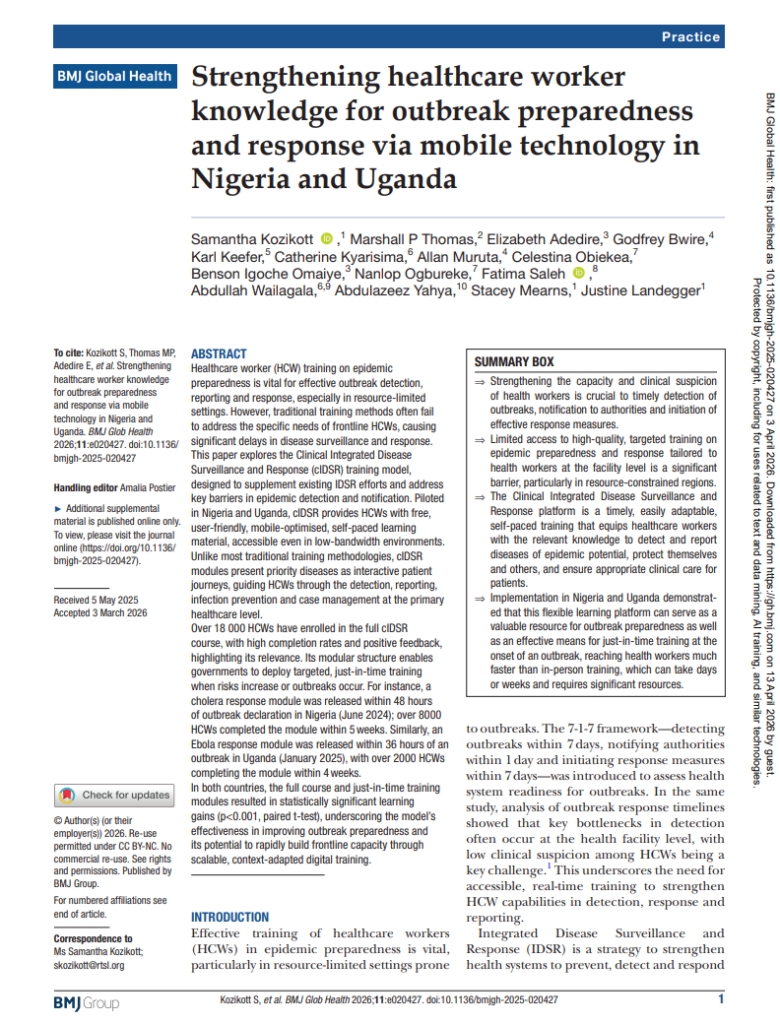
A new digital training model called Clinical Integrated Disease Surveillance and Response (cIDSR) is helping frontline workers respond faster and more effectively to disease outbreaks. This analysis from Resolve to Save Lives explains how the training overcomes the limitations of traditional training using a mobile-optimised, self-paced platform that guides health care workers through real patient […]
7-1-7 data insights: Why cholera response can’t keep pace with detection
7-1-7 Alliance analysis of 7-1-7 data across six countries point to a persistent challenge: In nearly two-thirds of cholera responses, coordination constraints delay critical action.
A System in Transition: Nigeria Country Report
A new landscape assessment shows that financing disruptions are increasing risks to Nigeria’s surveillance, laboratory, and specimen transport systems, while highlighting opportunities to strengthen more integrated and resilient public health systems.
Rapid Outbreak Financing to Prevent Epidemics
Issue brief exploring how fast, flexible funding can reduce outbreak transmission with timely and effective containment activities.
Adoption and use of the 7-1-7 target for timely outbreak detection, notification and early response in the human and animal sectors in humanitarian crisis-affected South Sudan: A mixed-methods study during 2025
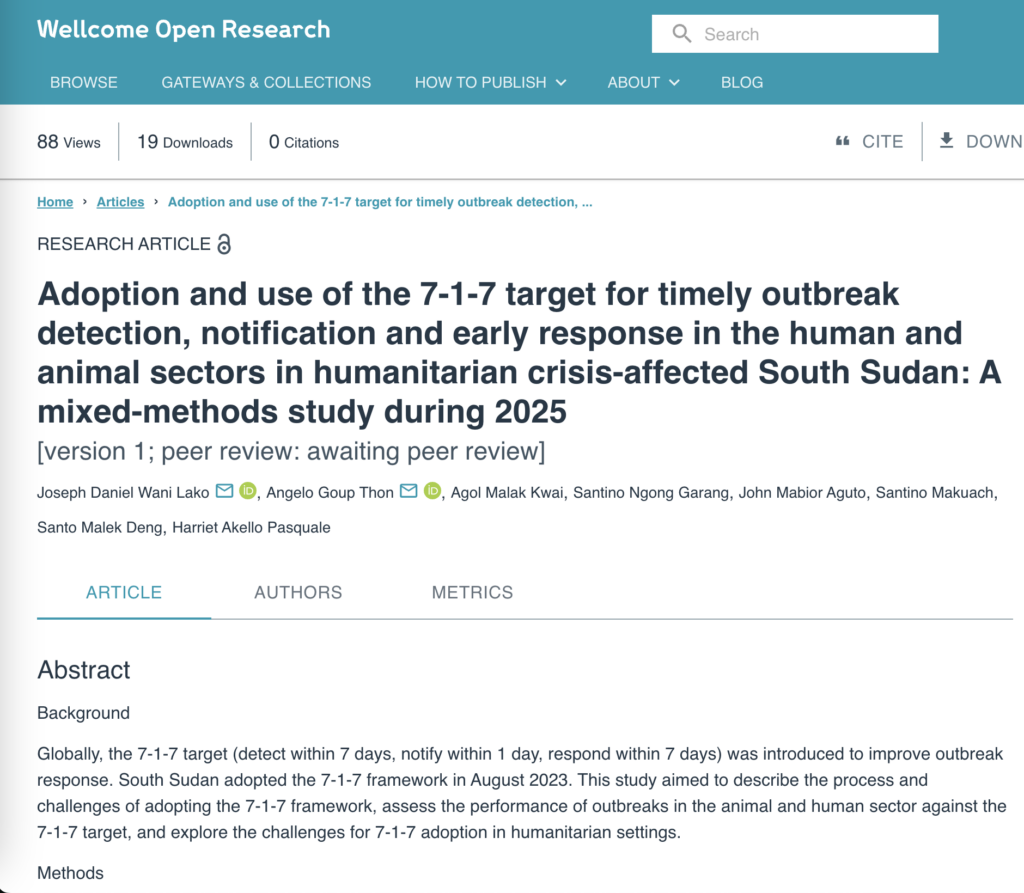
Wellcome Open Research article published on February 16, 2026. This study was conducted by 7‑1‑7 Alliance partners in South Sudan and supported by the Wellcome Trust (228152/Z/23/Z).
Implementation of 7-1-7 for improving timeliness in outbreak detection and response in Thailand: A mixed-methods study on challenges in application and achievement of targets in 2024-25
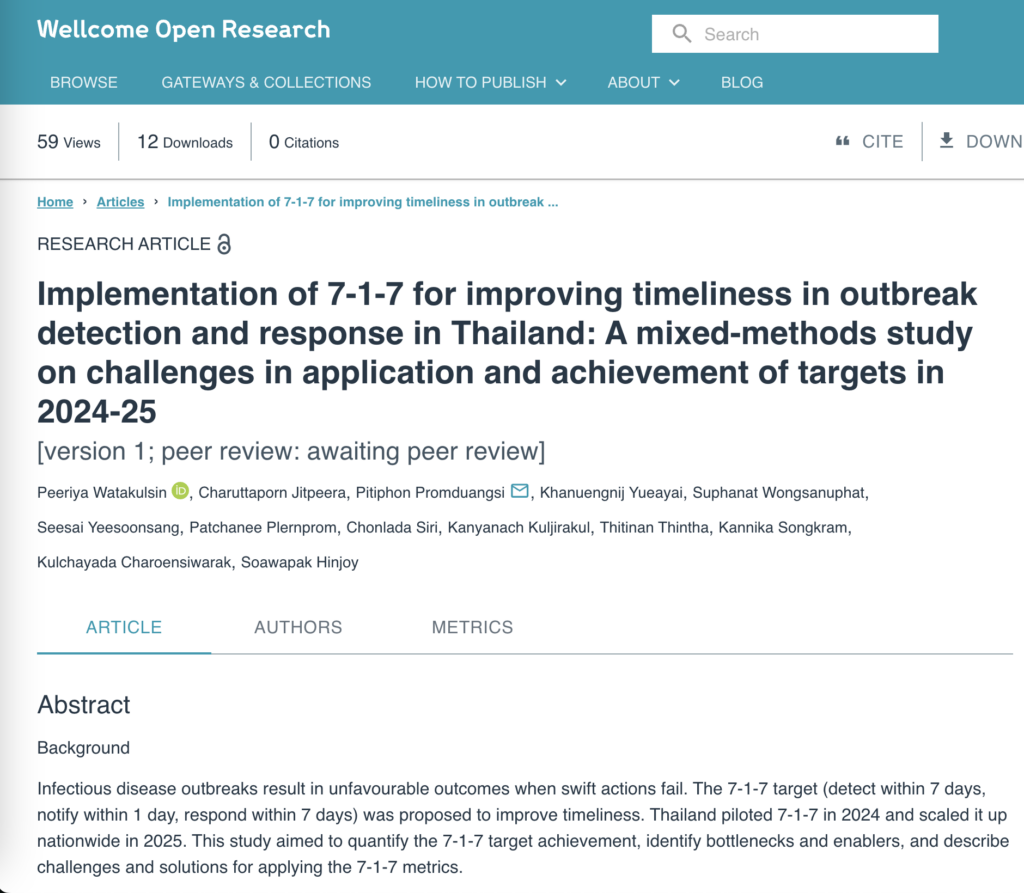
Wellcome Open Research article published on February 12, 2026. This study was conducted by 7‑1‑7 Alliance partners in Thailand and supported by the Wellcome Trust (228152/Z/23/Z).
Evaluating the 7-1-7 target for epidemic detection, notification and response in Zambia: An operational research study, 2023-2025
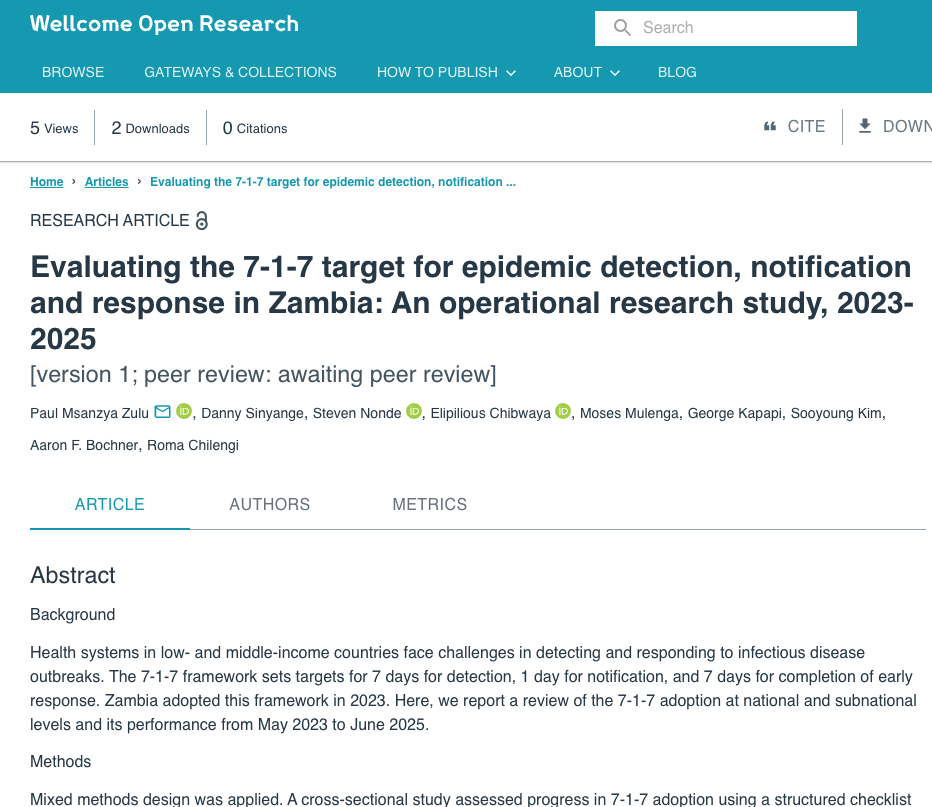
Wellcome Open Research article published on January 26, 2026. This study was conducted by 7‑1‑7 Alliance partners in Zambia and supported by the Wellcome Trust (228152/Z/23/Z).
Policies and interventions to create healthy school food environments: WHO guideline
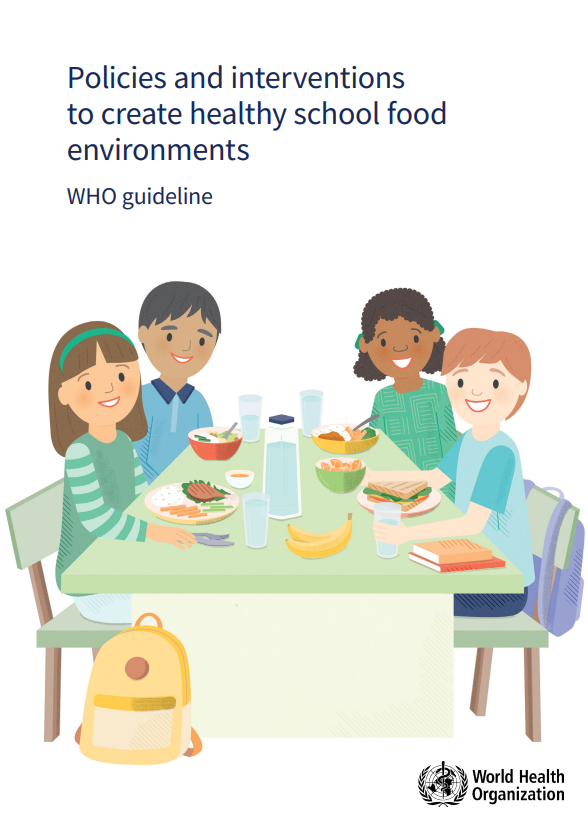
This WHO guideline provides Member States with evidence-based recommendations for improving school food environments. It covers three areas: direct food provision; nutrition standards for foods and beverages served or sold at school; and nudging interventions that promote healthier choices. The recommendations aim to increase availability and consumption of nutritious foods and reduce the presence of […]
Evaluating the 7-1-7 Outbreak Response Metric: Modelling and Implementation Insights for Ebola, Measles, and Anthrax in Central and Eastern Uganda, 2025
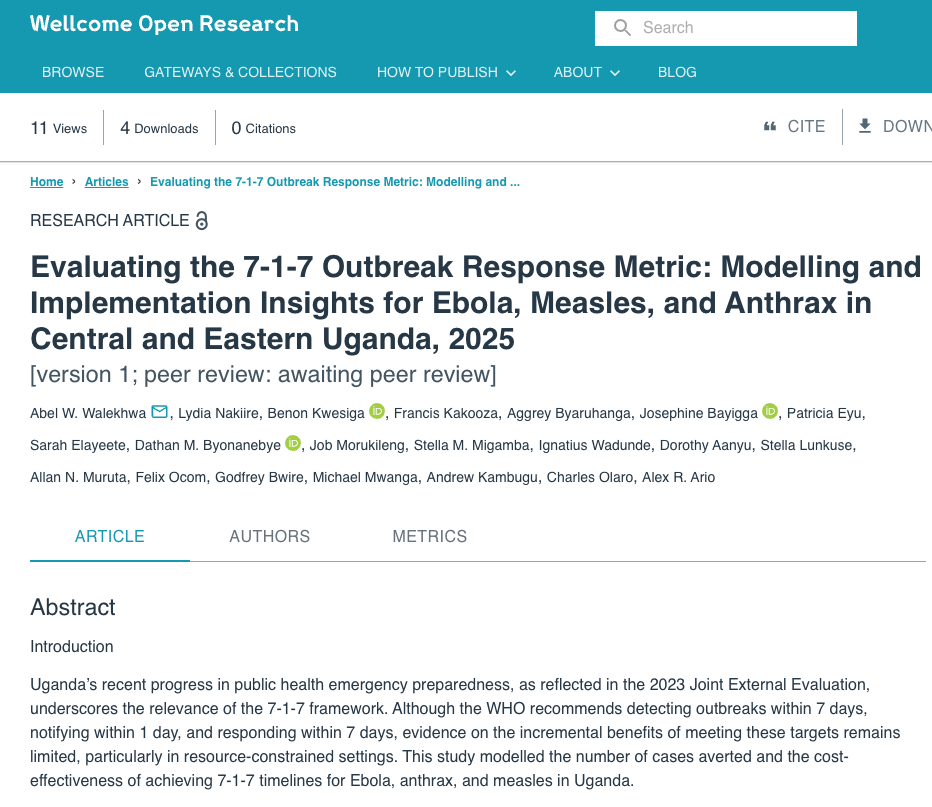
Wellcome Open Research article published on January 26, 2026. This study was conducted by 7‑1‑7 Alliance partners in Uganda and supported by the Wellcome Trust (228152/Z/23/Z).
IHR Key Obligations and Rights – Summary Table
Summary table on IHR key obligations and rights for incorporating the 2024 amendments.
Taxation of foods high in fat, sugar, and sodium in India: A modelling study of health and economic impacts
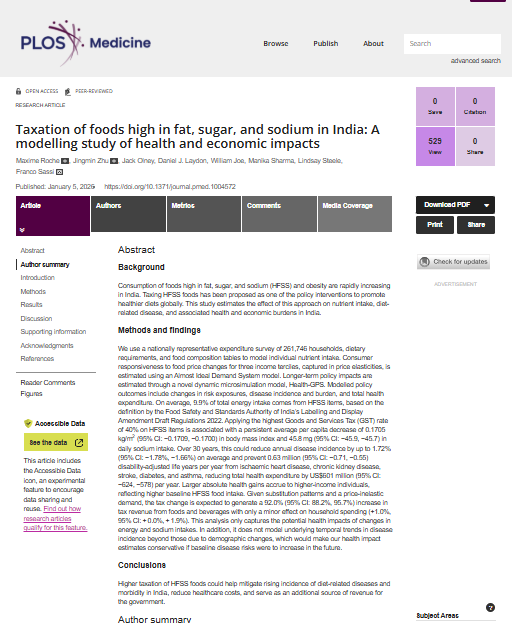
A new modelling study from Centre for Health Economics & Policy Innovation, the Institute of Economic Growth, and Resolve to Save Lives highlights how taxing foods high in fat, sugar, and salt (HFSS foods) could deliver major health and economic gains for India over the next 30 years—with minimal impact on household spending. Better health […]
IHR Legal Analysis: Standardized Checklist and Reporting Template
Standardized checklist and reporting template for incorporating the 2024 amendments.
Building the science behind a smarter salt
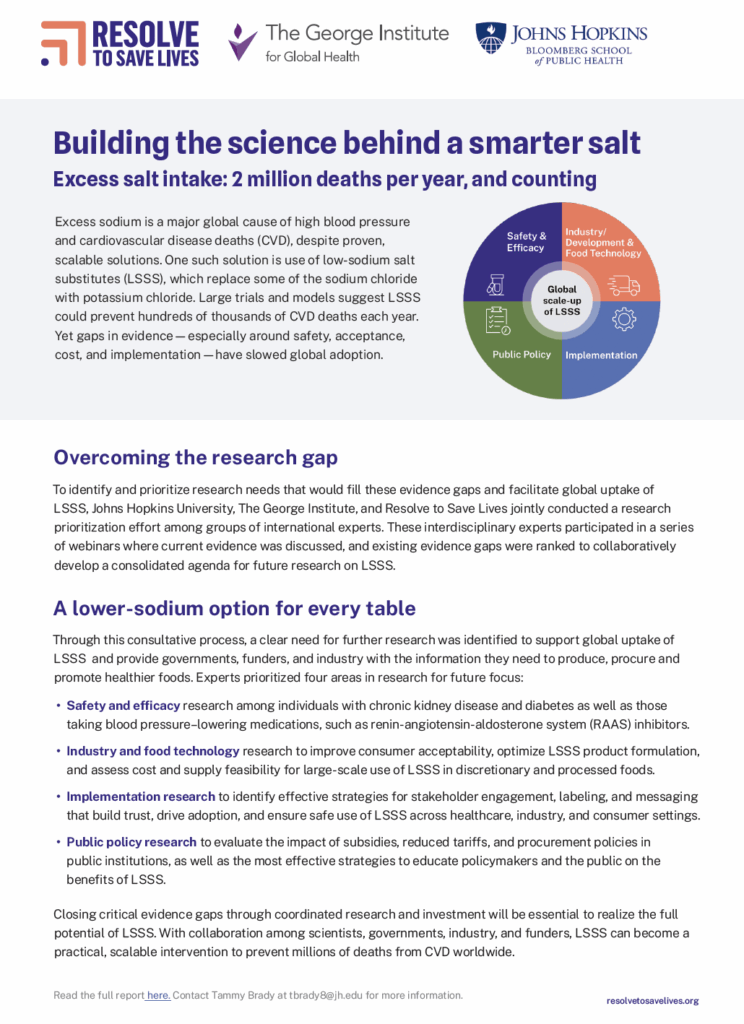
Excess sodium drives global hypertension and cardiovascular deaths, yet adoption of lower-sodium salt substitutes remains slow despite strong evidence that they could prevent hundreds of thousands of deaths annually. To pinpoint what’s holding back large-scale uptake, Johns Hopkins University, The George Institute, and Resolve to Save Lives convened international experts to identify the most urgent […]
Research prioritization to scale-up lower-sodium salts
Excess sodium drives global hypertension and cardiovascular deaths, yet adoption of low-sodium salt substitutes (LSSS) remains slow despite strong evidence that they could prevent hundreds of thousands of deaths annually. To pinpoint what’s holding uptake back, Johns Hopkins University, The George Institute, and Resolve to Save Lives convened international experts to identify the most urgent […]
PAHO’s HEARTS Quality Framework for controlling high blood pressure

A new article in The Lancet Regional Health – Americas unveils the HEARTS Quality Framework, a practical blueprint to help countries dramatically reduce high blood pressure and cardiovascular disease risk through primary health care. Developed by the Pan American Health Organization, ministries of health throughout the region, and international experts and researchers, the HEARTS Quality Framework centers around the ambitious goal […]
Considerations for the establishment of national IHR authorities (NIAs)
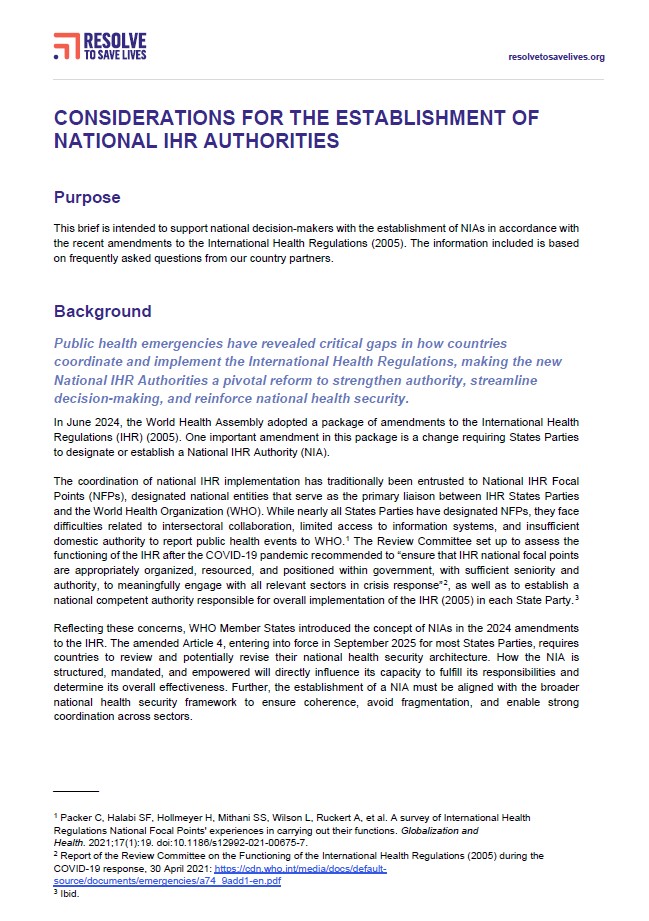
A brief to support national decision-makers with the establishment of national IHR authorities (NIAs) in accordance with the recent amendments to the International Health Regulations (2005).
Lessons learned from treating 34 million people with hypertension
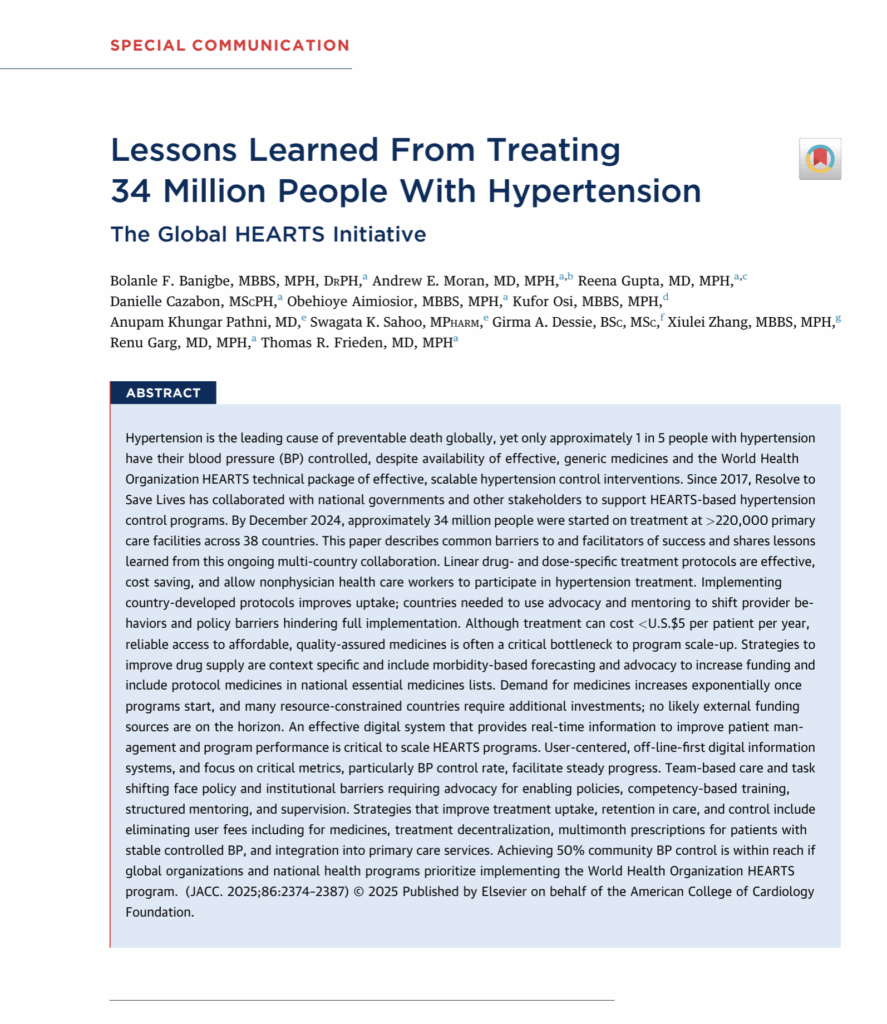
Hypertension is the leading cause of preventable death globally, yet only one in five people with high blood pressure have it under control despite availability of effective, low-cost medicines and the WHO HEARTS technical package of effective, scalable hypertension control interventions. Since 2017, Resolve to Save Lives has collaborated with national governments and other stakeholders […]
Global Development Assistance for Health Allocated to Cardiovascular Disease Control, 2015 to 2022
Cardiovascular disease (CVD) is the leading cause of death worldwide yet CVD prevention efforts remain starkly underfunded. A new landmark report in the Journal of the American College of Cardiology quantifies for the first time the surprising mismatch between high CVD burden and low CVD funds from high income country governments and international development agencies such […]
Association between timeliness of detection, notification and response and the magnitude, severity and duration of disease outbreaks: a retrospective review of 84 outbreaks in Uganda, 2017–2022
Timely detection, notification and response are critical to reducing the impact of outbreaks, yet evidence linking these factors to outcomes has been limited. In an analysis of 84 outbreaks reported in Uganda between 2017 and 2022, Resolve to Save Lives and partners found that delays in detection were strongly associated with higher numbers of cases […]
Adoption and use of the 7-1-7 timeliness metrics for detection, notification, and early response actions to public health events: an observational study in Liberia, January 2024–June 2025
Wellcome Open Research article published on October 31, 2025. This study was conducted by 7-1-7 Alliance partners in Liberia and supported by the Wellcome Trust (228152/Z/23/Z).
Ultra-processed foods in Bangladesh are full of salt—and often not saying so
People around the world are consuming more sodium from processed and ultra-processed foods—and Bangladesh is no exception. A new country-wide cross-sectional study highlights concerning realities: 97% of participants consumed processed or ultra-processed foods in the past week Children consumed processed or ultra-processed foods approximately 21 times per week, adolescents 16 times per week, and adults […]
The Healthy Hearts program to improve primary care for hypertension
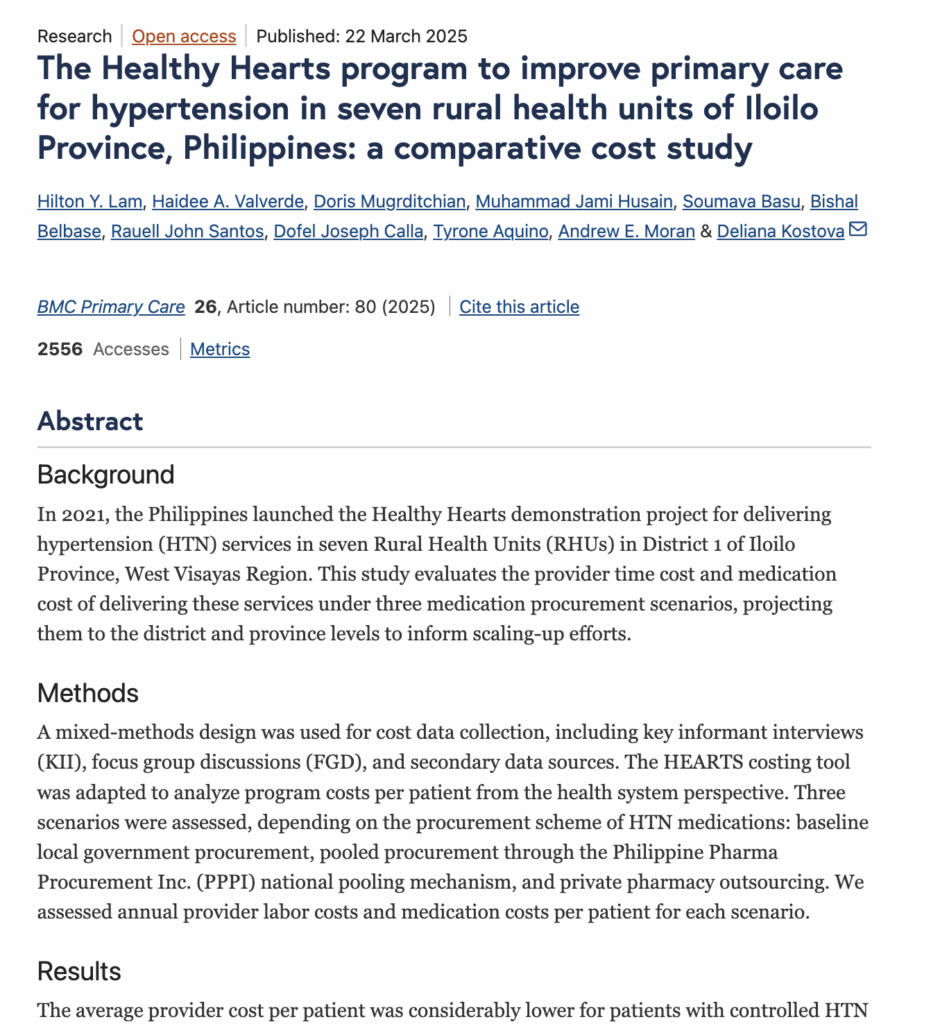
A new study co-authored by RTSL on the Philippines’ Healthy Hearts program compared three ways to supply hypertension medicines under the country’s Universal Health Care law. Researchers found that centralized national procurement would cost government payers less than one-third of the current decentralized system, while relying on private pharmacies would be more expensive. The study […]
How to increase hypertension control 6-fold through primary health care
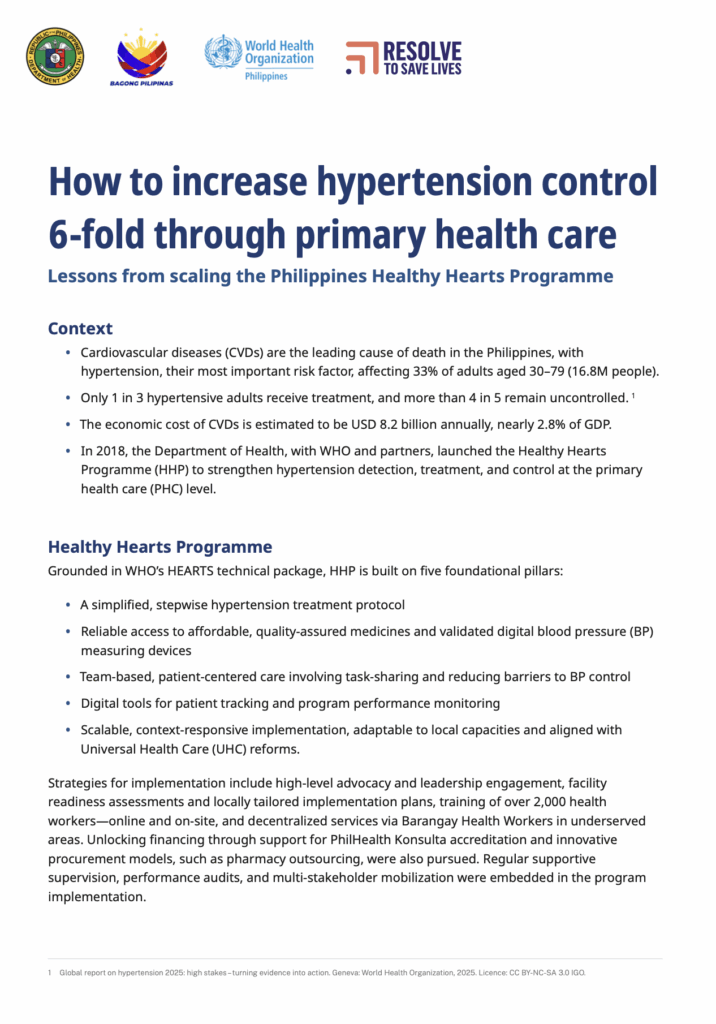
Lessons from scaling the Philippines Healthy Hearts Programme This advocacy resource from Resolve to Save Lives highlights lessons learned and key strategies for improving population-level blood pressure control in the Philippines, which are captured in an upcoming report. The key takeaway: Scaling the Healthy Hearts Programme nationally can avert about half a million premature deaths […]
Global report on hypertension 2025: High stakes—turning evidence into action
The World Health Organization’s second global hypertension report identifies access to life-saving medicines as the biggest barrier—but also the greatest opportunity—for rapid, scalable progress to get high blood pressure under control and save millions of lives.
Actionable 7‑1‑7 bottleneck insights: Timely laboratory confirmation
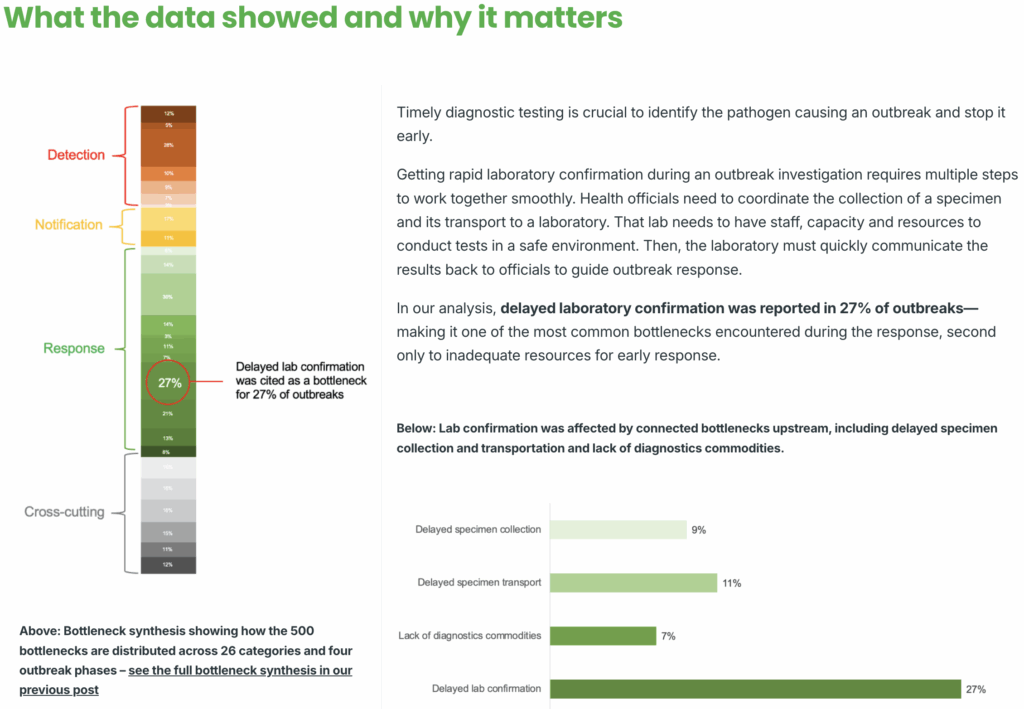
This fourth post in the 7-1-7 bottleneck insights series examines delays in laboratory confirmation—the second most common response bottleneck—and practical ways countries can accelerate diagnostics for faster outbreak control.
Progress in epidemic-ready primary health: early pilot results from four African countries (Ethiopia, Nigeria, Sierra Leone and Uganda), December 2023-October 2024
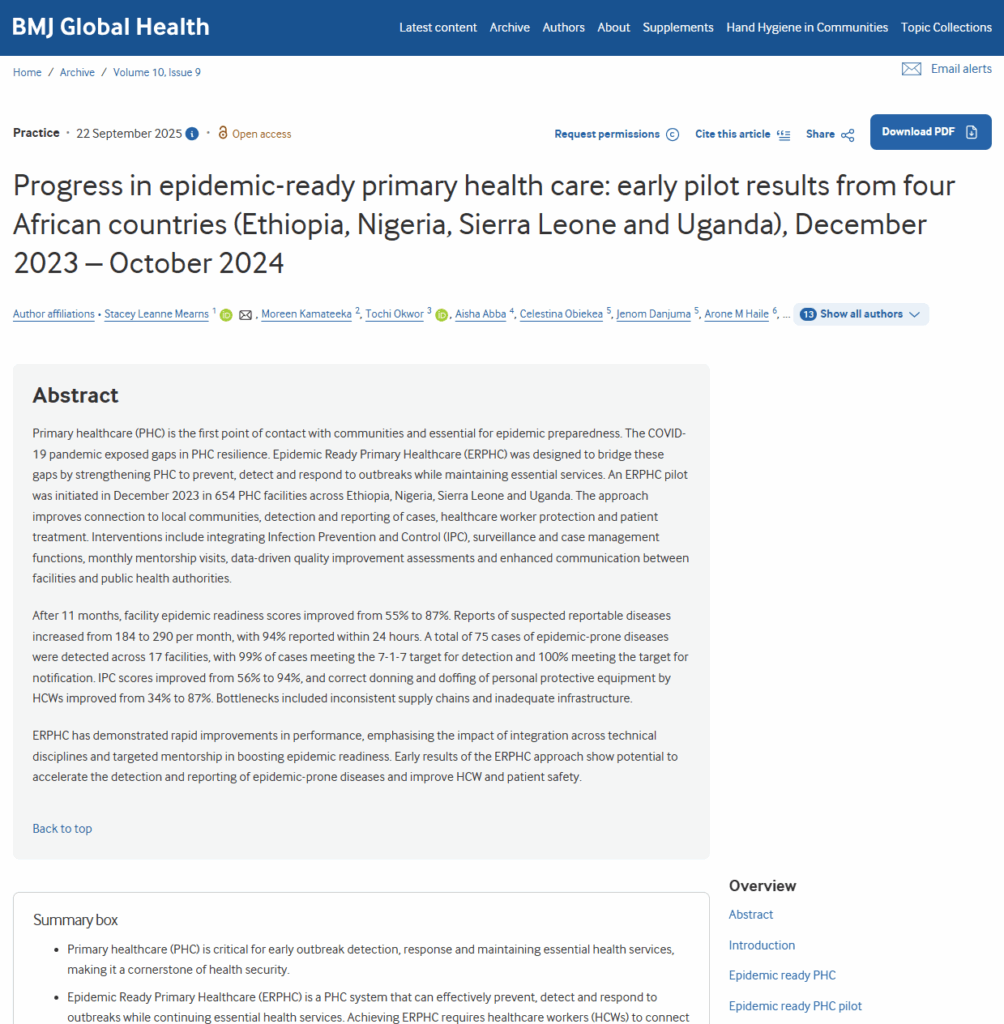
Primary health care facilities are the first point of contact when community members fall ill. They are also essential to epidemic preparedness. Despite their critical importance, many facilities lack the capacity to prevent, detect and respond to outbreaks while maintaining essential services. To address these gaps and bolster facility resilience, we launched an Epidemic Ready […]